





















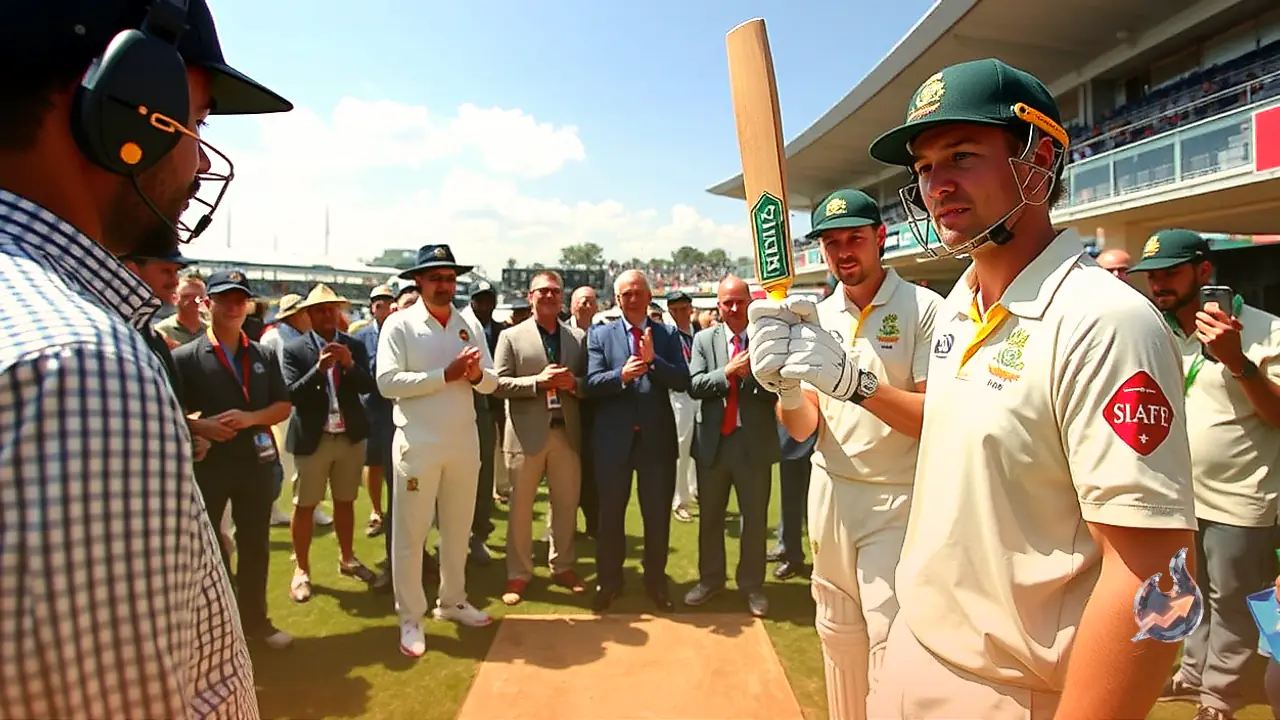

Cricket often produces peculiar and memorable statistical anomalies that capture the attention of fans worldwide. A similar extraordinary coincidence recently unfolded for Australian batsman Marnus Labuschagne during a red-ball encounter. In the ongoing match, the right-hander faced the exact same number of deliveries and accumulated identical scores across both innings of the fixture. Despite this rare statistical feat, a substantial individual knock eluded him once again, extending a prolonged phase without reaching the three-figure mark that has stretched across numerous outings.
Identical Figures Across Both Innings in Durban
During the opening match between South Africa and Australia in Durban, the first innings saw Marnus Labuschagne spend considerable time at the crease. He faced 58 deliveries and contributed 37 runs to the total before losing his wicket, hitting six boundaries along the way before being dismissed by South Africa bowler Wiaan Mulder. When the batting unit returned for the second turn at the crease, a nearly identical script played out. Marnus Labuschagne once again faced precisely 58 balls and was dismissed after scoring exactly 37 runs. Although this time he struck four boundaries and fell to Keshav Maharaj, the matching figures of balls faced and runs scored created a striking statistical parallel.
Prolonged Wait for a Test Century Continues
While the matching statistics in both innings highlight a rare quirk of the game, the outcome remains a matter of concern for the team and the player himself. Marnus Labuschagne failed to convert his starts into a defining innings on either occasion. Having made his debut in 2018, the batsman has now gone through a lengthy stretch without reaching a century, with his last triple-digit Test score coming against England back in 2023. Although he has managed several half-centuries in the interim period, converting those into hundreds has proven difficult. Despite this dry spell, the team management continues to back him with consistent selections in the playing eleven, leaving observers waiting to see whether a big score arrives before selection pressures mount further.