




















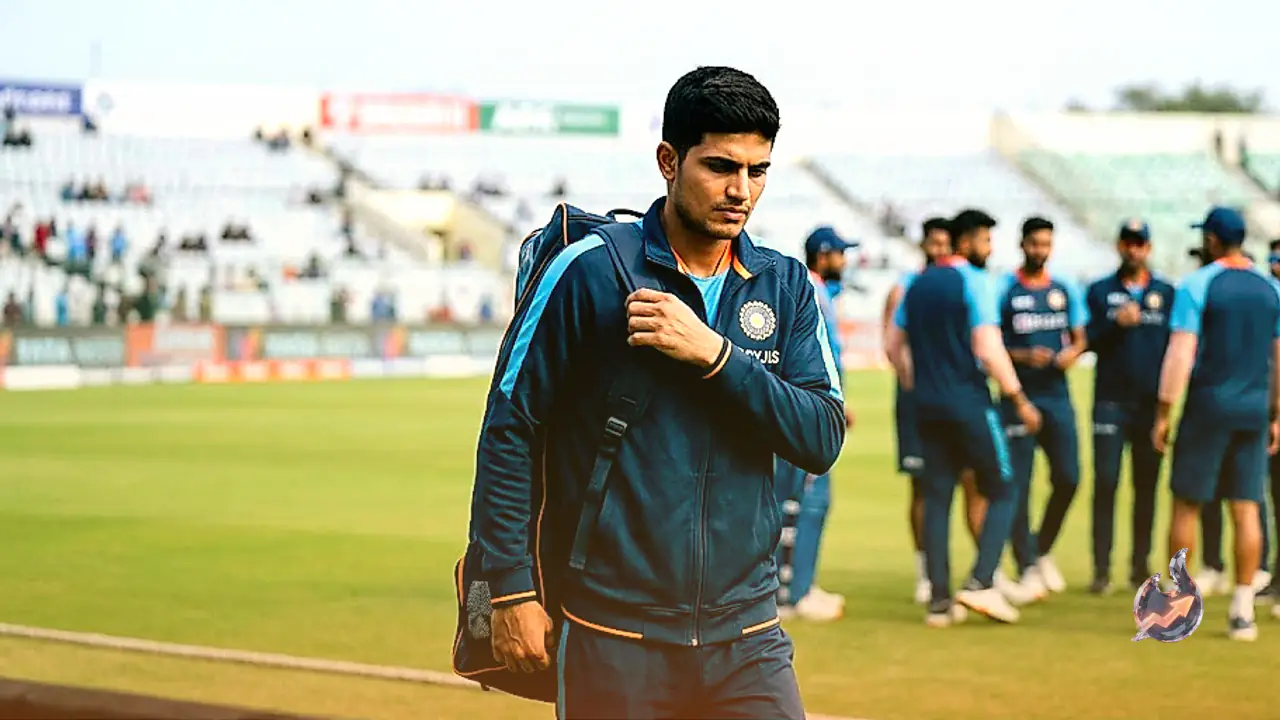

Prior to the Indian team's historic victory at the 2026 T20 World Cup, Shubman Gill was universally regarded as the heir apparent to lead India across all three international formats. Today, however, the gifted top-order batter finds himself grappling with a complex and uncertain future in the shortest format of the game. Whenever Indian cricket initiates a fresh transition, decisions made by the selection committee often stir intense discussion among fans, analysts, and former players. The unexpected decision to exclude Gill from the recently announced Indian squad for the upcoming T20 International series against Afghanistan represents one such critical juncture. Despite the Cricket Board reinforcing their immense faith in Gill by handing him leadership roles in both Test and One-Day International formats, his omission from the T20 setup is far from a routine rest period. Instead, it serves as a clear tactical declaration from the team management that spots in the T20 International lineup are no longer guaranteed for established stars, as the leadership actively searches for dynamic options ahead of upcoming global marquee events.
Transition from Traditional Anchors to High-Impact Aggressors
The selection board's decision to appoint Gill to key leadership roles in Test and ODI cricket highlights their appreciation of his tactical acumen and technical sophistication. However, in T20 Internationals, his scoring velocity, measured by his strike rate, has increasingly emerged as a structural drawback for the side. Following the departure of legendary figures such as Rohit Sharma and Virat Kohli from T20 Internationals, the selection committee fundamentally revised its core batting strategy. Rather than prioritizing traditional anchor batters who rebuild innings cautiously before accelerating late, the team management now heavily favors high-impact stroke-makers capable of taking on the opposition from the very first ball. Gill's natural template involves spending initial deliveries setting up his innings before expanding his shot repertoire. In contemporary T20 cricket, consuming precious deliveries during the early overs slows down the team's scoring pace during the powerplay, imposing heavy execution pressure on middle-order batters who follow.
The Four-Opener Dilemma and the Roadmap for the 2028 World Cup
The squad assembled for the Afghanistan T20 series underscores this aggressive shift, featuring four explosive opening options in Vaibhav Suryavanshi, Ishan Kishan, Abhishek Sharma, and Sanju Samson. Bringing together four highly aggressive top-order batters provides a strong indication that Gill has temporarily dropped out of the preliminary blueprint for the 2028 T20 World Cup. A driving reason behind this strategic move is the management's desire to exploit left-handed opening options during the powerplay. Players like Vaibhav Suryavanshi and Abhishek Sharma excel at capitalizing on early field restrictions, taking calculated risks against movement and pace right from ball one. In comparison, Gill's classical right-handed profile offers less immediate scoring volatility, making him vulnerable to being bypassed in favor of specialized powerplay hitters.
Statistical Realities: Strike Rate Deficit and International Friction
A granular look at international statistics illustrates the core issue confronting the young batter. Gill's career T20 International strike rate hovers consistently between 135 and 139. In the modern international arena, where elite top-order openers regularly operate at strike rates exceeding 150, an average near 137 falls noticeably behind global standards. While Gill has delivered staggering scoring runs and centuries in the Indian Premier League, particularly on favorable batting surfaces, replicating that explosive rate against world-class international bowling attacks and under varied global conditions has proven far more problematic. The gap between domestic T20 conditions and top-tier international bowling forces selectors to demand proven ball-one aggression rather than relying solely on IPL volume statistics.
Reinvention and the Strategic Road Ahead for the 'Prince'
Being dropped from the Afghanistan series does not signal a permanent end to Shubman Gill's T20 International career, but it unequivocally sounds an urgent alarm. If the talented top-order batsman intends to reclaim a regular spot in the T20 setup and feature in India's plans for the 2028 T20 World Cup, he must undergo a radical adaptation in his approach. In upcoming domestic T20 matches and future IPL seasons, Gill must re-engineer his batting mindset, proving that he can transition into an uninhibited, fearless striker who dictates tempo from the opening delivery. In today's T20 landscape, classical elegance alone is insufficient to secure selection; high scoring velocity and immediate match impact remain the absolute currencies of success.