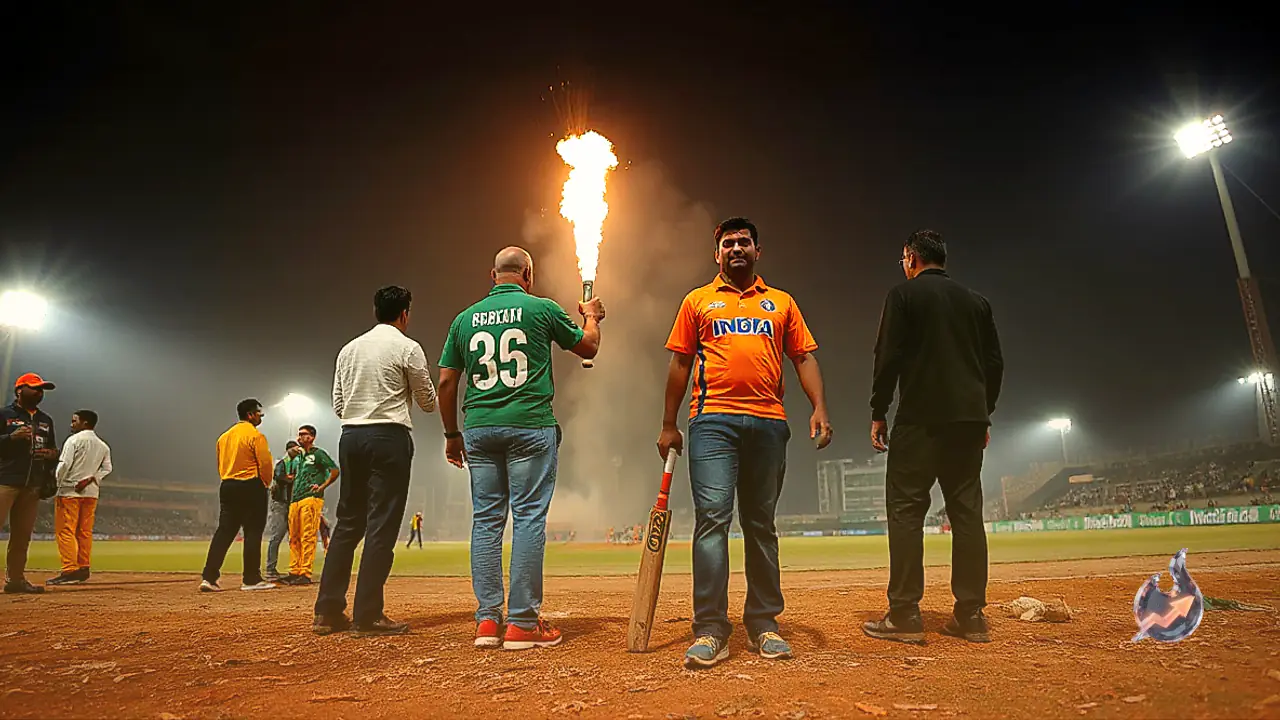

























Shoaib Akhtar, globally celebrated as the 'Rawalpindi Express' and recognized as one of the most terrifying fast bowlers in cricket history, has made a candid revelation regarding his international career. Having intimidated batsmen across the globe by hurling deliveries at an extraordinary record speed of 161.3 km/h, the legendary Pakistani pacer still carries a profound unfulfilled ambition. Speaking openly during a recent appearance on a Geo TV broadcast, Akhtar disclosed that had he received the opportunity to play under the leadership of former Pakistan captain and legendary all-rounder Imran Khan early in his career, his international Test career statistics would have reached a dramatically higher milestone.
Imran Khan's Leadership Style and the Unfulfilled 400 Test Wickets Milestone
Reflecting on his career trajectory during the Geo TV appearance, Shoaib Akhtar stated unequivocally that not playing under Imran Khan's captaincy stands as the single biggest regret of his entire professional journey. Akhtar described Imran Khan as an extraordinarily aggressive, fearless, and visionary captain who possessed a unique gift for extracting every ounce of hidden potential from fast bowlers. According to Akhtar, having such an inspirational mentor during the early phase of his Test career would have transformed his trajectory and elevated his international statistics to unprecedented heights.
To support his claim regarding his latent wicket-taking capability, Akhtar referenced his impressive record in First-Class cricket. He reminded listeners that he has over 400 wickets to his name in First-Class matches. Akhtar remarked, "If I had played a bit earlier under Imran Khan's leadership, I would have taken at least 400 Test wickets." He expressed firm conviction that Imran Khan's fearless leadership philosophy and tactical backing of pace bowlers would have enabled him to cross the 400 Test wicket mark comfortably.
Test Debut in Rawalpindi and Navigating Pakistan Cricket's Changing Captaincy Eras
The circumstances surrounding Shoaib Akhtar's introduction to international Test cricket were both memorable and challenging. He earned his maiden Test cap in his home city of Rawalpindi against a strong and formidable West Indies team. However, by the time Akhtar stepped onto the international stage, Imran Khan had already retired completely from international cricket. Consequently, Akhtar's deep-seated ambition of playing under the guidance of his ideal captain remained an unfulfilled dream throughout his playing career.
Following his debut, Akhtar found himself playing under a series of different team captains across various stages of his career. Pakistan cricket during that era was marked by frequent and rapid turnover in team leadership. Adapting to the contrasting tactical approaches, management styles, and personalities of multiple captains proved to be an exceptionally complex and demanding task for the express pacer. His relationships with several captains over the years remained intricate and at times turbulent. This pattern of leadership friction persisted until the end of his international career, which concluded around the 2011 ODI World Cup amidst reports of differences with then-captain Shahid Afridi, leading Akhtar to announce his retirement from international cricket.
Complex Dynamics with Wasim Akram: Friction, Respect, and a Lethal Partnership
Reflecting on the formative phase of his international career, Akhtar also discussed his equation with legendary fast bowler Wasim Akram. In the initial stages, Wasim Akram was not in favor of giving young Akhtar his Test debut immediately. Akram believed that the young fast bowler was not yet fully equipped to handle the immense physical and mental pressure associated with international Test match cricket and required more time to mature.
Over time, the relationship between Wasim Akram and Shoaib Akhtar evolved into a complex dynamic characterized by an intriguing mix of high praise and mutual respect alongside unspoken tension and ideological differences. Nevertheless, despite any underlying friction off the field, whenever Akram and Akhtar shared the ball for Pakistan, they created utter havoc for opposition batting line-ups. Their bowling partnership delivered numerous memorable victories for Pakistan, most notably during the historic 1999 tour of India and the 1999 ODI World Cup held in England, where Pakistan produced a stellar run to finish as the tournament runners-up.
Excruciating Knee Agony, Syringes, and the 5-Hour Post-Match Recovery Drama
While spectators and cricket fans focused on the sheer velocity of his bowling, flying stumps, and dramatic celebrations, the physical sacrifice Akhtar endured to maintain his extreme speed was harrowing. For the first time, Akhtar provided a detailed account of the painful physical procedures he underwent to consistently bowl at 100 mph.
Recalling those excruciating match days, Akhtar revealed that he was required to wake up at least 3 hours earlier than all his teammates. His morning routine began with intense cycling followed by rigorous gym workouts. Overnight, his knee joints would lock up and freeze completely. Before stepping onto the cricket field, medical personnel had to use syringes to manually extract fluid that had accumulated in his knees, after which medications were applied and ice packs were used to reduce swelling and numb the pain.
Only after enduring this agonizing medical process was Akhtar capable of sprinting in and bowling with his characteristic raw pace and intensity. However, the torment did not conclude when the match ended. The post-match physical pain was so intense that bringing his body back to a normal state and completing the mandatory recovery process required another 5 hours every single day. Akhtar explained that this demanding and painful routine had become his daily reality throughout his international career.
Career Statistics and the Enduring Legacy of the 'Rawalpindi Express'
Shoaib Akhtar's final career statistics stand at 178 wickets in 46 Test matches, 247 wickets in 163 ODI matches, and 21 wickets in 15 T20 Internationals. Statistical analysis indicates that had his body remained unburdened by recurring injuries and had he received early guidance under a visionary leader like Imran Khan, reaching the 400 Test wicket mark would have been achievable.
Despite enduring immense bodily suffering, undergoing invasive syringe treatments, and battling severe joint issues, Akhtar's feat of breaking the 100 mph speed barrier (161.3 km/h) cements his status as a legendary figure in world cricket.