
















In the religious town of Karauli, Rajasthan, the festival of Rakshabandhan is celebrated with a distinctive spiritual touch. While markets across the country are inundated with modern, fancy, and commercially manufactured Rakhis made of silk and plastic, Karauli continues to honor an age-old traditional Rakhi rooted deeply in faith. Known locally as 'Sona Sarwan' or 'Baman Rakhi', this sacred thread is not designed for decorative wear on a brother's wrist. Instead, it is crafted specifically to be offered at the feet and wrists of deities in temples and to be tied to revered priests, preserving a cherished cultural legacy of the region.
Four Generations of Craftsmanship by the Patwa Family
The duty of keeping this unique tradition alive rests with a local Patwa family, who has been handcrafting these specialized Rakhis for four consecutive generations. Preparations for the festival begin nearly two months in advance of Rakshabandhan. Family members work tirelessly day and night to produce these Rakhis in massive quantities. Once ready, the products are distributed to local markets across Karauli as well as to neighboring towns and rural areas, ensuring that the religious demand of the entire region is satisfied.
Handcrafted with Cotton and Thread Without Machinery
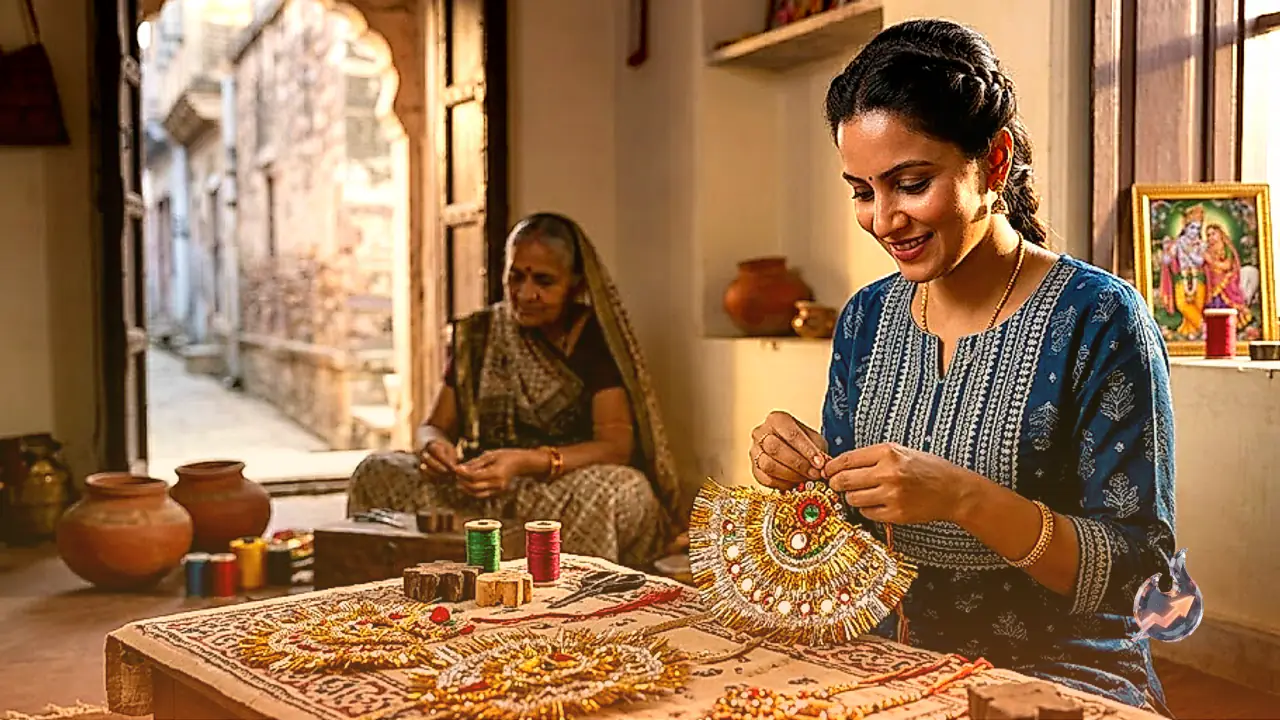
The manufacturing process of the Sona Sarwan Rakhi sets it completely apart from contemporary mass-produced alternatives. No machinery is involved in its creation. Each Rakhi is meticulously built by hand using simple raw materials like cotton and thread. After forming the base structure, the Rakhis undergo a traditional dyeing process before being carefully sorted and arranged into bundles, locally known as lacchas. Because this labor-intensive art requires substantial effort and time, production must be initiated well ahead of the festive rush.
Spiritual Reverence: Offered to Thakurji and Priests
The religious importance of the Sona Sarwan Rakhi in Karauli is paramount. Devotees purchase these Rakhis to offer them to Lord Thakurji and various deities worshipped in home shrines as well as public temples. According to local customs, these Rakhis are also tied to priests and pandits on the day of Rakshabandhan as a sign of respect and religious ritual. This deep-seated belief ensures that demand skyrockets every year as the festival approaches.
Active Role of Women and Collective Family Effort
Shakuntala Devi, a member of the Patwa family, shared that the tradition is deeply tied to their household identity. She emphasized that every single Rakhi is individually crafted by hand, requiring teamwork from every member of the family. Women in the family play an equally vital role, spending long hours spinning, dyeing, and bundling the Rakhis. This collaborative domestic effort allows the family to meet high production targets while maintaining the authentic quality of the traditional product.
Production in Millions at Accessible Prices
According to Vishnu Patwa, another family member carrying forward the trade, the family produces millions of Sona Sarwan and Baman Rakhis annually. As Rakshabandhan nears, local demand alone scales into hundreds of thousands. The family supplies these Rakhis to the wholesale market at approximately 10 rupees per bundle (laccha), while retail packets are sold to consumers at affordable rates ranging between 15 and 20 rupees. Despite low profit margins per piece, large volume sales ensure that this four-generation-old craft remains a viable and meaningful source of livelihood for the family.