















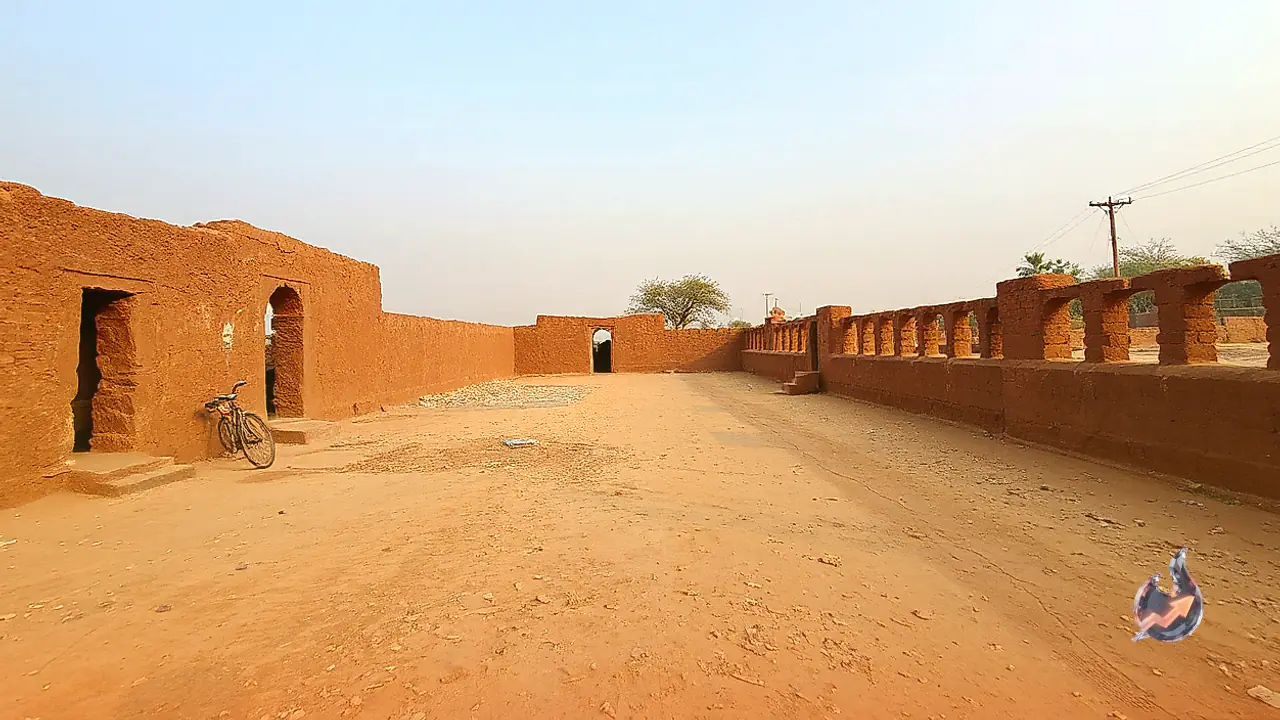

In the rich tapestry of traditional folk art in Bihar, the traditional Pidhia painting from Bhojpur holds a distinct and cherished place. Once created primarily on mud walls using purely natural pigments, this artistic tradition is now finding a new home on paper and canvas. Fine artist Rukhsar Praveen from Bhojpur is spearheading the effort to give this traditional folk art a contemporary lease of life. She has attempted to connect Pidhia painting with modern lifestyles, social environments, and cultural heritage, giving it a modern makeover. Rukhsar believes that the folk arts of Bhojpur have not yet received the recognition they truly deserve. Driven by this thought, she began working extensively on Pidhia painting and Bhojpuri culture. Her primary objective is to take this art form beyond traditional rituals and make it accessible to the younger generation and art enthusiasts everywhere.
The tradition linked with the longevity of brothers
The tradition of Pidhia forms an essential part of the social and cultural fabric of Bhojpur. Rukhsar explains that in her region, a special festive period associated with Pidhia is celebrated right after Diwali and Govardhan Puja, lasting for about a month. During this traditional practice, sisters observe fasts to pray for the long life and well-being of their brothers. Following this, traditional motifs and patterns are created on household walls using natural colors. Throughout the month, traditional folk songs, music, and rituals continue uninterrupted. On the final day of the festivities, small lumps made of cow dung are immersed in the holy Ganges River. Rukhsar endeavors to convey this very cultural heritage to the public through her artworks. Her paintings vividly reflect local life, religious beliefs, and traditional symbols, while she also depicts subjects like Chhath Puja in the traditional Pidhia style.
Green from bean leaves, white from rice, and red from vermilion
A striking characteristic of Rukhsar's paintings is her exclusive use of natural colors. She points out that in traditional Pidhia painting, the green color is prepared directly from bean leaves, while white is created by grinding rice into a smooth paste. Red is achieved using vermilion along with other traditional materials. Although the commercial market has seen a surge in the popularity of acrylic colors, Rukhsar makes a conscious effort to keep the traditional combination of natural pigments alive. In her view, natural colors possess a distinct charm and visual impact that synthetic alternatives simply cannot replicate.
Taking a full week to craft a single painting
Rukhsar is now also transferring Pidhia painting onto handmade sheets. The creation process begins by applying a brown background layer onto the sheet. Following this, various figures and shapes are formed using green and white hues. Completing a single painting takes her approximately one week of meticulous effort. Alongside traditional motifs, her artworks incorporate themes such as education, rural lifestyle, and the broader social environment. In one particular painting, she has beautifully captured the memories of old government schools and children studying under the shade of trees. At the same time, she has also crafted depictions centered around grooms, brides, and married life in the traditional Bhojpuri Kohbar style.
Learning from a mentor and exploring traditions through research
Rukhsar was already trained as a fine artist before embarking on this journey. Her inner desire to develop and preserve folk art propelled her further down this path. She took formal training in Pidhia painting from a local teacher and gradually mastered its intricate nuances. To accurately paint religious and cultural subjects, she undertook extensive research, traveled to various places, and gathered valuable information about local traditions by interacting directly with village elders.
Launching Art Heaven Studio with a modest investment
Channeling her artistic passion into entrepreneurship, Rukhsar initiated Art Heaven Studio. She made an initial investment ranging between 5,000 to 10,000 rupees using her own pocket money. During the early stages, she funded the venture herself, and over time, the initiative started generating regular income. For the past two years, she has been working dedicatedly and exclusively on Pidhia painting. Throughout this period, she has successfully set up exhibition stalls at numerous locations, including Bokaro, Ranchi, Ara, and Gandhi Maidan in Patna. The price of her artistic creations ranges from 1,000 rupees to 5,000 rupees. Rukhsar's ultimate endeavor is to ensure that this traditional art form of Bhojpur steps out of household walls and gains nationwide recognition.