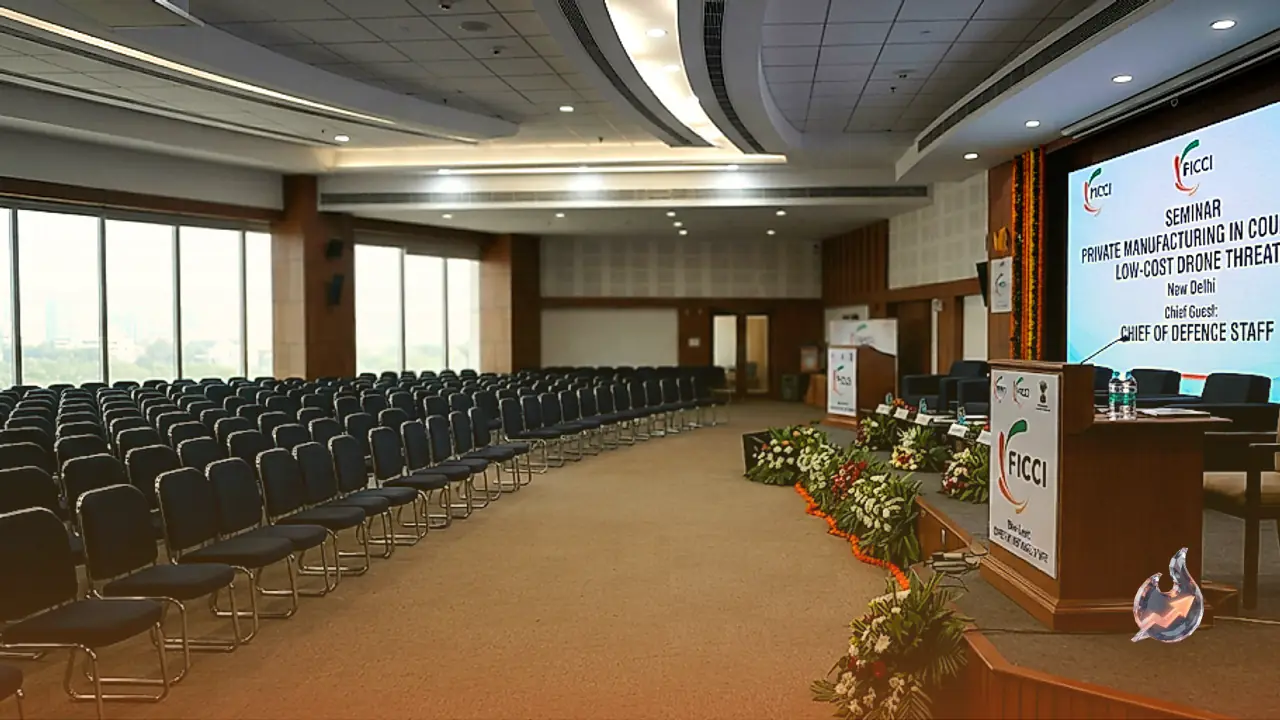

The landscape of conflict is undergoing a fundamental transformation where sheer military size and expensive legacy weapons no longer guarantee victory. Future warfare outcomes will predominantly be determined by artificial intelligence (AI), low-cost drones, and rapid decision-making capabilities. Speaking at an event organized by the Federation of Indian Chambers of Commerce and Industry (FICCI) in Delhi, Chief of Defence Staff (CDS) General NS Raja Subramani outlined the emerging imperatives for national defense and emphasized the need for India to bolster its domestic technology and manufacturing base.
The Shahed vs Patriot Dilemma: Economic Asymmetry in Drone Warfare
One of the most critical challenges highlighted during the address is the severe financial imbalance involved in intercepting cheap tactical assets. General Subramani illustrated this issue by contrasting the Iranian Shahed drone with the US-made Patriot missile defense system. A single Shahed drone carries a production cost of approximately $50,000, whereas an interceptor missile like the Patriot can cost around $4,000,000 ($4 million).
This means a nation defending its airspace may be forced to deploy a countermeasure that is roughly 80 times more expensive than the incoming threat. When adversaries launch massive swarms of low-cost drones, relying continuously on high-cost missile interceptors creates an unsustainable economic burden. This stark economic disparity is forcing defense planners worldwide to rethink military spending and air defense architecture.
Artificial Intelligence Integration and Ethical Dilemmas
AI technologies are dramatically compressing the timeline required to execute complex military operations. Citing a conflict scenario involving the US and Iran, General Subramani noted that AI systems enabled the targeting of 1,000 positions on the very first day of operations. Out of these, 999 strikes were accurate, but a single targeting error led to a strike on a school, resulting in the tragic loss of children's lives.
This incident underscores the ethical and operational dilemmas surrounding military AI application. The CDS questioned whether a single technological failure warrants discarding the technology entirely, or if defense forces should instead focus on refining algorithmic models to eliminate vulnerabilities. He also pointed to Yemen's Houthi rebels modifying Claude AI models to enhance their missile targeting capabilities, demonstrating that advanced software tools are no longer exclusive to major powers. Consequently, India must focus on developing robust, indigenous AI capabilities to maintain a defense edge.
Speed of Decision-Making Outpaces Traditional Firepower
While the fundamental purpose of war remains political, the methods used to achieve strategic goals are changing rapidly. Historically, a military's strength was measured primarily by its inventory of hardware and troop count. In contemporary combat, however, advantage belongs to the force that can gather data, process information, and execute commands faster than its opponent.
General Subramani stressed that the ultimate edge lies in maintaining a rapid sensing-to-execution cycle. Achieving this requires a comprehensive network of sensors deployed across ground and aerial domains. Data collected from these sensors must flow seamlessly to command centers equipped with high-performance processing capabilities, enabling commanders to make real-time operational choices. Implementing AI across this command pipeline requires resilient communication networks, reliable data infrastructure, and specialized technical personnel.
Mobilizing Private Industry and Historical Lessons
To overcome production bottlenecks and scale up defense output, the CDS advocated for deeper integration of India's private sector into defense manufacturing. He highlighted how countries like France and Britain leverage automotive manufacturers to assist in producing cruise missiles. He questioned why India's vast automotive and industrial manufacturing base cannot similarly be harnessed to manufacture defense systems at scale during critical windows.
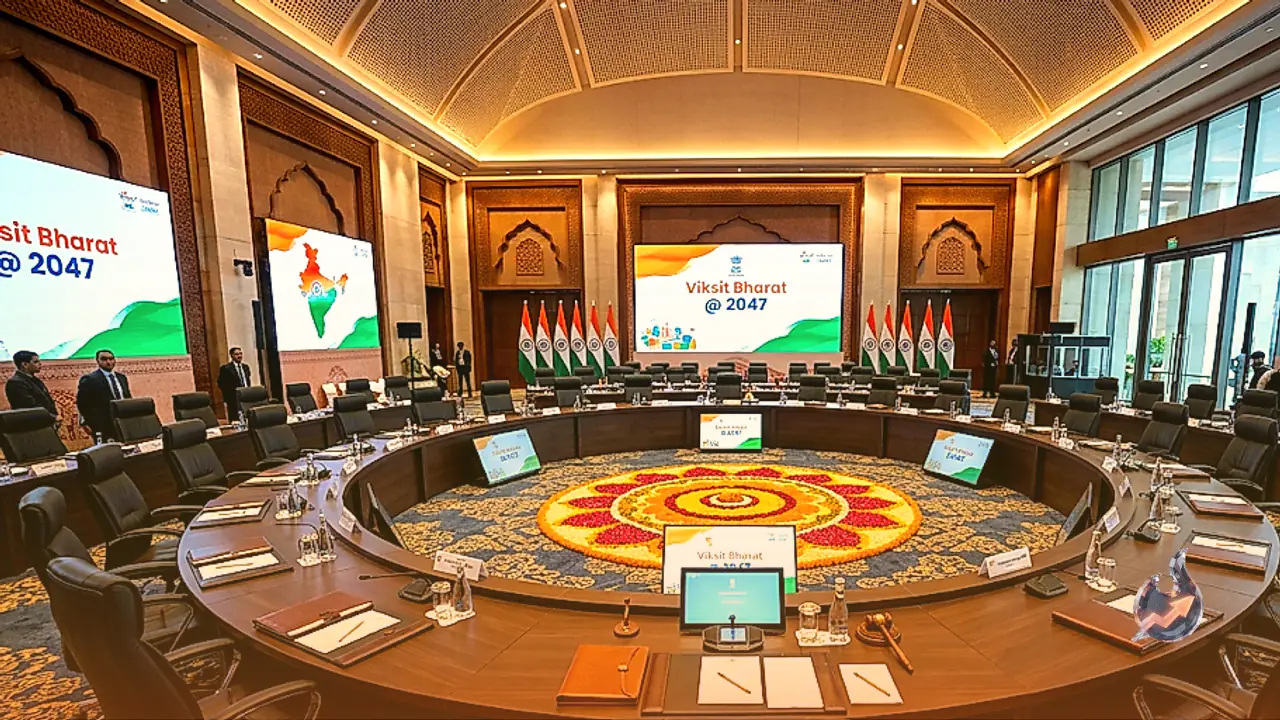
Recalling historical initiative, General Subramani cited industrialist Walchand Hirachand, who around 1940 took significant financial risks despite the lack of initial technical infrastructure in India. Hirachand established Hindustan Aircraft in Bengaluru and initiated shipyard construction in Visakhapatnam. The CDS concluded that aligning economic growth with national security is vital to fulfilling the vision of Viksit Bharat 2047, asserting that true strategic autonomy means having the capability to defend national interests independently over the long term.