

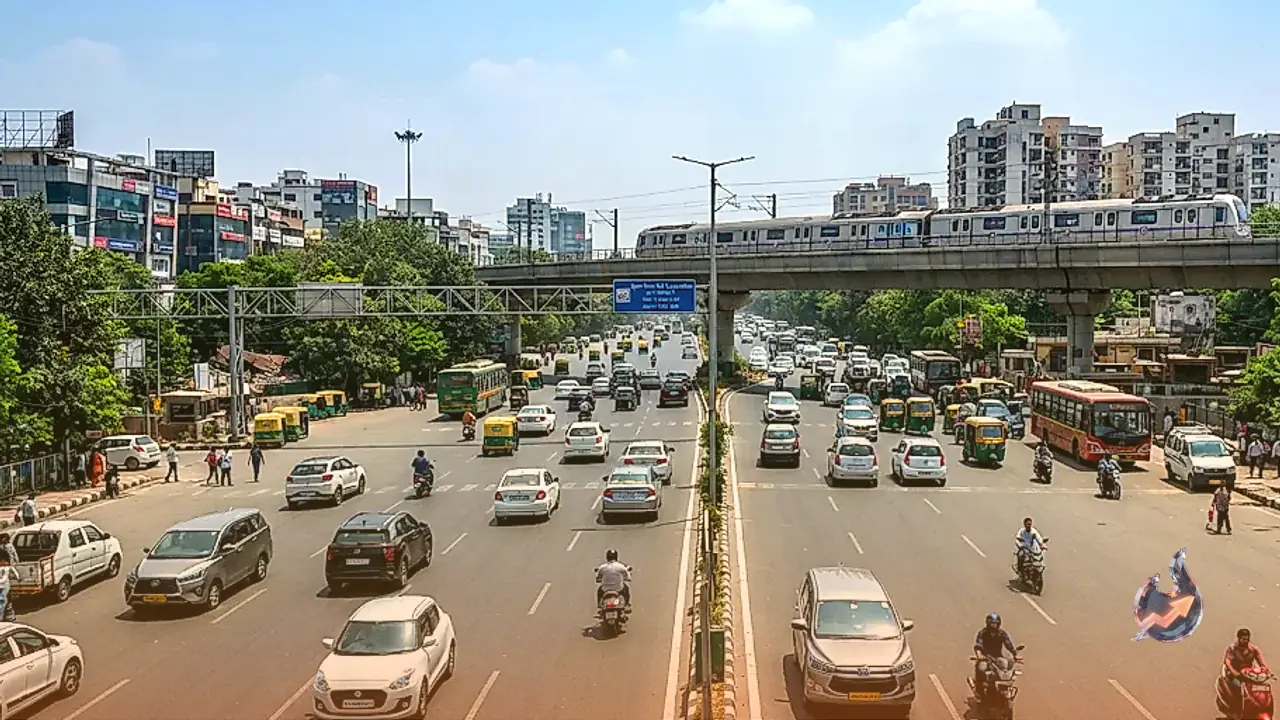
















Following a noticeable improvement in air quality across the National Capital Region, authorities have rolled back the stringent Stage 3 restrictions under the Graded Response Action Plan (GRAP). The sub-committee of the Commission for Air Quality Management (CAQM) decided to revoke GRAP Stage III rules after Delhi's Air Quality Index (AQI) dropped to 204 on Tuesday. However, officials emphasized that restrictions under GRAP Stage I and Stage II, along with all measures enforced via the order dated 30.10.2026, will remain fully operational to prevent pollution from spiking again.
Atmospheric Factors Driving Air Quality Improvement
The sudden drop in pollution levels across Delhi-NCR has been primarily driven by favorable meteorological conditions. Recent light rainfall coupled with increased wind speeds helped facilitate the rapid dispersion of airborne pollutants. The stronger breeze swept away suspended particulate matter that had previously accumulated over the metropolitan area, bringing down the daily AQI to moderate levels. Based on this technical assessment of atmospheric dispersion, the CAQM sub-committee decided that Stage 3 measures were no longer required for immediate emergency control.
Key Restrictions Relaxed Following GRAP Stage 3 Revocation
The decision to lift GRAP Stage III provides widespread relief to residents, school operators, vehicle owners, and the construction sector across the NCR. Key relaxations include
- Resumption of Construction Work: The temporary ban on non-essential construction and demolition projects has been lifted, enabling real estate and infrastructure development to restart.
- Vehicle Restrictions Removed: Four-wheeler vehicles complying with BS-III petrol and BS-IV diesel standards are now permitted to operate freely across Delhi and surrounding NCR cities.
- Goods Vehicles Transport: Non-essential diesel Medium Goods Vehicles (MGVs) rated BS-IV or older can now enter Delhi without facing entry restrictions.
- Primary Schools Operations: Mandatory hybrid and online learning options for students up to Class 5 have been rolled back, clearing the way for primary schools to resume standard physical classes.
Measures That Remain Enforced Under GRAP Stage 1 and 2
While Stage 3 regulations have been eased, authorities clarified that Stage 1 and Stage 2 measures remain strictly enforced across the region to maintain air standards
- Ban on Diesel Generator Sets: The operational ban on diesel generators remains active across the entire NCR, excluding emergency services, hospitals, railway stations, and airports. Only PNG, LPG, gas, or biogas generators are permitted.
- Coal and Firewood Restrictions: Hotels, restaurants, and roadside eateries are strictly prohibited from using coal or dry wood in tandoors. Food establishments must rely exclusively on electric or gas-powered cooking equipment.
- Strict Penalties for Open Burning: Municipal authorities maintain a zero-tolerance policy against the open burning of solid waste, plastic, or dry leaves, with heavy financial penalties mandated for violators.
Meteorological Outlook: Winter Chill May Trigger Fresh Pollution
Despite the recent environmental relief brought by rain and strong winds, meteorologists have advised caution for the coming weeks. Weather experts warn that as winter intensifies and ambient temperatures drop, atmospheric inversion layers could trap pollutants close to the ground once again. Lower temperatures combined with reduced wind velocity often lead to a renewed concentration of particulate matter. Consequently, environmental agencies continue to monitor air quality metrics closely, urging citizens to adhere strictly to existing Stage 1 and 2 guidelines.