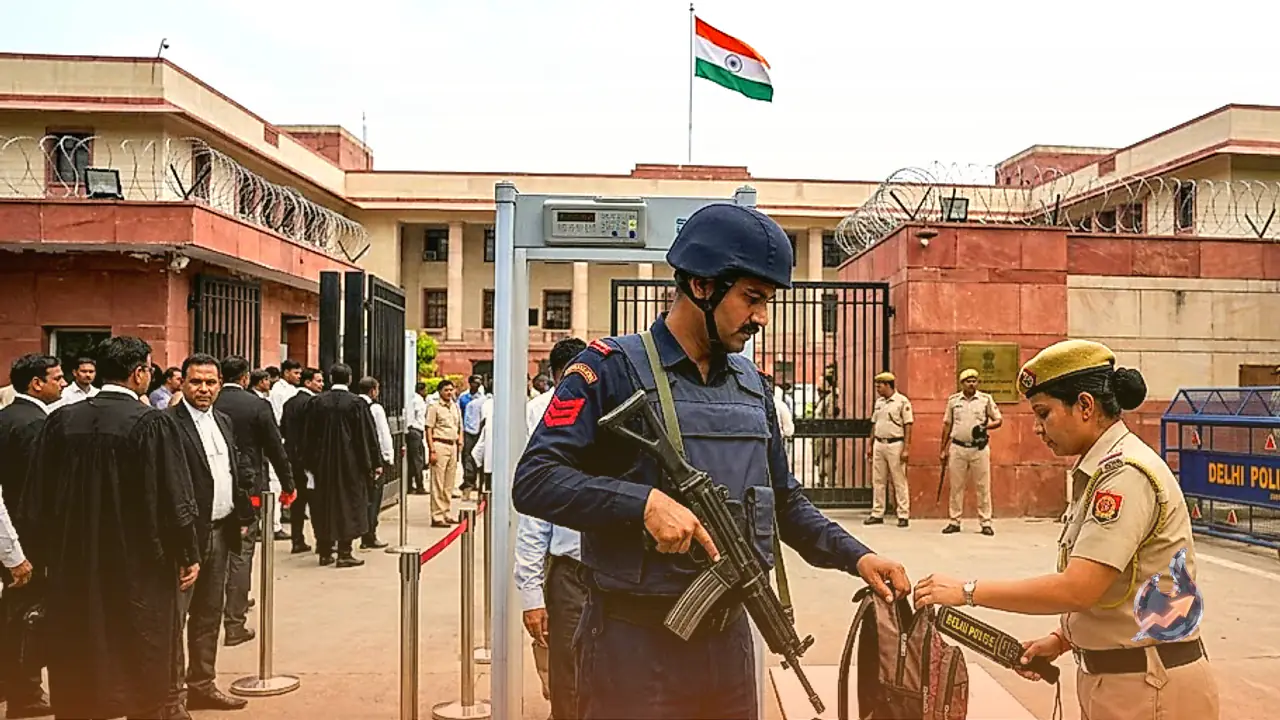
























In the direct aftermath of the brutal Pahalgam terror attack, India's national security apparatus underwent an unprecedented posture shift. National Security Advisor Ajit Doval has revealed the internal decision-making process and strategic resolve of Prime Minister Narendra Modi during those critical hours. Interrupting his official visit to Saudi Arabia, the Prime Minister flew back to New Delhi and immediately convened an emergency operational review at the airport terminal itself, demanding swift accountability before authorizing retaliatory action.
Emergency Airport Briefing and Immediate Command
Following the terror assault in Pahalgam on 22 April 2025, which claimed the lives of 26 innocent civilians, Prime Minister Narendra Modi terminated his diplomatic engagements in Saudi Arabia to head straight to the capital. Upon landing in New Delhi, where he was met by the Foreign Secretary and top security brass, the Prime Minister bypassed standard movement protocols to hold an on-site security assessment. Doval noted that the Prime Minister's immediate inquiry was, "Who did this? Who is responsible for this?"
During this preliminary meeting, the leadership mandated that Indian intelligence services trace the exact networks responsible for organizing the assault, laying the groundwork for targeted retribution against cross-border terror infrastructure.
Intelligence Mobilization and Target Identification
Indian intelligence services operated on an expedited timeline to establish culpability. Within days of the strike, analysts mapped out the command hierarchy, training facilities, and operational staging points situated across the border in Pakistan and Pakistan-occupied Kashmir.
The findings confirmed the active involvement of launchpads affiliated with Lashkar-e-Taiba, Jaish-e-Mohammed, and Hizbul Mujahideen. With actionable intelligence locked in, the strategic directive transitioned from investigative tracking to operational planning for defensive kinetic strikes.
Execution of Operation Sindoor and Precision Strikes
On the night of 6-7 May 2025, the armed forces initiated a synchronized retaliatory campaign under the code name Operation Sindoor. Utilizing precision-guided missiles and aerial strikes, Indian forces dismantled 9 primary terror camps and launch sites across the border.
The operations were designed to neutralize combatant infrastructure while delivering a explicit strategic message regarding Indian defense policy. Reflecting on the campaign, Ajit Doval emphasized that India's restraint must never be mistaken for vulnerability, stating that national defense forces retain the operational capability to strike hostile elements regardless of where they seek refuge.
The 88-Hour Standoff and Ceasefire Agreement
The cross-border strikes escalated into an intense 88-hour military confrontation between the two nuclear-armed neighbors. High-intensity artillery and operational exchanges continued along the border until diplomatic and military channels intervened.
On the evening of 10 May 2025, the Pakistani Director General of Military Operations (DGMO) reached out to his Indian counterpart to negotiate a cessation of hostilites. The communications resulted in a mutual agreement to halt firing and military engagements, concluding the 88-hour active standoff.
Doctrine Shift in National Security Policy
In his interview for the documentary series 'Declassified: Operation Sindoor', Doval contextualized the Prime Minister's assertion that Operation Sindoor remains active. The strategic posture dictates that operational readiness and counter-terrorism measures will persist until hostile terror networks are thoroughly dismantled.
Furthermore, the principle that "blood and water cannot flow together" serves as a definitive policy boundary. Future cross-border terrorist acts will be evaluated as direct acts of war, marking a permanent recalibration of India's defensive and offensive security doctrines.