





















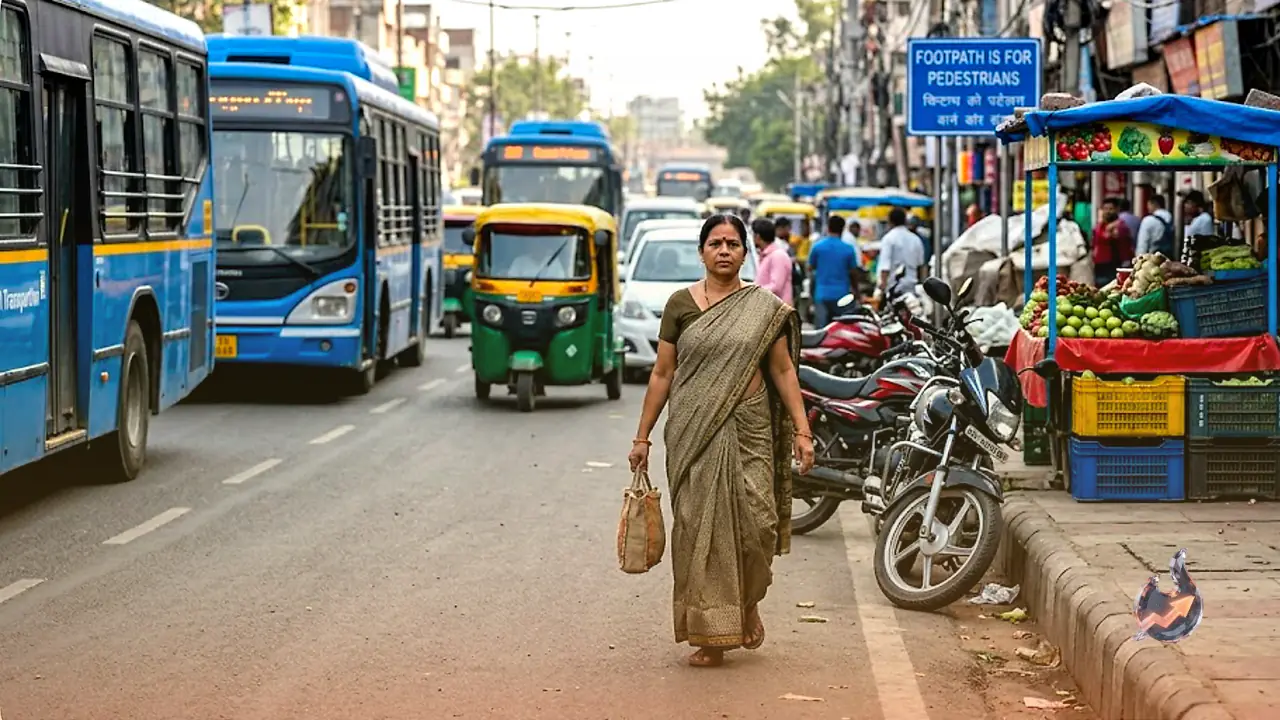

Every single day, millions of residents and commuters traverse the bustling streets of Delhi on foot, navigating their way through one of the busiest metropolises in the world. However, a critical question remains: is there actually any secure space left for these pedestrians to walk? The grim reality on the ground is that footpaths across the city have been systematically repurposed into parking lots for private vehicles, overtaken by street vendors, or in many areas, have completely disappeared. In the face of such absolute neglect, ordinary citizens are routinely forced to risk their lives, walking directly on high-speed roads alongside heavy traffic. Addressing this critical urban crisis, the Supreme Court of India has delivered a historic and landmark verdict, declaring that walking on designated footpaths is not a mere luxury or public convenience, but an absolute fundamental right of every citizen. The apex court explicitly stated that the safety and rights of pedestrians must take absolute precedence over motorized vehicles. Yet, even with this powerful judicial declaration, the primary challenge persists: will Delhi's pedestrians finally reclaim their constitutional rights, or will the city's footpaths continue to remain buried under a mountain of commercial encroachment and illegal parking?
A Landmark Judicial Decree on Pedestrian Rights
The Supreme Court's bench, comprising Justice P. S. Narasimha and Justice A. S. Chandurkar, elevated the right to walk on footpaths to the status of a fundamental right. This critical ruling was delivered during the hearing of a motor accident compensation case that arose from the tragic death of a five-year-old child in a road accident. Deliberating on the profound loss and the systemic failures of road design, the bench clarified that the right of citizens to access unobstructed, designated footpaths is deeply integrated within the freedom of movement guaranteed under Article 19(1)(d) and the right to life enshrined under Article 21 of the Constitution of India. The judicial pronouncement left no room for ambiguity, declaring that the safety of people walking on the roads must be prioritized over the convenience of motor vehicles under all circumstances.
The Encroachment Epidemic and Civic Failures
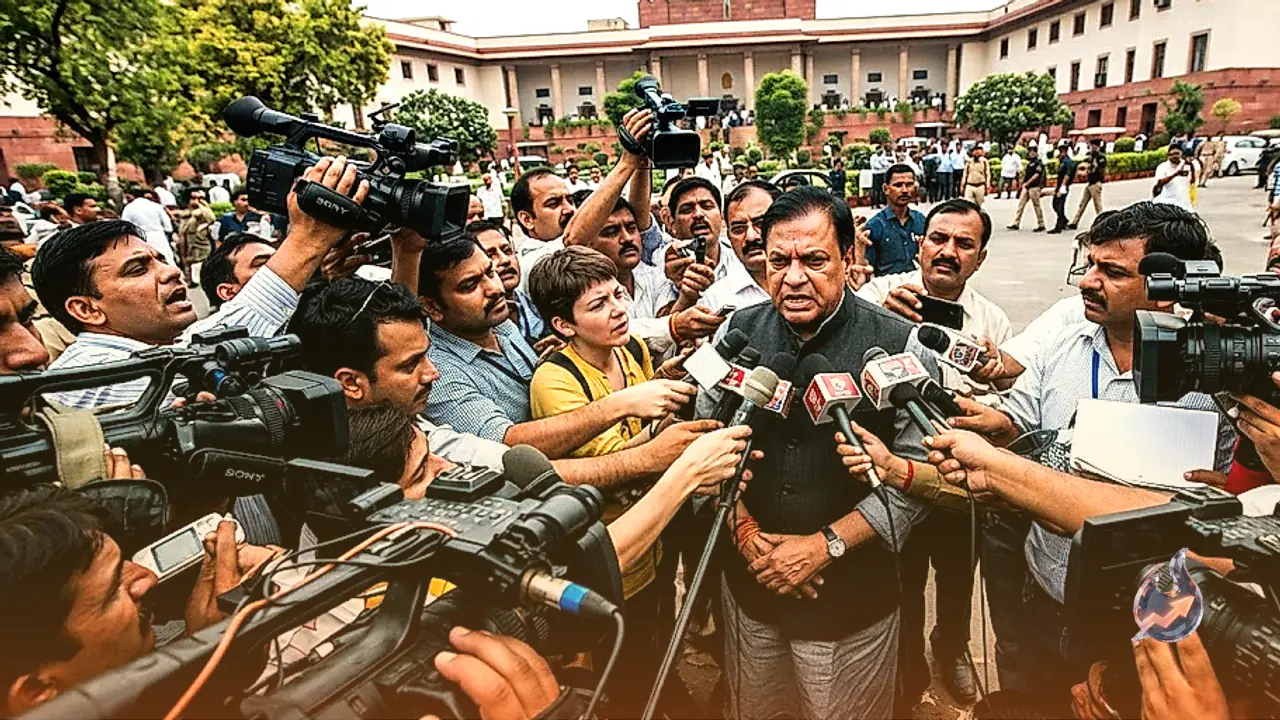
The apex court's ruling shines a harsh spotlight on the severe infrastructural failures in cities like Delhi, where pavements are either heavily damaged, occupied, or entirely non-existent. Commenting on the significance of the judgment, senior advocate Ashok K. Singh suggested that this ruling could serve as a powerful catalyst for change. By reinforcing the constitutional and legal obligations of local administrative bodies to protect public spaces, the verdict establishes a clear framework of accountability.
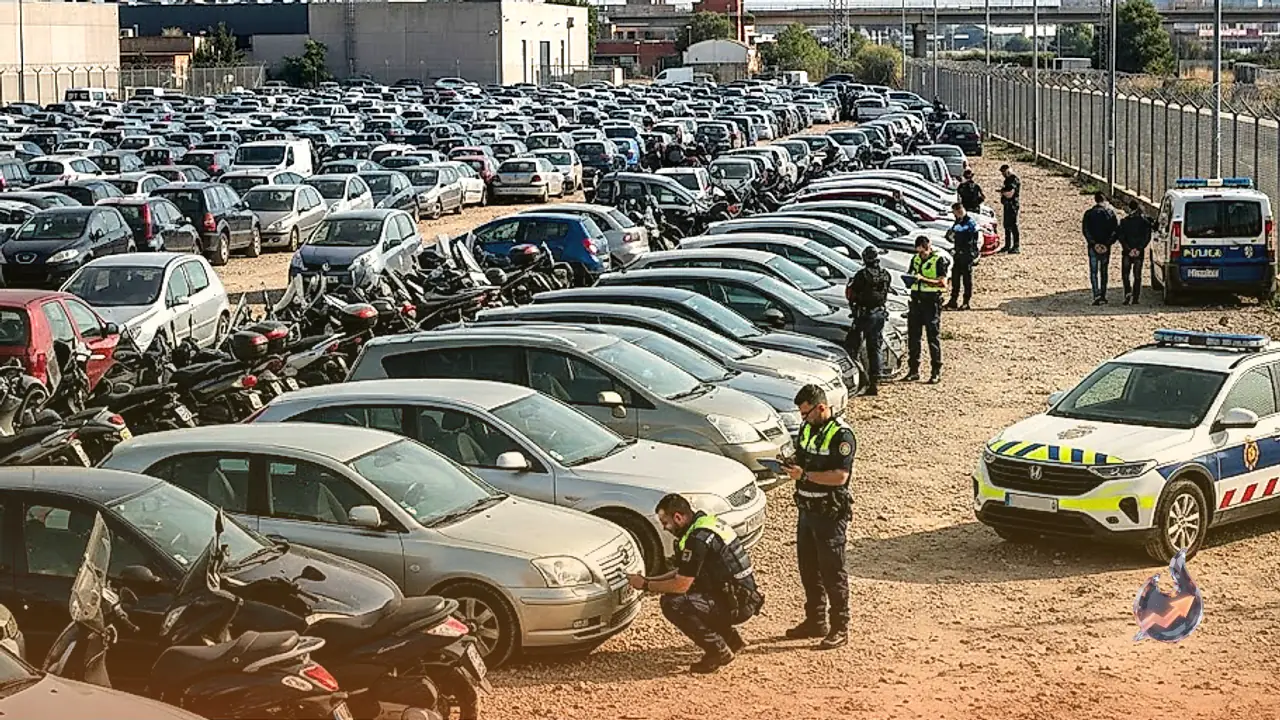
In an interview, Ashok K. Singh emphasized that the judgment would significantly increase public awareness regarding the rights of pedestrians. It provides a strong legal mandate to accelerate and enforce anti-encroachment drives, sending an unambiguous message to municipal bodies that ensuring safe and unobstructed passage for citizens is a constitutional duty they cannot ignore. He pointed out that this crisis is particularly severe within the jurisdictions of the Municipal Corporation of Delhi (MCD) and the New Delhi Municipal Council (NDMC). Singh alleged that both MCD and NDMC have routinely permitted footpaths to be converted into commercial parking spaces, where rows of vehicles are parked systematically, leaving absolutely no room for people to walk safely.
The Commercialization of Pedestrian Spaces
According to the senior advocate, the problem goes far beyond casual illegal parking; it points to an organized commercialization of public pathways. Singh noted that footpaths in many prominent areas of Delhi appear to have been leased out systematically for paid parking businesses. If a motorist stops their vehicle on a footpath anywhere in the city, an operator will immediately approach them to hand over a parking receipt. These receipts, Singh claimed, are frequently issued under official parking schemes sanctioned by agencies like the NDMC. Essentially, private contractors are being granted formal licenses to collect parking fees from vehicles parked directly on pedestrian footpaths.
This widespread misuse of roads and footpaths is further corroborated by enforcement data. According to official government figures, the Delhi Traffic Police issued as many as 4,30,202 challans for improper, obstructive, or illegal parking between January and March of this year alone. This massive volume of traffic tickets highlights that obstructionist parking has become the most prevalent traffic violation in the city, directly compromising the daily safety of commuters and pedestrians.
Frustrated Citizens Detail Their Daily Struggles
The direct impact of this administrative failure is borne by ordinary residents who must navigate these hostile environments daily. Roshan Kumar, a resident of Delhi, expressed his frustration, noting that the situation causes immense daily distress. Although the government has previously promised to take strict action against encroachment, the problem has only become more visible and severe over time, leaving virtually no walking space for the public. Kumar shared a terrifying personal experience, recalling how he and his child narrowly escaped a serious road accident just a few days ago while trying to walk along a blocked street. He lamented that pedestrians have been completely squeezed out of public spaces, and challenging these violations is incredibly difficult for ordinary citizens, who often do not even know which authority to approach to file a complaint.
Another local resident, Sanjay Kumar, echoed these sentiments, stating that pedestrians are always the primary victims of this urban mess. He criticized the entire concept of converting footpaths into parking zones, calling it fundamentally flawed. Looking at the rows of vehicles occupying public walkways, Sanjay questioned the justification for allowing cars to usurp space meant for people, adding that in several neighborhoods across Delhi, footpaths have become completely invisible due to extensive encroachment.
Data and Research Reveal a Deadly Reality
These personal struggles are fully backed by rigorous academic research and official crash data. A joint study conducted by IIT Delhi's Transportation Research and Injury Prevention Centre (TRIP-C) and University College London revealed that approximately 44% of Delhi's roads do not have any footpaths at all. This lack of basic infrastructure forces nearly half the city's pedestrians to walk directly on the carriage-way, sharing space with fast-moving traffic.
The lack of safe pedestrian infrastructure has resulted in a devastating loss of lives. According to Delhi Police statistics, in 2025, road accidents claimed the lives of 649 pedestrians, while 1,738 others sustained injuries. A detailed analysis of these fatalities shows that private cars were the biggest killers, causing 92 pedestrian deaths, followed by two-wheelers, which accounted for 75 deaths, and heavy goods vehicles, which were responsible for 43 pedestrian fatalities. Furthermore, the joint study by IIT Delhi highlighted that in 2022, out of a total of 1,461 fatal road accidents recorded in the capital, pedestrians made up a staggering 43% of the deceased. These figures clearly illustrate the extreme hazards associated with walking in Delhi, emphasizing the urgent need for local authorities to execute a complete overhaul of pedestrian infrastructure.