



















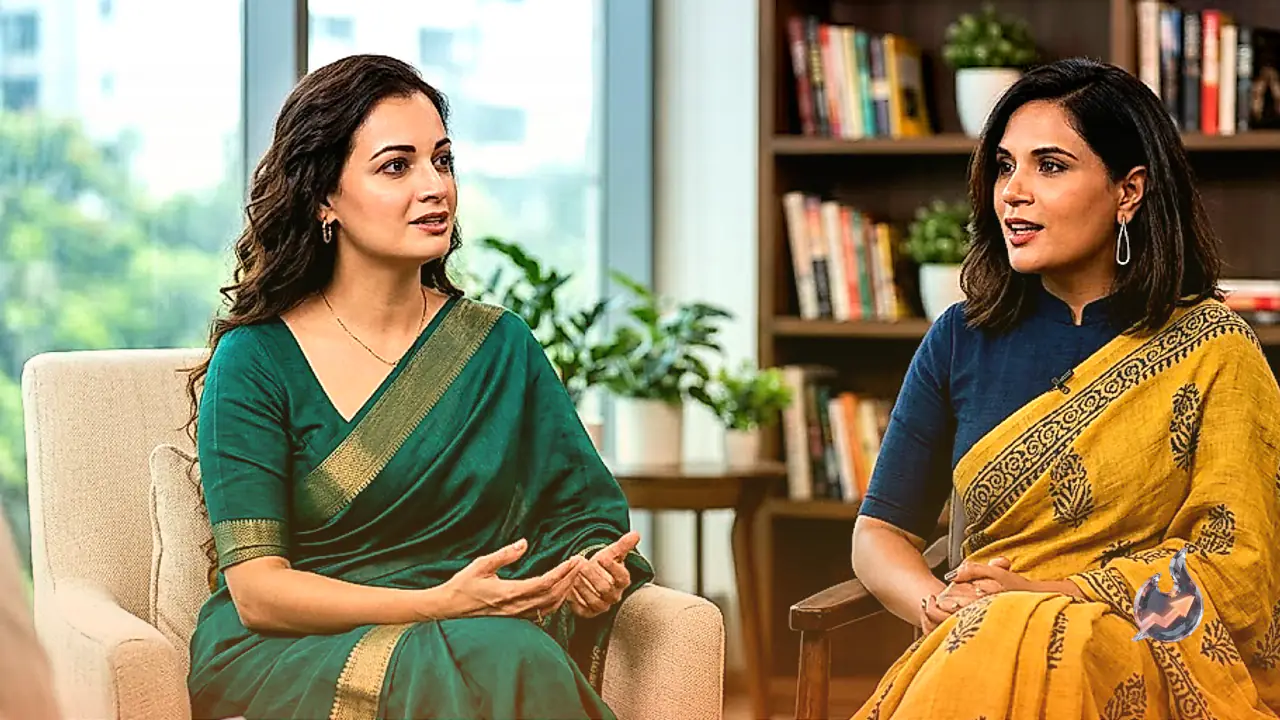

Recently, an advertisement featuring actress Kriti Sanon celebrating Rakshaबंधन sparked significant controversy online. She was seen wearing a bralette top paired with an Indo-Western outfit while tying a rakhi, which drew sharp criticism from viewers. Actress Kangana Ranaut also condemned the ad, comparing it to celebrating a festival in a bikini. The backlash grew so intense that the company was eventually forced to take down the advertisement. Following this, a new interview has surfaced featuring actresses Dia Mirza and Richa Chadha discussing women's clothing and why attire constantly becomes a point of public debate.
In the viral interview, the host asks the two actresses whether women wearing revealing clothes is destroying culture. Responding to this, Dia Mirza remarks that during the Mughal era in India, women did not wear anything under their sarees, questioning how that could possibly ruin culture. Expanding on the topic of clothing, Richa Chadha points out that those who raise questions about attire have perhaps never studied history or religion, and seem to have forgotten the temples of Khajuraho.
Weighing in further, Dia Mirza argues that when discussing culture, textiles, clothing, and history, people should remember that sarees were originally woven and worn without any blouses. She adds that tribal communities living close to nature still do not wear blouses. She mentions seeing paintings and artwork from the Mughal period where women wore transparent kurtas, noting that bras did not exist back then either. According to her, the culture of covering breasts and wearing blouses is a Victorian import and not traditional Indian culture.
The video triggered intense reactions from social media users after it was posted online. Sharing the clip on X, Amit Kumar Sindhi wrote that people questioning the remarks should remember how human clothing evolved from early times. Another user commented that the actresses omitted how clothing norms shifted following foreign invasions in India, while numerous other internet users engaged in debates regarding historical, political, and social contexts.