




















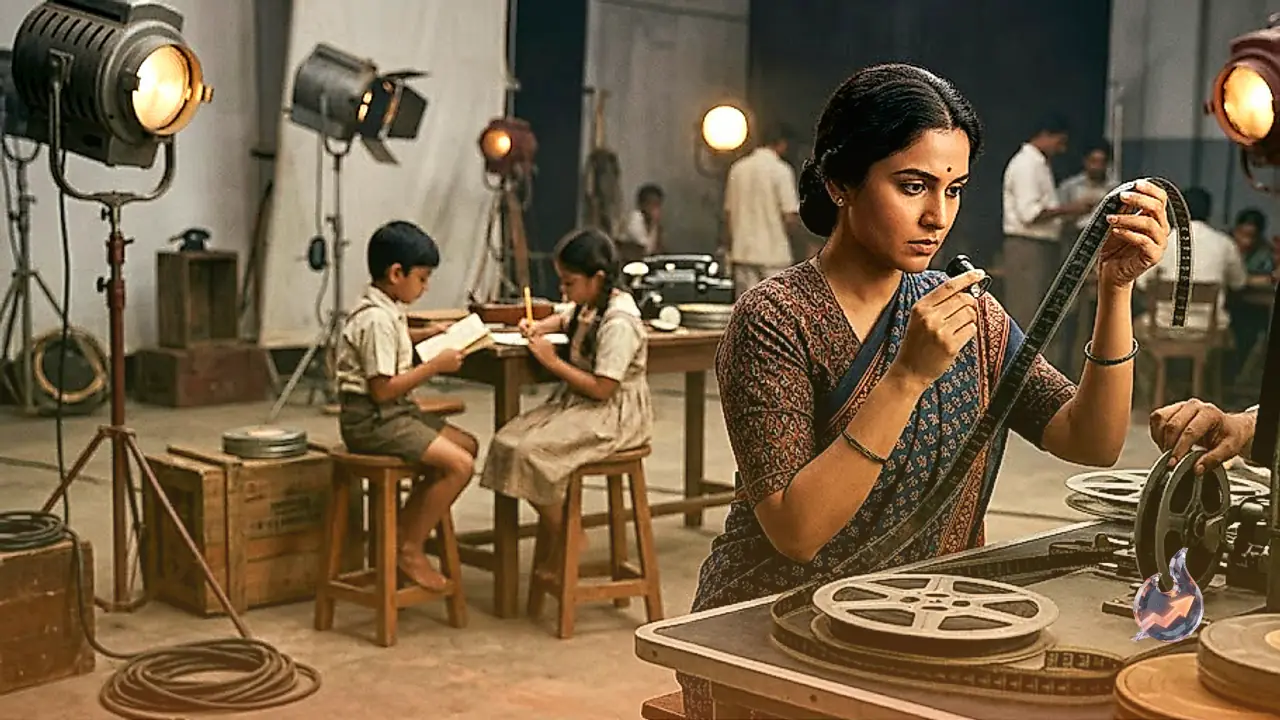

At a time when conservative society considered it scandalous for women from respectable backgrounds to work in cinema, Durga Khote took a brave step into the film industry purely to feed and raise her children independently. Originally named Vita Lad, her fascination with dramatic arts took root in her childhood when she accompanied her father to witness live theatrical performances. She was married at an early age to Vishwanath Khote, and the couple went on to have two sons. However, tragedy struck swiftly when her husband passed away, leaving her a widow at the tender age of 21. Faced with the heavy responsibility of single-handedly supporting two young sons and achieving financial stability, she decided to seek employment in films, taking a leap that openly challenged prevailing social conventions.
The Stumble of Her Debut and Intense Social Backlash
Her cinematic journey commenced in 1931 with the release of the film Farebi Jaal, which met with immediate failure and failed to find favor among viewers. The commercial rejection of her first venture escalated existing public scrutiny. In her autobiography, Mee Durga Khote, she detailed how both the Lad and Khote lineages enjoyed considerable esteem and influence in society, meaning her decision to act in pictures was already being discussed with great skepticism. Once the movie collapsed critically and commercially, a vocal section of the Maharashtrian community reacted with intense hostility. The disapproval reached such severe proportions that stepping outside her residence became virtually impossible, leaving her confined to her home in the aftermath.
Breakthrough with Ayodhyecha Raja and Unforgettable Roles
The turning point that transformed her career arrived shortly afterward in 1932, when she portrayed Queen Taramati in the landmark Marathi motion picture Ayodhyecha Raja. The historic success of this production validated her talent and established her as a respected, sought-after performer. In subsequent years, she consolidated her stature through memorable performances in notable productions such as Maya Machhindra, Amar Jyoti, Bharat Milap, Sita, and Prithvi Vallabh. Over the decades, she immortalized numerous screen characters, most prominently portraying Queen Jodhabai in the epic Mughal-e-Azam and Queen Kaikeyi in Bharat Milap. Her appearances in acclaimed mainstream features such as Bidaai, Bawarchi, Bobby, Abhimaan, and Karz continue to be celebrated, with her performance in Bidaai winning her the Filmfare Award for Best Supporting Actress.
Directorial Ventures, Highest Honors, and Final Chapter
Durga Khote refused to restrict her professional ambition to acting alone, choosing instead to pioneer new creative paths behind the camera. In 1937, she took on the dual responsibilities of producer and director for the feature film Saathi. As the industry evolved in later years, she maintained an active presence by producing commercial advertisements, non-fiction documentaries, and television projects. Her enduring contribution to Indian culture earned her the Padma Shri in 1968, followed by Indian cinema's highest recognition, the Dadasaheb Phalke Award in 1983, a milestone officially preserved in the records of the Directorate of Film Festivals under the Government of India. Her final screen appearance came in the 1983 film Daulat Ke Dushman. The pioneering actress passed away on September 22, 1991, at the age of 86, leaving behind an indelible legacy.