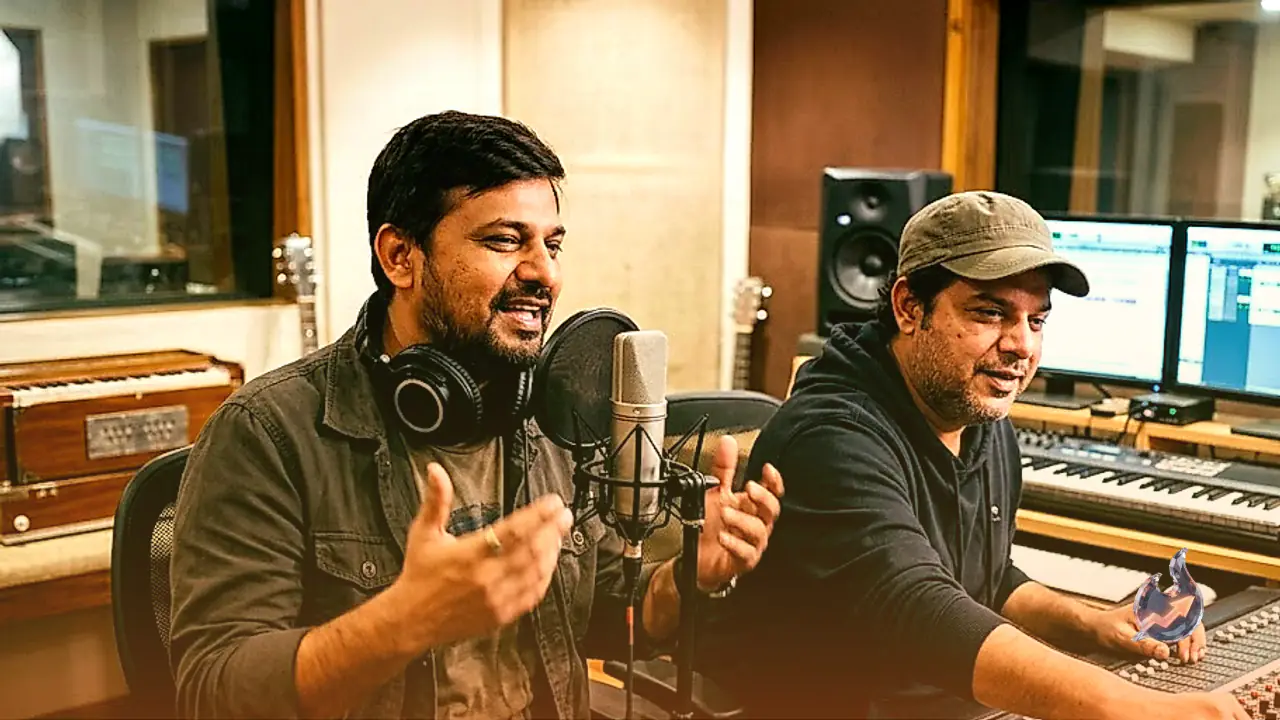




















Renowned Indian cinema screenwriter and lyricist Javed Akhtar has once again sparked debate by raising deep questions around religious belief, personal faith, and atheism. During a detailed conversation with Saurabh Dwivedi, he argued that religion across the globe is rarely a conscious, independently explored decision made by individuals. Instead, he described it as a familial inheritance received at birth. Reflecting openly on why people turn to faith, he examined why humans place their trust in a higher power and whether psychological comfort can ever serve as evidence of truth.
With a literary and cinematic career spanning five decades, Javed Akhtar has shaped cultural narratives through landmark scripts such as Sholay, Deewaar, and Zanjeer. Known for his candid perspective on social and philosophical matters, he acknowledged during the interview that faith often provides emotional refuge during life's most challenging phases. However, he raised the critical question of whether personal solace derived from a belief is enough to prove that the belief itself corresponds to reality.
The Elon Musk Example on Solace Versus Objective Truth
Javed Akhtar explained that people frequently place their confidence in an unseen power because it gives them the comforting assurance that someone is watching over them and taking care of their lives. While this psychological anchor can alleviate anxiety, he pointed out that emotional comfort does not validate the underlying premise.
To illustrate his point clearly, he shared a hypothetical scenario involving business figure Elon Musk. Akhtar suggested that if an individual genuinely convinces themselves that Elon Musk is their brother and that billions of dollars are arriving next month, that belief will undoubtedly bring immense happiness, optimism, and emotional relief. However, merely holding that conviction with absolute sincerity does not make it a factual reality. He emphasized that the peace of mind gained from believing in something must never be confused with whether that thing is objectively true.
Inherited Faith and the 99 Percent Reality
Turning to how religious identity operates across societies, Javed Akhtar pointed out that roughly 99 percent of people die in the very religion into which they were born. According to him, this reality demonstrates that faith is rarely an autonomous, deliberate choice made by an adult mind. Instead, people inherit their beliefs, rituals, and practices from their parents and household upbringing, carrying them through life without subjecting them to critical examination.
Relying on Logic and Ideas Over Individuals
Akhtar emphasized the necessity of separating individual personalities from their ideas. He argued that blind faith in specific individuals is flawed because human beings can change their stances over time, whereas logical reasoning and rational criteria remain objective and dependable. In his view, religious adherence often relies on unquestioning deference to tradition, parents, or charismatic preachers.
He also dismissed the popular assertion that all religions are identical. Akhtar highlighted that there are 10 major religions in the world, and claiming they are all the same ignores reality, as their core doctrines, philosophies, and teachings differ significantly from one another.
A Consistent Public Stance on Rationalism and Atheism
This discussion aligns with Javed Akhtar's longstanding public identification as an atheist. In June 2026, while responding to a user on social media, he reaffirmed his atheist stance and stated that his community consists of all Indians. His willingness to debate faith publicly has also drawn widespread attention in the past. In December 2025, at the Constitution Club in Delhi, Javed Akhtar engaged in a two-hour debate with Islamic scholar Mufti Shamail Nadwi on the central question of whether God exists.