

















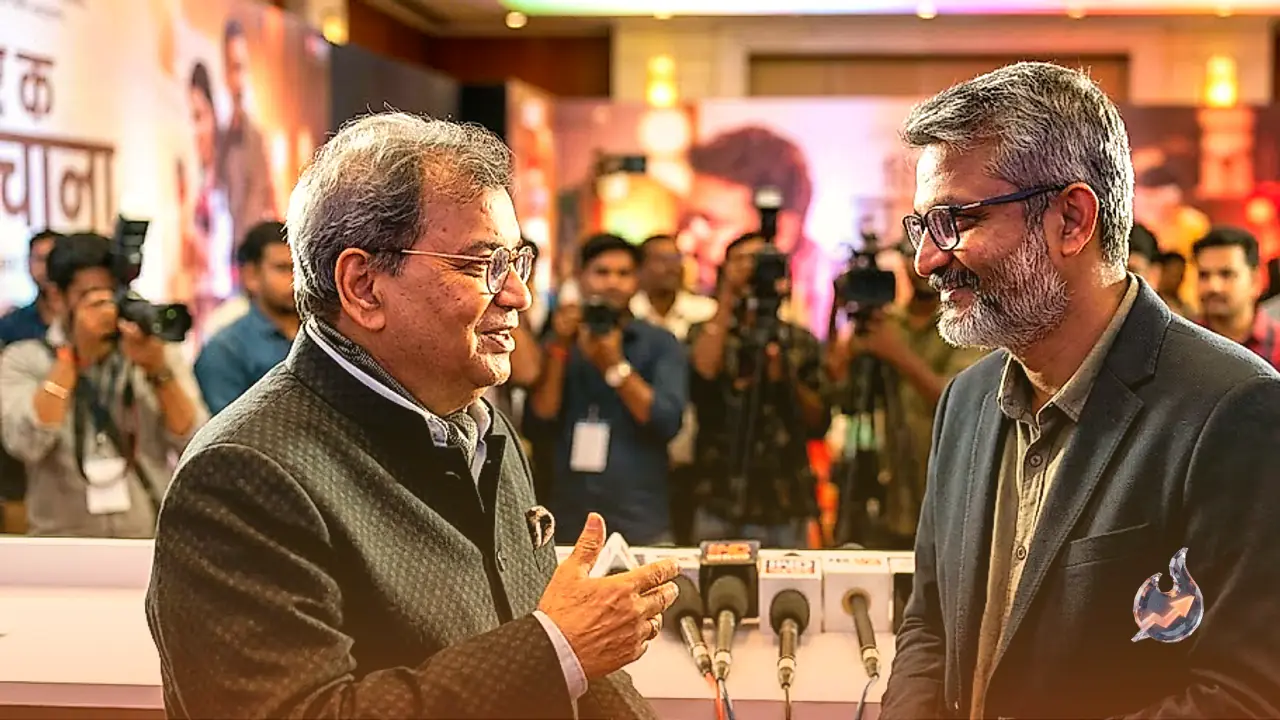

Renowned Indian filmmaker Subhash Ghai has voiced firm confidence in director Nitesh Tiwari's ambitious cinematic project Ramayana, asserting that the grand undertaking rests in capable creative hands. Speaking during a panel session centered on modern entertainment, artificial intelligence, and evolving narrative formats, the veteran director explained that despite rapid technological disruptions across filmmaking, the fundamental core of cinema will always be determined by powerful human emotions and rich substance.
The Supremacy of Human Direction Amid Technological Shifts
Reflecting on the increasing integration of artificial intelligence and innovative production techniques, Subhash Ghai clarified that no computational system can diminish the indispensable craft of a skilled filmmaker. He pointed out that while software may reshape how scenes are constructed or visuals are rendered, the nuanced capacity to connect with an audience through genuine sentiment remains exclusively human. According to him, an accomplished storyteller will always be paramount in guiding and molding narrative vision.
Highlighting this enduring dynamic, the filmmaker noted that this creative reality is destined to stay true for the next two centuries. Regardless of how sophisticated technical tools become, their effective implementation will always demand a perceptive director capable of injecting heart and clarity into the frame. Content, he underscored, has consistently reigned as the true foundation of cinematic impact, and visual grandeur alone cannot substitute for purposeful storytelling.
Timeless Epics and the Bridge Between Writing and Directing
Differentiating between the complementary roles of a screenwriter and a director, Subhash Ghai elaborated that while a writer articulates narrative concepts on paper, a director breathes tangible visual life into them through the lens. To demonstrate the permanence of potent narratives, he cited the timeless legacy of ancient Indian epics such as Ramayana and Mahabharata, which have continued to enthrall countless generations across varied eras.
From grassroots theatrical Ramleela stagings across communities to groundbreaking television adaptations and contemporary big-screen spectacles, the presentation mediums have dramatically evolved, yet the fundamental spirit and philosophical core of these epics have endured unaltered. He emphasized that the essential moral and emotional architecture of such grand histories cannot be inverted or manipulated, as the underlying narrative and emotional truth remain constant regardless of the medium.
Namit Malhotra's Big-Budget Canvas and the Star-Studded Ensemble
The upcoming cinematic adaptation, backed by producer Namit Malhotra, represents one of the largest scale ventures planned for Indian cinema. Subhash Ghai emphasized that coupling vast financial resources with a grounded and insightful director like Nitesh Tiwari ensures that the film's monumental scale does not overshadow its narrative depth. He highlighted that a high-profile production requires seasoned leadership to translate monumental vision into emotionally resonant cinema.
The extensive ensemble cast features Ranbir Kapoor stepping into the central role of Lord Ram, paired with Sai Pallavi portraying Goddess Sita. Kannada cinema star Yash will portray the antagonistic force of Ravana. The expansive casting lineup also brings together Sunny Deol, Lara Dutta, Vivek Oberoi, and Kajal Aggarwal in prominent roles. Conceived as a multi-part cinematic journey, the project will premiere in two successive installments, with the initial chapter scheduled for release during Diwali 2026 and the concluding part arriving in theaters for Diwali 2027.