

















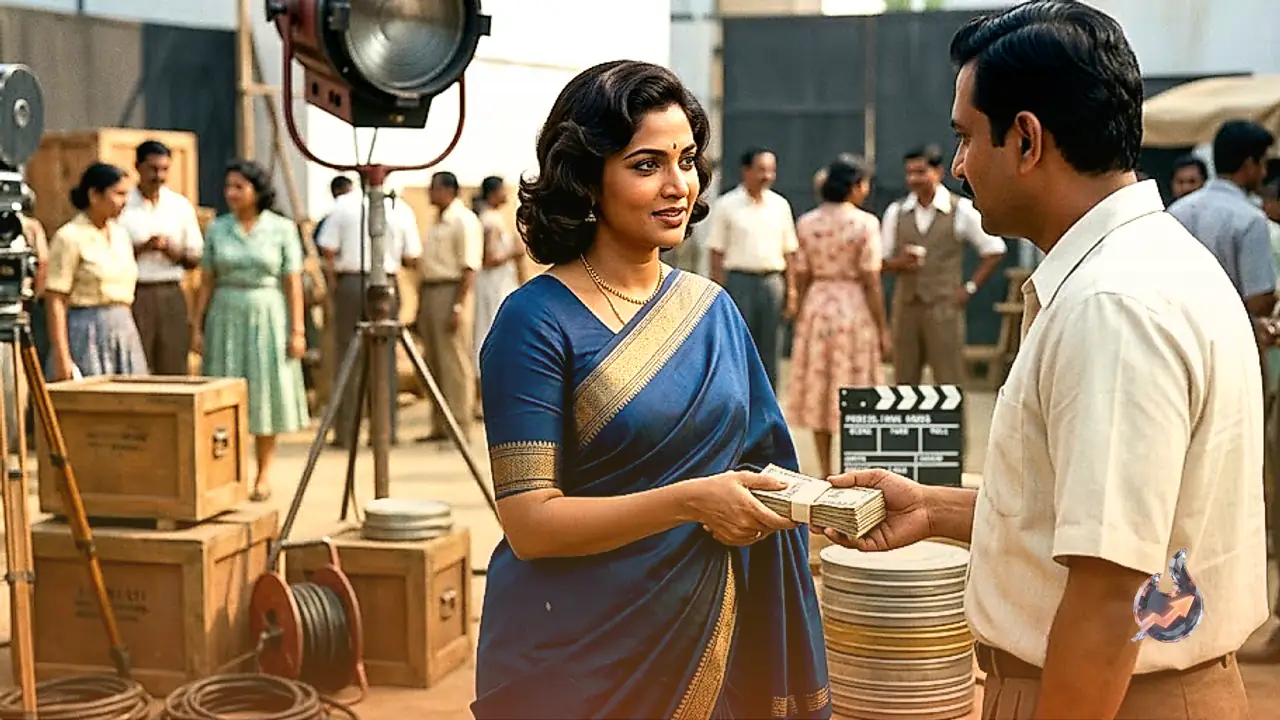

During an era when ten grams (one tola) of gold was priced at a modest 40 rupees, one leading lady in Indian cinema was commanding an astonishing acting fee of 25,000 rupees per project. That single payment was so substantial that it accounted for nearly half of an entire motion picture's total production budget. The trail-blazing figure behind this feat was Bhanumathi Ramakrishna, a formidable superstar of the 1940s and 1950s who carved out an unmatched legacy as the very first female superstar of Telugu cinema, reshaping the industry across creative, technical, and commercial boundaries.
Mastery of Eight Crafts and High Praise from Sarvepalli Radhakrishnan
Audiences and contemporaries widely celebrated Bhanumathi Ramakrishna as an Ashtavadhani, honoring her rare ability to demonstrate absolute mastery across eight artistic disciplines simultaneously. Far from restricting her work to acting, she was an accomplished singer, film director, music composer, writer, editor, dancer, and studio entrepreneur. Her extraordinary creative range caught the attention of India's first Vice President, Dr. Sarvepalli Radhakrishnan, who became a vocal admirer of her vast contributions to Indian arts and cinema.
A Breakthrough Debut and Unstoppable Stardom
Bhanumathi Ramakrishna made her cinematic acting debut in the 1939 film ‘Vara Vikrayam’. Broad commercial popularity soon followed with her standout appearance in ‘Krishna Prema’, while the movie ‘Swargaseema’ propelled her into full-blown stardom across South India. Expanding into Tamil cinema, she made her debut opposite MGR in the production ‘Raja Mukthi’. In parallel with her acting responsibilities, she took charge of music direction for several feature films, composing original scores that stood out for their melodic richness.
The Milestone Production of Chandirani in 1953
In 1953, Bhanumathi Ramakrishna stepped into the director's chair for the first time with ‘Chandirani’. The project showcased her unmatched creative stamina on a grand scale: she directed the film, produced it under her own banner, composed its complete musical soundtrack, and took on a demanding double role across three distinct linguistic releases, namely Hindi, Telugu, and Tamil. Handling writing, production, music, and dual-lead performances simultaneously across multiple languages remains one of the most ambitious feats in Indian film history.
Defying Family Opposition and Founding Her Own Film Studio
While working on the sets of ‘Krishna Prema’, Bhanumathi fell in love with a struggling assistant director, PS Ramakrishna Rao (PC Ramakrishna Rao). Her father strongly opposed their union because she was already a celebrated screen star while Rao earned very little. Refusing to yield her personal choices to convention, Bhanumathi eloped with him in 1943. She subsequently made history as the first woman in India to establish her own full-fledged film studio, naming the enterprise after her son. Through this setup, she launched her husband as a full-time producer and filmmaker, with era-defining superstars NTR and ANR regularly headlining major productions mounted by her company.
National Honors and Refusing Commercial Endorsements on Principle
Government recognition matched her commercial eminence: Bhanumathi Ramakrishna became the first actress from South India to be honored with a Padma award by the Government of India, and she was also the final recipient to receive a President's Award for acting. Her professional integrity was equally uncompromising. At a time when virtually every top leading lady appeared in advertisements for Lux soap, Bhanumathi was offered a lucrative fee to endorse the product. She turned down the lucrative sum outright, explaining that since she did not personally use the soap in her daily life, she refused to lie to the public for financial gain. Her decorated cinematic journey concluded on screen with her final performance in the 1998 release ‘Pelli Kanuka’.