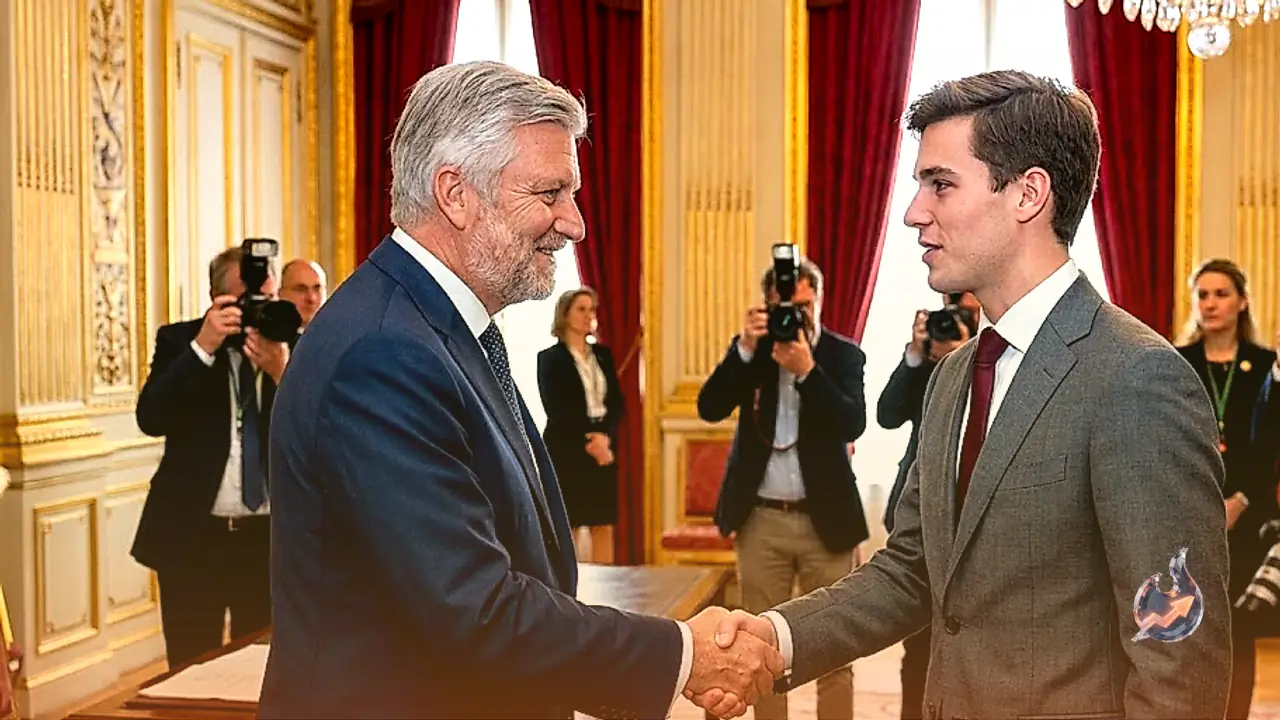





















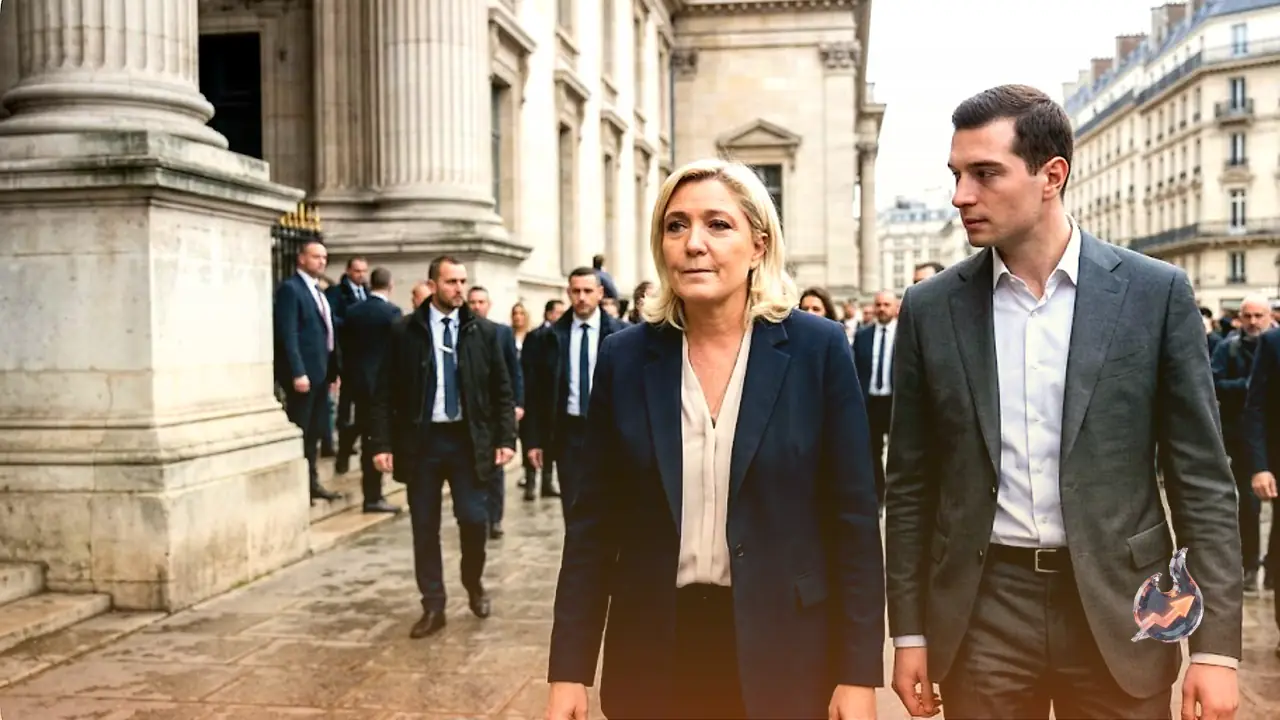

Marine Le Pen, 57, stood shoulder to shoulder with Jordan Bardella over the weekend in a carefully staged show of unity, just days before a Paris appeal court delivers a verdict that could shut the door on her presidential ambitions for good. If judges bar her from standing in the 2027 election, it may bring down the curtain on a political career that has defined France's hard right for a generation.
A Verdict That Could Close a Career
Speaking to supporters over the weekend in Lievin, the town at the heart of her constituency in the Pas-de-Calais region, Le Pen told the crowd that if the judiciary barred her from running for the presidency, she would instead put her energy into backing her young protege, Jordan Bardella. She is a trained lawyer and an accredited cat breeder, so she does have options outside frontline politics, but she has been immersed in it since childhood, and it is difficult to picture her stepping into a supporting role after everything she has built. To some observers watching her in Lievin, it felt less like a woman fighting for her future and more like someone quietly preparing to hand over the baton to the next generation. At one point she was seen singing along to the words of a wistful 1980s song by the singer Dalida, written from the perspective of a performer in the twilight of her career, its chorus built around a longing to die on stage in front of the spotlights.
Three Runs, Two Defeats to the Same Rival
Le Pen has tasted electoral defeat before. She finished third in the 2012 presidential race, then came in as runner-up to Emmanuel Macron in both 2017 and 2022. This time, with polls putting her ahead heading into next year's vote and with Macron constitutionally barred from running again, 2027 would represent her best shot yet at the presidency, which makes the timing of the court's decision especially consequential.
Fifteen Years at the Head of the Movement
For fifteen years, Le Pen has been the most powerful figure in France's anti-immigration politics. Whatever the court decides could effectively close out a family era that stretches back to the 1970s, when her father Jean-Marie Le Pen founded the National Front. She took charge of that movement in 2011 and spent the years since steadily erasing his imprint on it, first inside the National Front itself, and later by rebranding it entirely as the Rassemblement National, known in English as the National Rally.
The Bomb Attack That Shaped a Childhood
Marine Le Pen was just eight years old in November 1976 when a bomb attack destroyed her family's flat in central Paris. She survived along with her two elder sisters, Marie-Caroline and Yann, and their parents, all escaping with only minor scratches. She later described the attack as a night of horror, the moment she first understood that her father's life was bound up in politics. Family life did not stay settled for long. In September 1984, eight years after the bombing, her mother Pierette left the family home, having taken up with Le Pen's future biographer, and later went on to pose for Playboy. All three sisters ultimately sided with their father, but it was Marine, the youngest of the three, who went on to inherit his political legacy in full. She remained fiercely protective of him for years, telling French television in 2004 that a person is born Le Pen's daughter and dies Le Pen's daughter, calling him the man of her life and crediting him with making her the woman she became.
A Lawyer Who Could Not Escape Her Surname
By the early 1990s, Marine Le Pen had qualified as a lawyer in Paris and had already begun stepping into politics. Her surname followed her into the profession, and other lawyers reportedly boycotted her because of her family background, pushing her further toward building a career inside the National Front itself. She rose to become vice president of the party in 2003 and won a seat in the European Parliament the following year, in 2004. Her father reached the high point of his own political career in 2002, finishing second to Jacques Chirac in the presidential race with 18% of the vote, though it would take another nine years before his daughter formally took over as party leader. She stayed on as a Member of the European Parliament until 2017. A conviction handed down last year in the so called fake jobs case found that she had played a central role in a scheme that funnelled 1.4 million euros, worth around 1.2 million pounds, of European Parliament money toward paying party assistants who were not actually doing that work.
A Kremlin-Linked Loan and a Handshake That Would Not Go Away
For years, the National Front struggled simply to raise money, because French banks refused to lend to a party with a racist and antisemitic history. That left Le Pen's party with little choice but to turn to a Russian Czech bank with links to the Kremlin, and it did so in the very year that Vladimir Putin carried out his illegal annexation of Ukraine's Crimea. Le Pen went on to repeatedly back Putin's occupation of the territory, and on the eve of the 2017 presidential race she travelled to Moscow to meet him at the Kremlin. Over the years she had made no secret of her admiration for the Russian leader, but the image of the two of them shaking hands would later come back to haunt her politically.
Two Defeats to Emmanuel Macron
She won almost 11 million votes in the 2017 race, a record for the National Front at the time, but Emmanuel Macron told her bluntly during a bad tempered televised debate that France deserved better than her, and he went on to take over two thirds of the electorate. Five years later, with another presidential vote looming and Putin on the verge of launching a full scale invasion of Ukraine in February 2022, she told the BBC that she did not believe at all that Russia wished to invade Ukraine, though she added that if it did happen, she would back Ukraine's sovereignty.
Softening the Image Without Softening the Policy
Her biggest achievement by far has been what the French call dedemonisation, the process of stripping away the toxic reputation her father built, all in pursuit of dragging the movement into the political mainstream. The anti-immigration policies themselves remain fully intact, including promises to prioritise housing, jobs and welfare benefits for French nationals ahead of others, but the open racism and antisemitism associated with her father, who died last year, is gone from the party's public face. Le Pen herself has faced the courts before. In 2015 she was acquitted of inciting racial hatred over comments comparing the sight of Muslims praying in the street to the Nazi occupation of France during the Second World War.
Breaking With Her Own Father
Her decision to expel Jean-Marie Le Pen from the National Front in August 2015 marked the peak of a bitter family feud, one so intense that at one point he suggested that his own daughter might want him dead. After his death, she said she would never forgive herself for that decision, admitting that she knew it had caused him immense pain. In 2018, a year after losing the presidential race to Macron for the second time, she rebranded the party entirely, giving it the new name and identity it carries today. The purge of the old guard did not stop with her father. Steeve Briois, an old family friend who still serves as mayor of the National Rally stronghold of Henin Beaumont, was pushed out of the party's executive, and he later complained publicly about a shift in priorities toward immigration and identity issues at the expense of the everyday social concerns that had once defined the movement. With less than a year to go before the next presidential vote, that rebranding effort now looks essentially complete, though the next defining political moment for the National Rally may belong not to her but to Jordan Bardella.
A Life With Cats Beyond the Party
A life entirely outside politics still seems unlikely for Marine Le Pen, but it is not impossible to imagine. Back in 2015, after a defeat in regional elections, she told the newspaper Le Parisien that she could simply stop everything and do something else entirely, suggesting she might breed cats instead. Five years later she actually followed through, passing a formal diploma in cat breeding, and for a short stretch she even made a small amount of money from the venture, at one point listing the names of all six of her cats during an interview. That side project appears to have fizzled out since, but as recently as last year, in October 2025, she was photographed walking into the French prime minister's residence holding a cat carrier behind her back, a small reminder that even at the height of a career defining legal battle, there is another, quieter side to her life that has nothing to do with the presidency at all.