
























Global financial markets are entering an exceptionally busy trading session dominated by a series of preliminary Purchasing Managers Index (PMI) surveys across major economies including Australia, Europe, the United Kingdom, and the United States. Heading into this data-heavy Friday, the US Dollar maintains a modest bid against a basket of major currencies, reflecting cautious sentiment among institutional investors and currency traders. Market participants across continents are preparing for a dense stream of economic activity indicators while keeping a close eye on interest rate expectations, government bond market interventions, and ongoing geopolitical tensions in the Middle East.
Foreign Exchange Trends and Major Currency Pair Dynamics
The foreign exchange market is witnessing notable divergence among major currency pairs, with the US Dollar demonstrating solid strength across multiple fronts. The Greenback posted its most pronounced gains against the Japanese Yen, driving the USD/JPY currency pair upward to reclaim territory beyond the key 159.00 barrier. This upward momentum in USD/JPY comes as hawkish commentary from Federal Reserve officials continues to bolster US yields, putting persistent downward pressure on the Yen.
In contrast, the British Pound showed resilience earlier before surrendering some of its intraday advances against the American currency. The GBP/USD exchange rate managed to cling to daily gains on Thursday, though it gradually receded toward the 1.3630-1.3620 range. The pullback in Cable occurred despite the modest bounce in the US Dollar, as market participants cautiously positioned themselves ahead of a crucial slate of UK macroeconomic data scheduled for release on Friday.
Meanwhile, the Euro experienced downward pressure against the US currency, with EUR/USD trading with modest losses around the 1.1670 mark. The single currency retreated all the way down from earlier intraday peaks beyond the 1.1700 figure. This decline in EUR/USD reflects the acceptable rebound in the US Dollar, as market participants continue to closely track developments and rate expectations originating from the US money market.
Energy Commodities and Precious Metals Performance
In commodity markets, energy prices are continuing to trend upward due to lingering geopolitical risks. West Texas Intermediate (WTI) crude oil extended its recent advance, pushing steadily toward the $87.00 per barrel mark. Ongoing conflict and elevated geopolitical tensions across the Middle East remain the primary catalyst driving oil prices higher, as energy traders factor in potential supply chain risks.
Simultaneously, the precious metals sector displayed renewed vigor on Thursday. Gold managed to regain its composure and reclaim the critical area beyond the $4,500 mark per troy ounce. The daily recovery in the yellow metal took place alongside a humble improvement in the US Dollar and a stabilization in US Treasury yields, following Wednesday's pronounced retracement across the yield curve.
Cryptocurrency Market Rally and Digital Asset Trends
Digital asset markets are extending their upward trajectory on Thursday, led by a broad-based rally across high-cap cryptocurrencies. Bitcoin (BTC) spearheaded the bullish momentum by surging past the $70,000 threshold, attracting strong buying volume as market sentiment strengthened.
Following Bitcoin's upward movement, Ethereum (ETH) remained firmly bullish, holding its valuation above the $2,200 level. At the same time, Ripple (XRP) staged a clear recovery, climbing back above the $1.15 mark as buyers tightened their grip across major crypto trading pairs.
US Treasury Yields Stabilize After Unexpected Debt Buyback Policy Announcement
In the fixed income space, US Treasury yields stabilized on Thursday following a sharp decline observed during Wednesday's trading session. Benchmark 10-year US Treasury yields edged back up toward 4.672%, reflecting a modest correction after bond prices rallied earlier in the week.
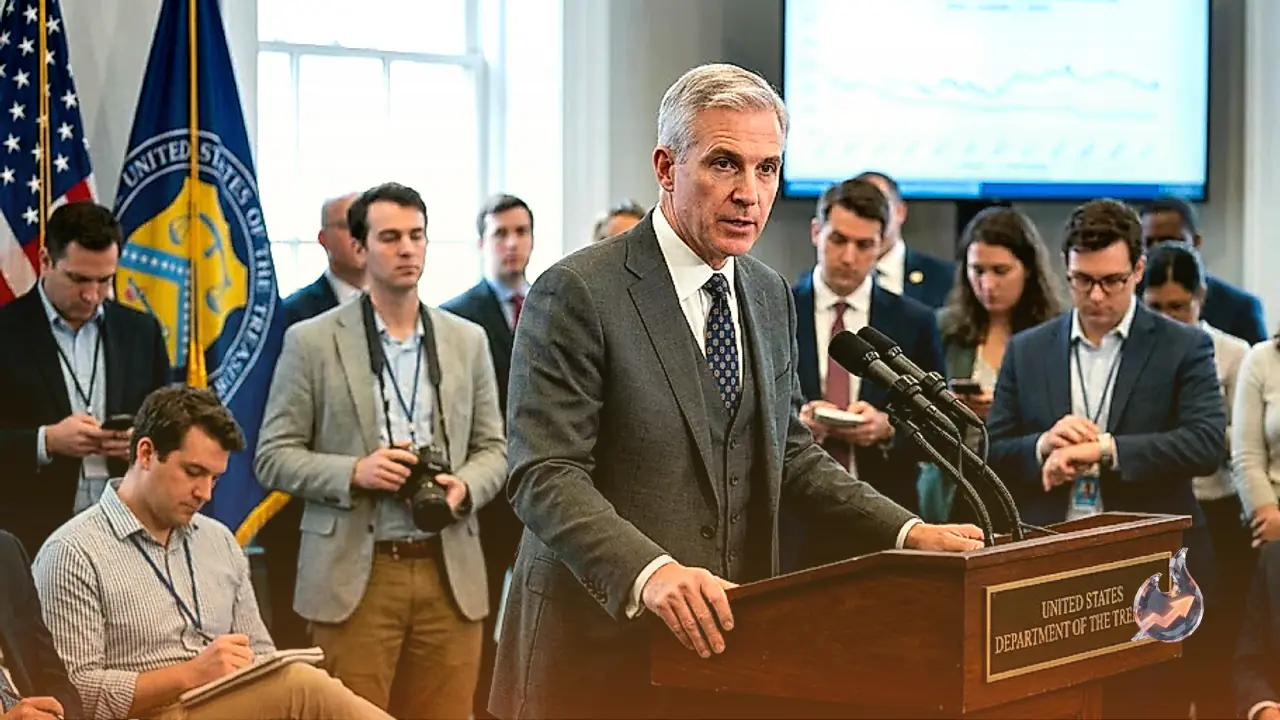
This stabilization in yields comes after an unannounced move by the US Treasury Department on Wednesday. At 12:32 GMT, the Treasury departed from its scheduled calendar to announce a significant expansion of its liquidity support buyback operations. The department revealed that it will double the size of its liquidity support buybacks within the 10-year to 20-year and 20-year to 30-year maturity sectors, raising the maximum allocation from $2 billion per operation to at least $4 billion. This surprise policy intervention will become effective on September 9 and will run through November 4, providing enhanced liquidity support to long-dated government debt sectors.
Flash PMI Data Pipeline and the Upcoming Jackson Hole Policy Keynote
The upcoming trading session features an extensive rollout of preliminary flash PMI surveys across global economies. The Asian trading session begins with Australia's preliminary S&P Global PMIs. Coming on the heels of a weak national employment report and firmer domestic inflation expectations, analysts note that a soft set of survey figures would add further downside pressure on the Australian Dollar.
The European morning session represents the main economic event of the day. The release of UK Retail Sales data for July kicks off the European session, with market consensus pointing toward a monthly decline. Immediately following the retail figures, a cascade of flash PMI surveys will cover France, Germany, and the overall Eurozone via the HCOB survey reports. Shortly thereafter, the UK will release its own preliminary S&P Global PMI figures.
Looking beyond Friday's immediate economic releases, global financial market attention is already shifting to next week's high-stakes Jackson Hole Symposium. At this prestigious economic gathering, newly appointed Federal Reserve Chair Kevin Warsh is scheduled to deliver his very first keynote address. Investors will scrutinize every word of his address for potential signals regarding the Federal Reserve's upcoming September monetary policy decision.