






















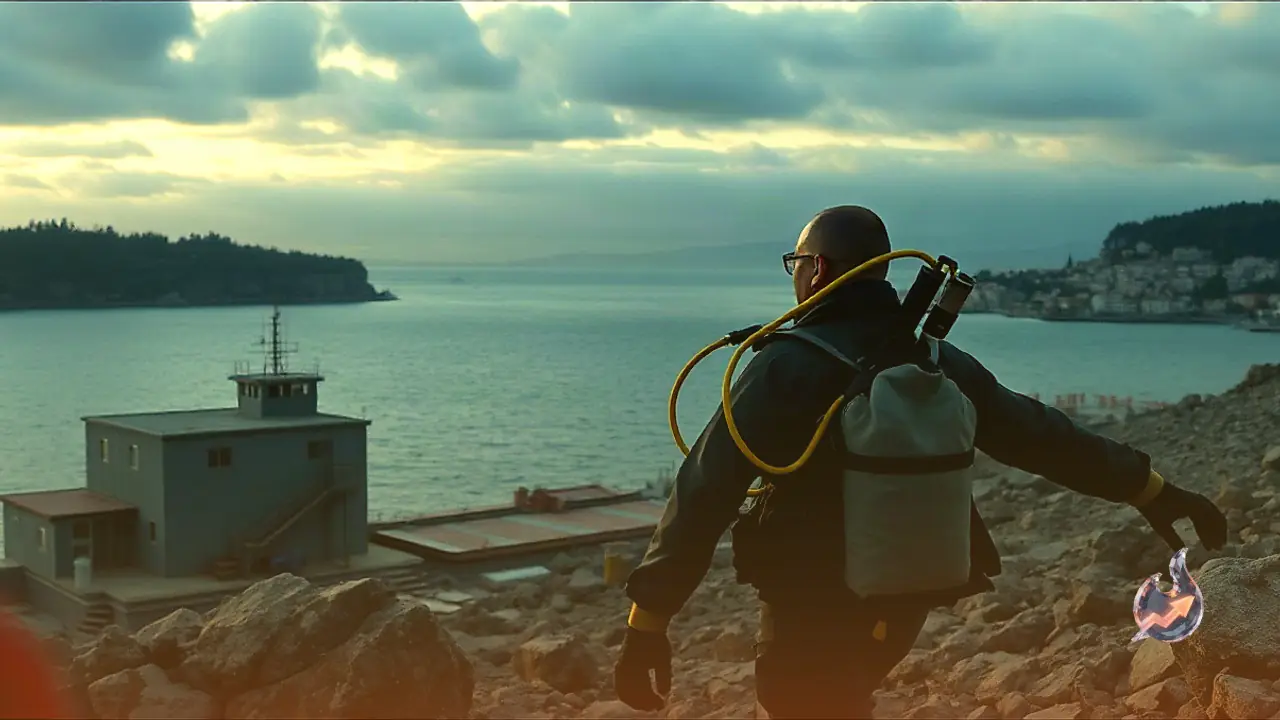

A major development has emerged in the ongoing investigation into the September 2022 underwater bombings of the Nord Stream gas pipelines linking Russia and Germany. Law enforcement authorities in Croatia have arrested a Ukrainian national suspected of carrying out the deep-sea operation. According to German investigators, the detainee was among the team of trained scuba divers who placed explosives along the Baltic Sea pipeline network shortly after Russia launched its full-scale invasion of Ukraine. German prosecutors have formally initiated extradition proceedings to bring the suspect to face trial.
Second Arrest in the Undersea Bombing Operation
This detention marks the second arrest of a high-profile suspect tied to the clandestine plot. German prosecutors have officially identified the man only as trained diver Vladimir Z, though he is widely recognized as Volodymyr Zhuravlyov. Zhuravlyov had previously been detained in Poland in 2025 under a German arrest warrant. However, a Polish judge rejected Berlin's extradition request at the time, reasoning that if Ukraine was indeed responsible for disabling the energy infrastructure, the operation constituted a just action given the wartime context. The case has added diplomatic friction between Kyiv and Berlin, despite Germany being one of Ukraine's primary European military and financial backers.
The Rostock Yacht Plot and Serhiy Kuznetsov Trial
The other primary figure in the investigation is former Ukrainian military officer Serhiy Kuznetsov. Kuznetsov was apprehended in Italy in August 2025 and subsequently extradited to Germany to stand trial. Appearing before a Hamburg court in June, Kuznetsov denied any personal involvement in the explosions. German prosecutors maintain that Kuznetsov headed an operational cell that rented a yacht from the northern German port city of Rostock. The group navigated the vessel toward the Danish Baltic Sea island of Bornholm, where they dived down to attach heavy explosives directly onto the pipelines. The resulting detonations ruptured three of the four Nord Stream underwater lines.
Geopolitical Background and Energy Transit Disputes
At the time of the attacks in September 2022, the Nord Stream 1 pipeline was operational and delivering natural gas to Europe, whereas Nord Stream 2 was completed but had not yet received final clearance for commercial service. Initial geopolitical suspicion for the sabotage focused heavily on Moscow, but forensic evidence gradually shifted attention toward Ukrainian-linked operatives. Official representatives in Kyiv have consistently repudiated any government involvement or authorization. Meanwhile, Poland had long been a vocal opponent of the Nord Stream route, asserting that it deepened German dependency on Russian energy while stripping Warsaw of valuable gas transit revenues. Both Ukraine and the United States maintained longstanding strategic objections to the pipeline project prior to the attack.
Extradition Steps and Legal Consequences Ahead
Following his expected extradition from Croatia, Vladimir Z will be transported to Germany to appear before an investigating magistrate. He faces formal charges of causing anti-state sabotage and detonating explosives on critical energy infrastructure. The upcoming judicial proceedings in Germany will be watched closely by international observers as European nations navigate the complex diplomatic and legal ramifications of the Nord Stream destruction.