


















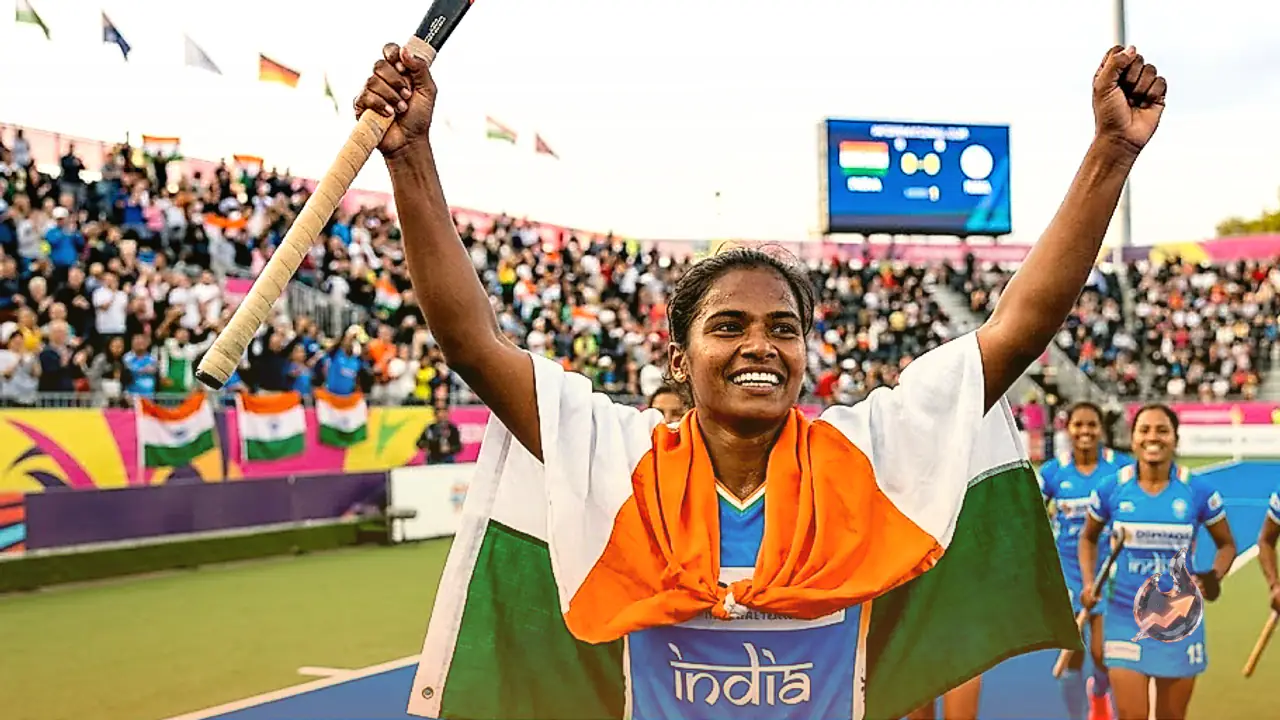

The remarkable journey of Salima Tete, who rose from a small village in Jharkhand to become the captain of the Indian Women's Hockey Team, stands as a testament to resilience and unwavering dedication. Overcoming severe poverty and a lack of basic facilities, she carved out her own space on the international sports stage. Her story, which began with improvised bamboo sticks and extreme financial hardship, serves as an inspiring narrative for millions of young athletes across the nation.
Improvised Gear and Childhood Hardships
Hailing from Chapar village in the Simdega district, located approximately 100 kilometers from Ranchi, Salima Tete grew up amidst intense poverty. Her father was a small-scale farmer whose minimal earnings were insufficient to sustain the family. Due to the acute financial crisis, her mother and sister worked as domestic helpers in other households. Under such circumstances, purchasing a genuine hockey stick was an unaffordable luxury for the family.
Undeterred by these challenges, Salima found creative ways to pursue her passion for the sport. Wild bamboo grew naturally around the farmland near her village, so she and her playmates cut bamboo branches to fashion crude hockey sticks. Unable to buy a proper ball, they used smooth stones to play hockey in local lanes and open fields. The meals at home were equally modest, often consisting merely of maad-bhaat (rice with starch water) or chokha-bhaat. Despite these daily struggles, her faith in hard work remained unshaken.
Recognizing Talent and Relentless Training
A pivotal moment in Salima's life occurred when Manoj Kondegi, the president of the Simdega Hockey Association, spotted her natural talent on the field. Recognizing her immense potential, he took her under his wing and provided initial coaching. Furthermore, he played a crucial role in securing her admission to a free residential hockey training center.
Securing a spot at the residential center relieved Salima of daily concerns regarding food and shelter. For the first time, she had access to modern hockey equipment, structured coaching, and proper nutrition. Salima capitalized on this opportunity by practicing relentlessly for 10 to 12 hours every single day. She credits her transformation and professional growth to the constant support of her coaches and family.
Watching Her Debut on a Neighbor's TV to Arjuna Award Glory
When Salima was selected for her first national-level match, her family still did not own a television set. To watch her play for the country, her family members had to visit a neighbor's house. Seeing her compete on the screen was a deeply emotional moment for her family, who had never imagined that a girl playing in village lanes would represent the nation at the highest level.
Salima went on to achieve extraordinary success, eventually being appointed as the captain of the Indian Women's Hockey Team. She successfully represented the nation at the Olympic Games and earned numerous accolades throughout her career. In recognition of her outstanding contributions to sports, the Central Government honored her with the prestigious Arjuna Award, making her the first female hockey player from Jharkhand to receive this award. Her rise from playing with bamboo sticks to leading the national team remains a powerful story of perseverance.