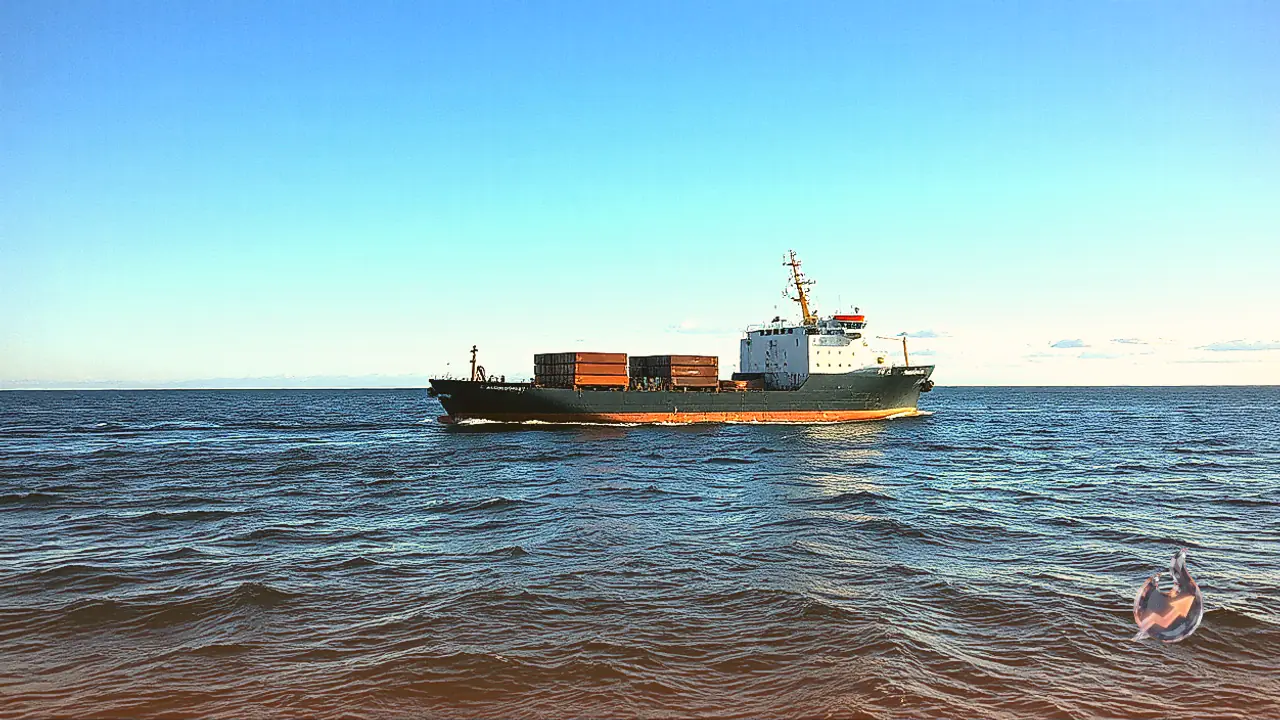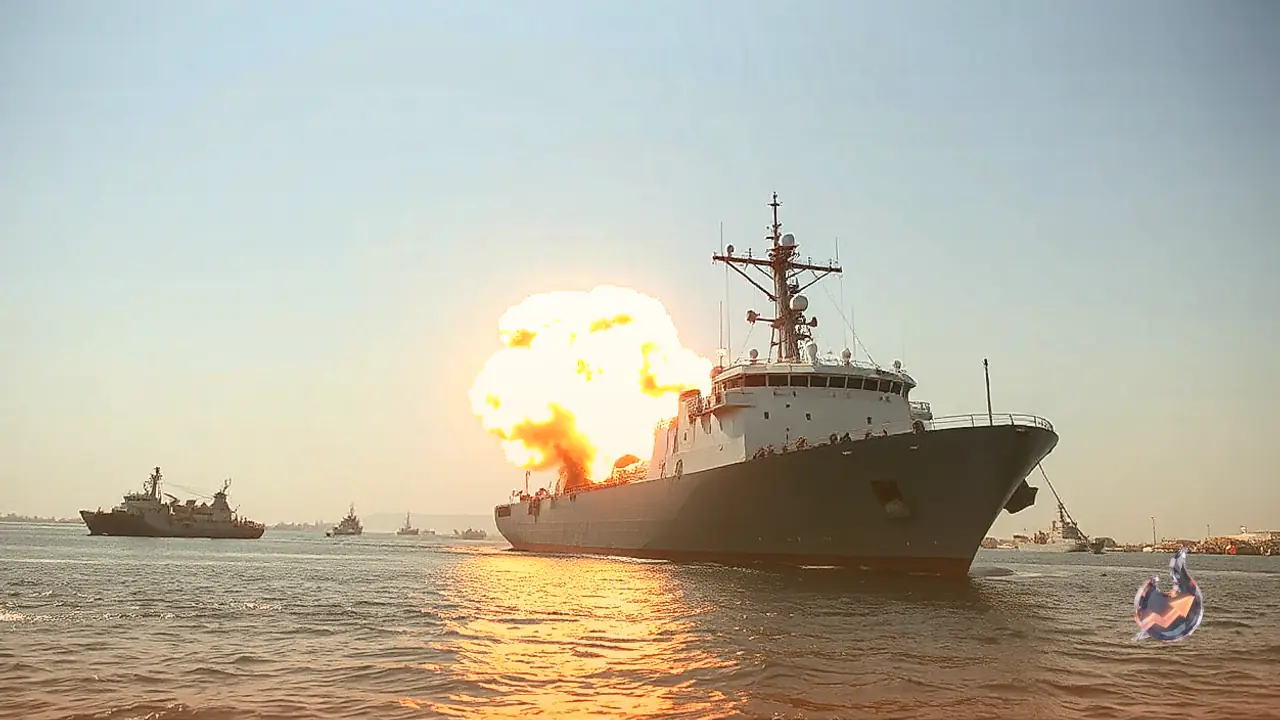

A suspected drone attack triggered a massive explosion on a Russian ship docked at the Benghazi naval base port in Libya, local authorities have confirmed. The blast occurred at dawn on Sunday while the vessel was making a stop for fuel and supplies on its return journey to Russia, according to state media reports citing the eastern-based administration. The incident has triggered urgent security protocols in the region, although Moscow has not yet issued any official comments regarding the explosion.
Visual evidence including satellite telemetry and social media footage has documented the severity of the incident at the port. Satellite imagery captured by Planet Labs PBC showed a vessel on fire at 0547 GMT at the Benghazi port, while subsequent images taken hours later depicted the same ship partially submerged in the water. Additional video clips uploaded to social media platforms and geolocated by independent analysts showed the vessel completely engulfed in flames and thick black smoke while darkness still blanketed the harbor.
The eastern-based Government of National Stability (GNS) stated that the Russian vessel was utilizing the Benghazi port strictly within the framework of an existing bilateral maritime agreement. Authorities confirmed that the surrounding area was swiftly secured following the blast and reported that there were no casualties resulting from the incident. Investigations are currently underway, with local officials actively coordinating with Russian counterparts to trace the origin of the suspected strike and identify the perpetrators responsible for the breach.
Strongly condemning the assault within a Libyan harbor, the GNS labeled the occurrence as a direct violation of maritime safety and an unacceptable infringement on national sovereignty. The administration emphasized that Libya is not a party to the Russia-Ukraine war or any other international conflicts unfolding beyond its borders. The government maintains that safeguarding local infrastructure from external military entanglement remains a top priority for regional stability and peace.
In a separate development, Libya's internationally recognized administration based in Tripoli, the Government of National Unity (GNU), issued a stern warning against hosting foreign military forces and allowing external entities to utilize national facilities. Published through state media, the GNU statement highlighted that such deployments raise serious fears regarding the risks of involving commercial ports and civilian assets in external geopolitical rivalries, which ultimately threatens the lives of citizens and the safety of critical national infrastructure.
Libya has remained fractured by political instability and periodic violence since the overthrow and death of longtime leader Muammar Gaddafi in 2011, a transition that paved the way for rival governing administrations. Geographically, the port city of Benghazi is situated more than 2,000 km or 1,243 miles away from the Russian capital of Moscow. Security analysts continue to monitor the fallout from the port explosion as diplomatic and military stakeholders assess the wider regional implications.