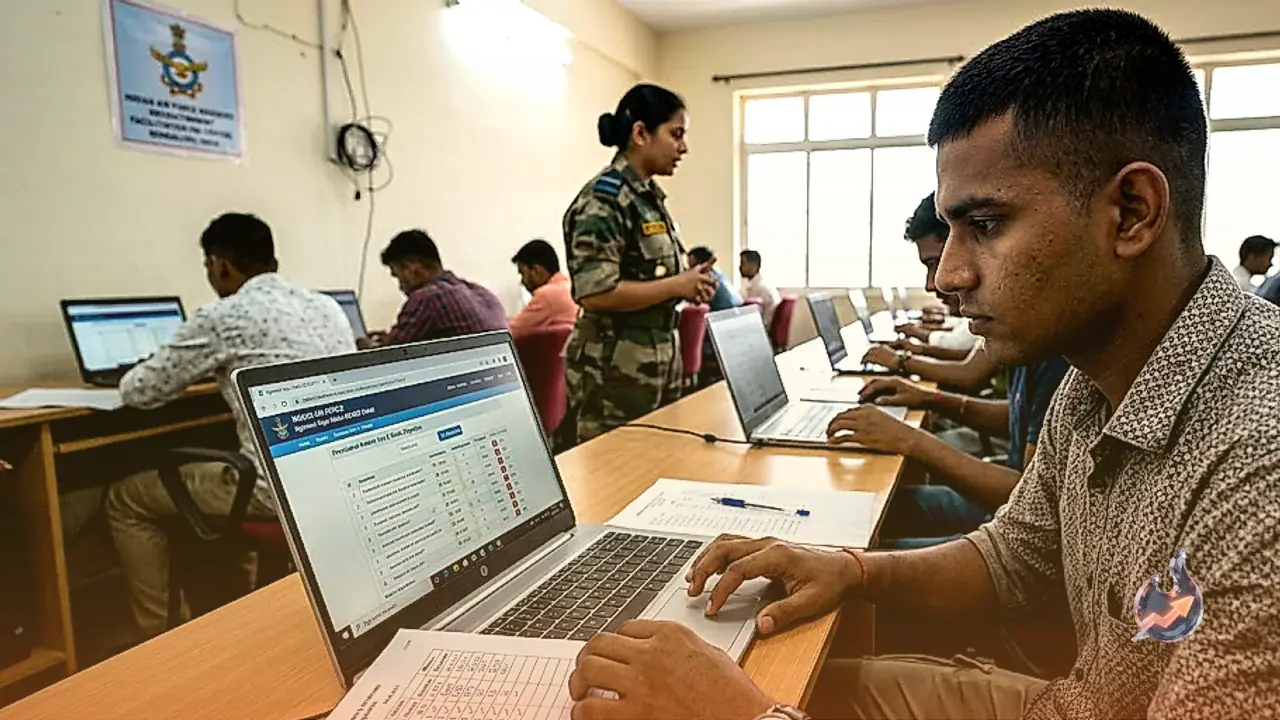






















Joining the Indian Armed Forces as a commissioned officer to serve the nation remains the ultimate ambition for millions of young aspirants across the country. The National Defence Academy and Naval Academy examination, conducted by the Union Public Service Commission (UPSC), serves as the primary gateway to fulfill this dream. Every year, hundreds of thousands of candidates appear for this highly competitive exam. However, clearing the written test and subsequently passing the intensive 5-day Service Selection Board (SSB) interview is a daunting challenge. Yet, even after overcoming these rigorous hurdles, many candidates see their dream shatter at the final stage when they fail to meet the strict parameters of the medical board.
Military officers are required to operate under extremely harsh, unpredictable, and demanding environmental conditions. Consequently, physical fitness standards in the armed forces are exceptionally stringent and uncompromising. Every year, scores of promising candidates get disqualified simply because they are unaware of their physical shortcomings or medical issues in advance. If you aspire to secure a commission through the UPSC NDA entry, it is vital to understand the top 5 physical disqualification factors enforced by the medical board.
1. Skeletal and Foot Structure Issues: Knock Knees and Flat Feet
Structural alignment of the legs and feet forms a foundational criterion during military medical evaluations. Knock knees and flat feet are among the most common structural defects leading to candidate rejection. Knock knees refer to a condition where both knees touch or bump against each other when standing straight in an attention position. This defect severely hampers a candidate's ability to run, jump, and march over extended periods during military training.
Similarly, flat foot is the absence of a normal longitudinal arch in the sole of the foot. Candidates with flat feet experience significant difficulty when required to run long distances or carry heavy combat loads. Running with flat feet exerts excessive shock and stress on the leg joints and the spinal column, which can lead to long-term physical damage. If these structural issues are detected during examination, candidates are declared unfit as per army standards.
2. Vision Standards, LASIK Restrictions, and Ocular Diseases
Visual acuity standards across the Army, Navy, and Air Force are distinct and rigidly maintained. Requirements for the Air Force Flying Branch are the most demanding of all. Candidates applying for the Flying Branch must possess an uncorrected visual acuity of strictly 6/6. Spectacles are not permitted for this branch, nor is any relaxation granted to candidates who have undergone LASIK surgery to correct their vision.
Beyond basic refractive errors, the medical board maintains zero tolerance for underlying ocular diseases. Conditions such as color blindness, squint (strabismus), or night blindness result in direct permanent disqualification without the option for temporary review. Precise visual perception and rapid color recognition are critical during combat operations, which is why these vision standards are strictly enforced.
3. Body Mass Index and Weight Imbalances
The medical board thoroughly evaluates every candidate's body weight in proportion to their height and age, referencing the official military Body Mass Index (BMI) charts. If a candidate's weight deviates by more than 10% above or below the ideal limit specified in the official chart, they are declared unfit during the initial medical screening.
However, weight-related disqualifications are not categorized as permanent rejections. Candidates who are over or under the acceptable weight range are granted a Temporary Rejection status. They are allowed a 42-day re-medical window, providing them with sufficient time to regulate their weight through structured diet and exercise before appearing for a re-examination.
4. ENT Hygiene, Excessive Sweating, and Nasal Defects
Candidates often focus on major medical conditions while overlooking minor physical ailments that can lead to medical disqualification. One such issue is Deviated Nasal Septum (DNS), where the nasal bone is bent, causing partial airway obstruction and breathing difficulty that can prove dangerous in high-altitude operational zones.
Another common cause for rejection is Hyperhidrosis, a condition characterized by excessive sweating on the palms and soles. Over-sweating poses a serious hazard during training as it impairs a candidate's grip on weapons, ropes, and tactical equipment. Additionally, ear issues such as perforated eardrums or excessive wax buildup can lead to initial unfitness. Even simple ear wax accumulation can result in a temporary rejection until the ear is medically cleaned.
5. Body Tattoo Regulations and Dermatological Conditions
The Indian Armed Forces maintain strict policies regarding body tattoos and their location. Permanent body tattoos are completely prohibited on the inner forearm (from the elbow to the wrist), the back of the hand, and any other visible part of the body that remains uncovered when wearing uniform garments. The presence of tattoos on visible body parts results in immediate disqualification.
Apart from tattoos, severe skin conditions are major grounds for medical rejection. Candidates suffering from eczema, vitiligo (white patches), or any other chronic, contagious skin diseases on the face or body are declared unfit by the medical board. Given the paramount importance of hygiene, discipline, and physical presentation in the military, these regulations are applied strictly.