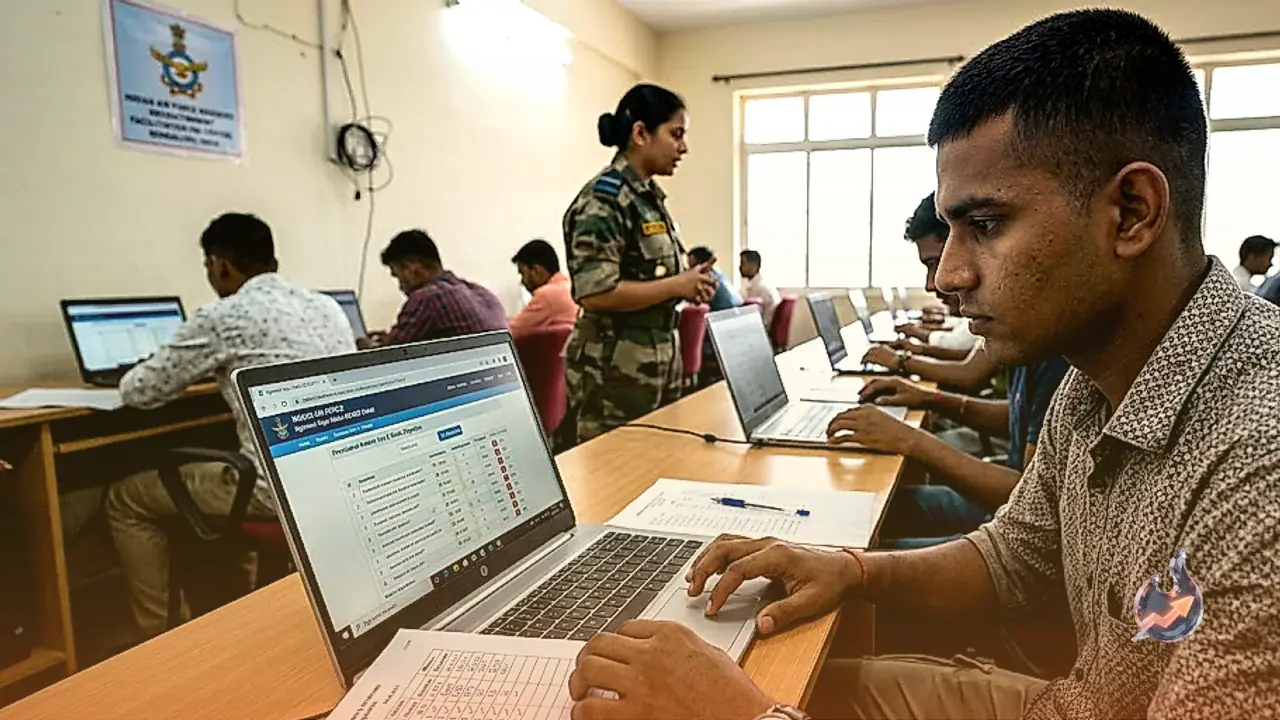






















A major overhaul could be on the horizon for India's largest medical entrance test, NEET UG. A high-level parliamentary panel has strongly recommended that the Union government urgently establish fixed boundaries for candidate age and the number of permissible exam attempts. The move comes in response to findings that individuals aged over 70 are taking the entrance exam due to the complete lack of eligibility ceilings. Lawmakers believe this open-ended format puts younger aspirants at an unfair disadvantage and distorts competition for scarce undergraduate medical seats.
Key Findings from Mukul Wasnik Led Committee's 382nd Report
The Parliamentary Standing Committee on Education, Women, Children, Youth, and Sports submitted its 382nd report focusing on institutional reforms within the National Testing Agency. Headed by Rajya Sabha Member of Parliament Mukul Wasnik, the committee observed that unrestricted attempts and the absence of an upper age barrier dilute standard academic competition. To restore balance, the panel advised the Ministry of Education and the Ministry of Health and Family Welfare to collaborate and introduce disciplined guidelines similar to the criteria followed in engineering entrance exams like JEE Advanced.
The Stark Contrast Between JEE Advanced and NEET Formats
Under existing guidelines, candidates appearing for JEE Advanced are permitted a maximum of two attempts across two consecutive years. NEET UG, by comparison, offers infinite chances with zero age ceiling. This loophole has allowed repeat candidates to spend years inside test-preparation ecosystems, competing directly against teenagers finishing senior secondary education. The presence of career test-takers alongside elderly candidates has created an uneven playing field, pushing qualifying cut-offs higher and intensifying mental stress for first-time applicants.
The Legal Battles Behind the Dropped Age Restrictions
The debate surrounding eligibility boundaries in medical admissions is decades old. In 2017, the Union government introduced an upper age ceiling of 25 years alongside a cap of three attempts. That framework met with immediate pushback and multiple court challenges. Following intervention from the Supreme Court, the National Medical Commission formally removed the upper age limit altogether in March 2022. That regulatory rollback paved the way for unrestricted entries, which the parliamentary committee now argues requires immediate recalibration.
Five Critical Recommendations to Safeguard NEET UG Infrastructure
To eliminate systemic malpractices and paper leak vulnerabilities, the parliamentary panel outlined five decisive infrastructural upgrades
- Shift to Computer-Based Testing: The committee recommended discontinuing the physical pen-and-paper OMR format and transitioning the examination entirely to a digital computer-based test platform.
- Sole Reliance on Government Venues: Examination centres should be restricted strictly to government schools, colleges, and state or central universities, entirely removing private venues vulnerable to malpractice.
- At Least One Centre in Every District: To alleviate the substantial logistical and financial burden on students from rural, tier-2, and tier-3 areas, testing centres should be set up inside every administrative district across the country.
- Statutory Accountability for the NTA: The panel suggested enacting special legislation to define the agency's legal charter, making it directly accountable to Parliament for its operational integrity.
- Standardised Question Bank and Latecomer Relief: Instead of crafting standalone question papers from scratch each cycle, the testing body should maintain a robust, secure question bank. Additionally, genuine late arrivals held up by traffic congestion or emergencies should be permitted entry after submitting a formal written undertaking.