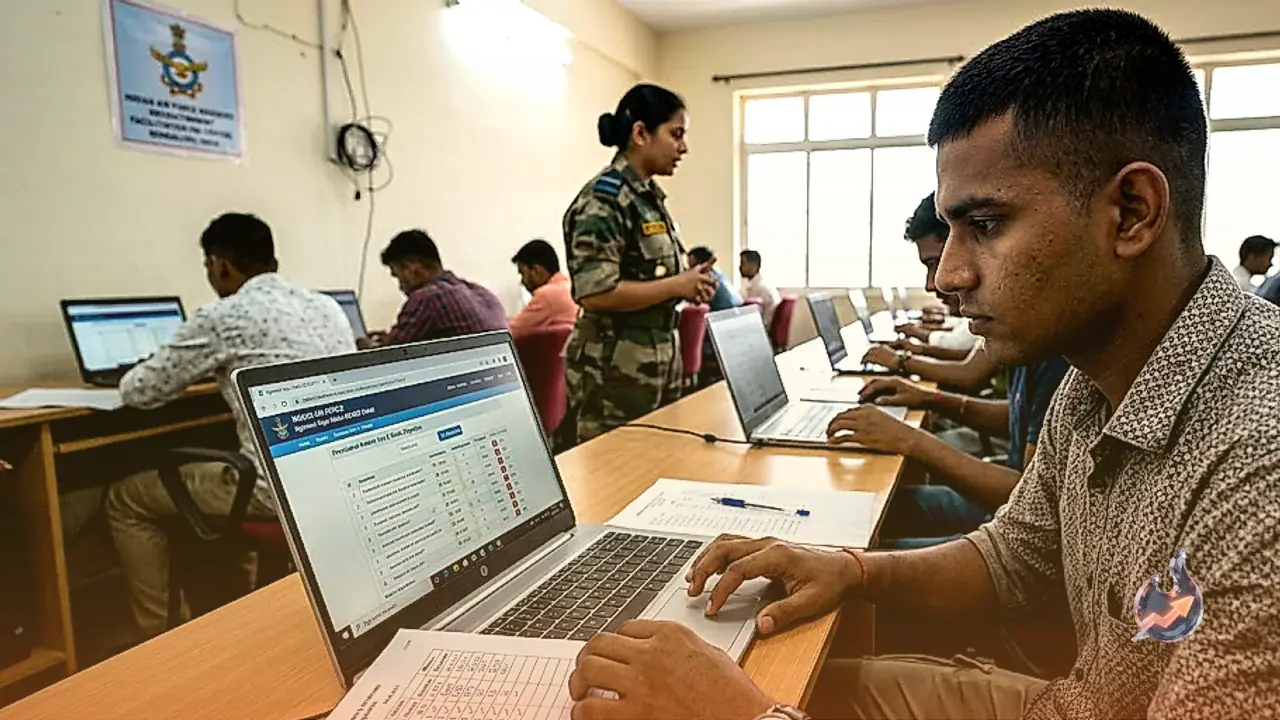
























Families of Indian-origin settled abroad often wonder if their children could ever become part of India's red-beacon bureaucracy. The answer hinges entirely on one label, whether the person is classified as an NRI or holds an OCI card, because although the two terms sound similar in everyday conversation, the law treats them as worlds apart. UPSC's civil services examination rules make that difference impossible to miss.
The citizenship puzzle, where NRI and OCI truly diverge
The Indian Constitution reserves equal opportunity in public employment, meaning government jobs, exclusively for citizens of India. That single principle explains why the Union Public Service Commission has framed separate rules for NRIs and OCI cardholders. An NRI, short for Non-Resident Indian, is an Indian citizen who has settled abroad for work, study or business, but still holds an Indian passport and legally remains a citizen of India. An OCI cardholder, short for Overseas Citizen of India, is technically a citizen of another country, such as the US, the UK or Canada. Their roots or family ties may lead back to India, but their passport is foreign. They are granted a lifelong visa to live and work in India, but that visa does not change their citizenship.
The UPSC door stands fully open for NRIs
Because NRIs are simply Indian citizens who happen to live overseas while holding an Indian passport, they are considered fully eligible for every one of UPSC's more than 20 services, including the IAS, IPS, IFS and IRS. That eligibility, however, comes with no special leniency in the exam itself. There is no separate NRI quota and no reserved seats, meaning they must go through the same examination process, syllabus and cut-offs as any other Indian candidate. It is also worth noting that no centre for the UPSC Prelims, Mains or interview is ever set up outside India, so NRI candidates must travel to India to sit for the exam no matter which corner of the world they live in. Those who completed their graduation at a university abroad face one additional formality before submitting their form, they must obtain an equivalency certificate for their degree from the Association of Indian Universities, without which the application will not be treated as valid. Since that certification process takes time, leaving it for the last moment can prove costly.
IAS, IPS and IFS remain locked for OCI cardholders
The situation for OCI cardholders is entirely different from that of NRIs. Under the rules, being a citizen of India is a mandatory condition for the Indian Administrative Service, the Indian Police Service and the Indian Foreign Service. Because OCI cardholders are legally citizens of another country and carry a foreign passport, they simply cannot apply for these three prestigious services, no matter how many years they may have already spent living in India. They do get complete freedom to live and work in India, and their visa remains valid for life, but in exchange they are not granted the constitutional right to vote or to hold any government post. Some limited scope does exist, special provisions in UPSC's annual notification can open up select technical or Group A posts to OCI cardholders, but the mainstream administrative services stay entirely off-limits to them.
The path an OCI cardholder must take to still become an IAS officer
The route is not permanently shut for OCI cardholders, but it comes with one major and unavoidable condition, they must give up their foreign citizenship and reacquire Indian citizenship. The Citizenship Act, 1955 sets out a fixed formula for this, which can be summed up in simple terms as the 5+1 year rule. Under it, a person who has held OCI status continuously for 5 years and has lived in India continuously for 1 year immediately before applying can then apply for Indian citizenship. Once that citizenship is granted, their legal status changes completely, the foreign passport is no longer part of the equation, and like every other Indian citizen, they become 100% eligible for all of UPSC's services. In other words, the dream of becoming an IAS officer is not entirely out of reach for OCI cardholders, it simply requires completing this lengthy citizenship process first.