























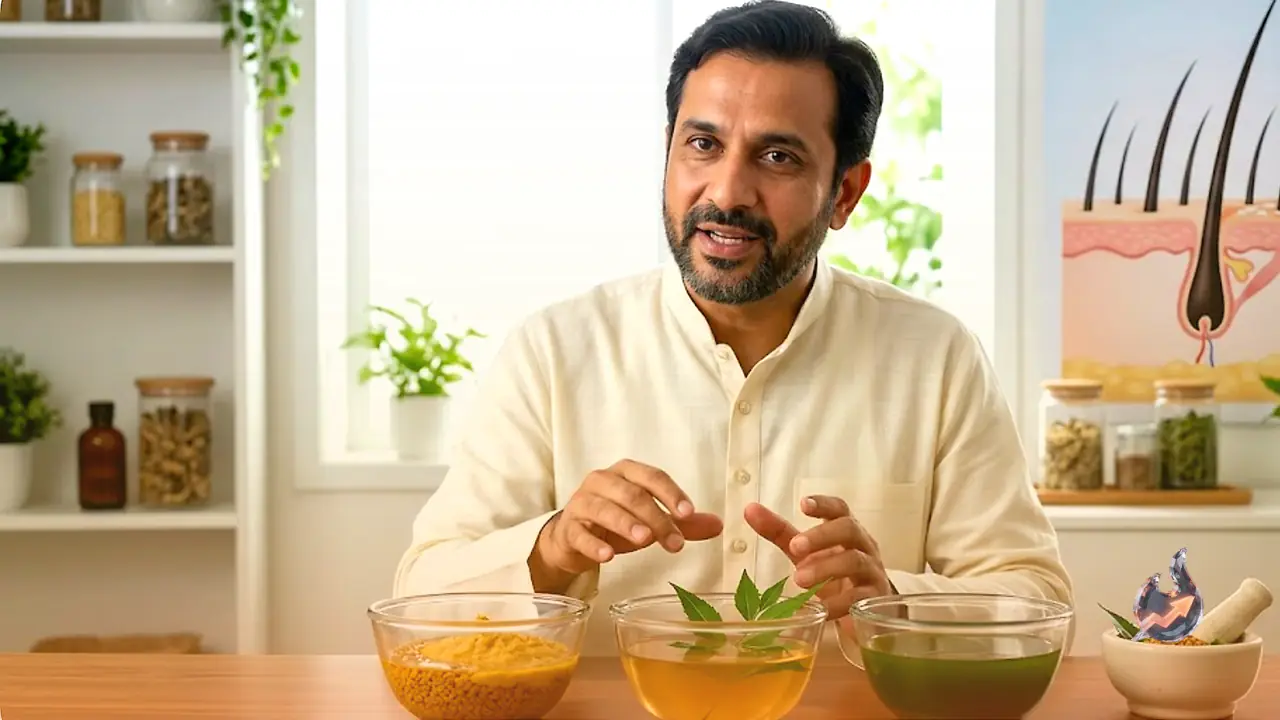

Dandruff is not always a sign of a dry scalp, in fact the very oils many people apply to fix dryness can end up making flaking worse. According to Ayurvedic expert Dr Saleem Zaidi, dandruff is actually caused by the overgrowth of a fungus called Malassezia, which feeds on the natural oils present on the scalp. As this fungus multiplies, it irritates the scalp and triggers the flaking and itchiness associated with dandruff. Dr Zaidi has shared a set of natural remedies that, when used consistently over time, can help bring this stubborn problem under control without relying only on chemical shampoos.
Fenugreek paste works as a natural fungus fighter
Fenugreek seeds carry natural anti fungal and soothing properties that help keep Malassezia fungus in check, while also strengthening hair from the roots. The method is simple, soak two teaspoons of fenugreek seeds in water overnight. The next morning, grind the soaked seeds along with the same water into a smooth paste and apply it to the scalp and hair. Wash it off after about thirty minutes. Dr Zaidi recommends using this pack two to three times a week, and continuing it consistently for three to four weeks to see visible results.
Apple cider vinegar restores the scalp's natural pH balance
Apple cider vinegar is usually associated only with weight loss, but it works just as well against dandruff. The scalp's natural pH is mildly acidic, and dandruff tends to worsen whenever that pH balance gets disturbed. Apple cider vinegar helps restore that balance by bringing the scalp back closer to its natural acidic state. To use it, mix one teaspoon of apple cider vinegar with one teaspoon of water in a bowl and apply the mixture to the scalp and hair roots. Wash it off with a mild shampoo after some time. It is important to always dilute apple cider vinegar with water before applying it, never use it directly on the scalp, since undiluted vinegar can irritate sensitive skin.
Neem water brings gradual relief from dandruff
Neem is considered a powerful natural anti fungal agent in Ayurveda, which is why neem water is highly effective at reducing dandruff. To prepare it, neem leaves are boiled in water, and once the water cools down to a lukewarm temperature, it is applied to the hair and scalp. Dr Zaidi notes that the results from neem water take a little time to show, unlike some quick fixes, but regular use does bring noticeable benefits to the scalp over the following weeks.
Points to keep in mind while trying these remedies
Dr Zaidi's advice is that trying any of these three remedies just once will not help, consistency over several weeks is what actually makes the difference between temporary relief and lasting results. It is also worth remembering that every scalp and skin type reacts differently, so it is best to do a patch test before trying any new remedy, and to stop use if any irritation, redness or discomfort shows up on the skin.
Disclaimer: The remedies mentioned in this article are for general information only. Consult your doctor or a specialist before trying any home remedy, starting any fitness or diet related change, or if you are dealing with a persistent scalp or skin issue.