
























US President Donald Trump has issued a stern warning of aggressive economic action aimed at completely isolating Iran, stating that any nation or entity aiding Tehran will face severe financial repercussions. In a direct statement shared on Truth Social, Trump noted that while the Islamic Republic of Iran was offered ample opportunity to reach a agreement, it ultimately failed to capitalize on the offer. Escalating the regional friction, the United Arab Emirates announced a total suspension of trade with Tehran following two ballistic missile strikes targeting UAE territory, a charge that Iran has explicitly denied.
Targeting Iranian Financial and Smuggling Operations
The US President specified that any country allowing its banking channels, commercial enterprises, aviation infrastructure, or state bodies to extend financial support to Iran will bear tremendous economic consequences. He called for an immediate halt to oil smuggling, currency swap arrangements, cash transfers, exchange houses, vessel registries, and corporate front entities used to bypass sanctions. While Trump previously suggested that Washington might eventually re-enter discussions with Iran, he characterized the current geopolitical positioning as highly favorable for the United States.
Crude Oil Price Dynamics and WTI Benchmark Overview
Amid geopolitical developments in the Middle East, global energy markets reflected immediate volatility. West Texas Intermediate (WTI) crude traded slightly higher by 0.02% at $85.28 per barrel. WTI serves as one of the three primary global crude oil benchmarks, alongside Brent Crude and Dubai Crude. Characterized as 'light' and 'sweet' owing to its low density and minimal sulfur content, WTI is exceptionally easy to refine. Extracted in the United States, it is centrally distributed through the Cushing hub in Oklahoma, widely recognized as the intersection point of global pipeline infrastructure.
Core Drivers Influencing Global Oil Markets
The pricing structure of WTI crude relies fundamentally on global supply and demand dynamics. Periods of robust macroeconomic expansion heighten energy consumption, pushing prices upward, whereas sluggish economic performance dampens demand. Geopolitical conflicts, regional instability, and trade sanctions introduce supply bottlenecks that drive price spikes. Additionally, output decisions made by OPEC, a coalition of 12 oil-exporting nations, alongside the broader OPEC+ alliance that includes 10 non-OPEC members such as Russia, play a central role in market balance. Reductions in production quotas restrict global supply and elevate per-barrel prices, while output increases yield the inverse effect. Furthermore, as crude oil is denominated in US Dollars, fluctuations in the greenback directly influence oil affordability for international buyers.
Impact of API and EIA Weekly Inventory Data
Energy traders closely track weekly inventory metrics published by the American Petroleum Institute (API) every Tuesday and the Energy Information Administration (EIA) every Wednesday. These figures reveal fluctuations in stored crude volumes, offering clear indicators of supply-demand shifts. A decline in commercial crude inventories signifies strengthening demand, placing upward pressure on WTI crude prices, whereas inventory builds reflect excess supply that depresses market values. Historically, API and EIA datasets align within a 1% variance roughly 75% of the time, with EIA figures carrying higher authority due to its official government status.
Foreign Exchange Movements and Dollar Depreciation
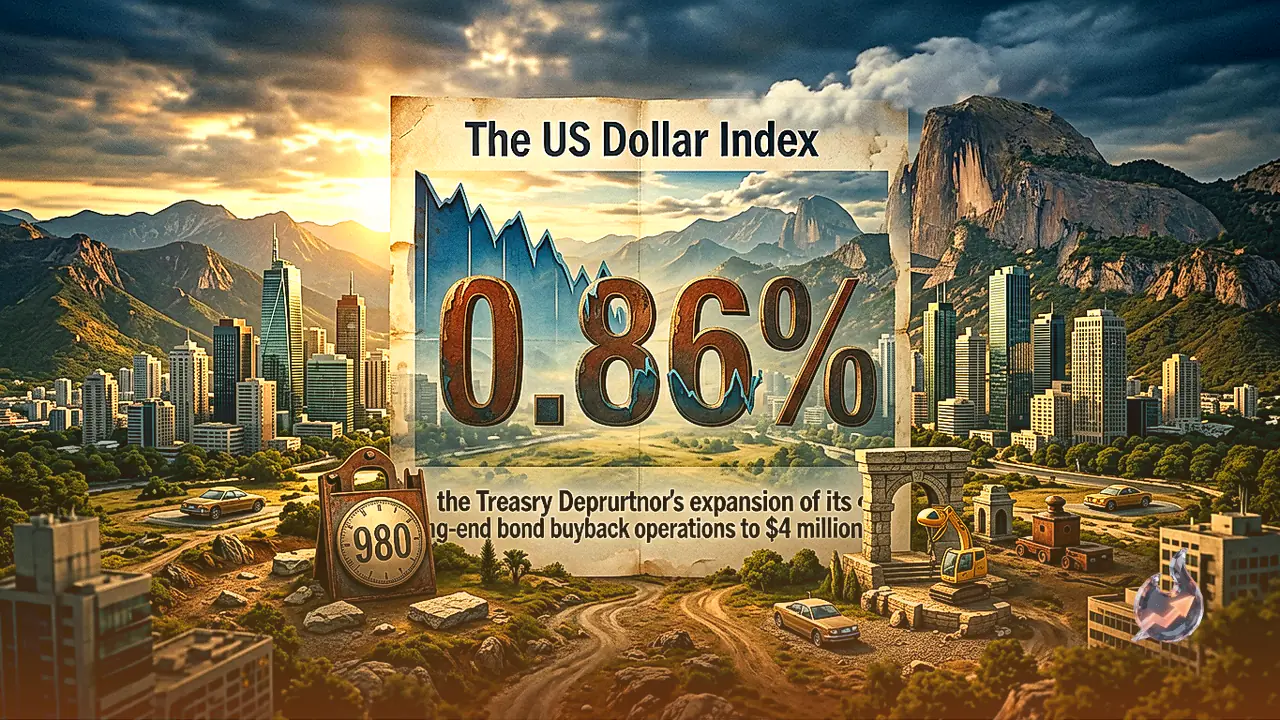
Broader financial markets experienced shifting trends as the US Dollar came under sustained selling pressure. The GBP/USD currency pair advanced past 1.3600, reaching its strongest valuation since mid-May. Data released from the United Kingdom showed annual Consumer Price Index (CPI) inflation holding steady at 2.9% in July, matching market forecasts, while core CPI picked up to 2.6% year-on-year against an expected 2.5%. The dollar's decline was accelerated by the US Treasury Department's decision to double the scale of liquidity support buyback operations for longer-dated nominal coupon securities.
Euro Gains and Gold Price Recovery
Benefiting from dollar weakness, the EUR/USD pair climbed above 1.1650 on Wednesday, marking its highest level since early June. Market participants remain focused on the release of the upcoming FOMC Minutes for key insights into the Federal Reserve's monetary policy path. Simultaneously, Gold (XAU/USD) recorded solid intraday gains during American trading hours as a softer US Dollar and a sharp retreat in long-term US Treasury yields enabled the precious metal to recover its previous losses.