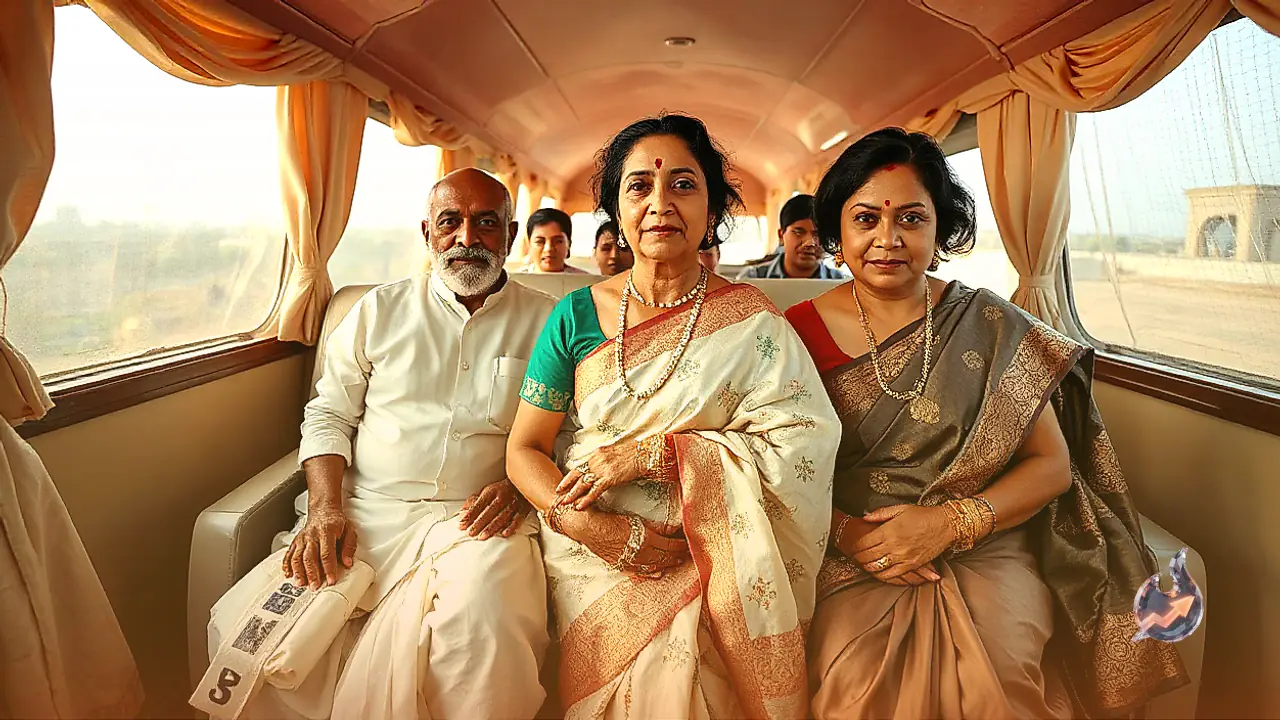





















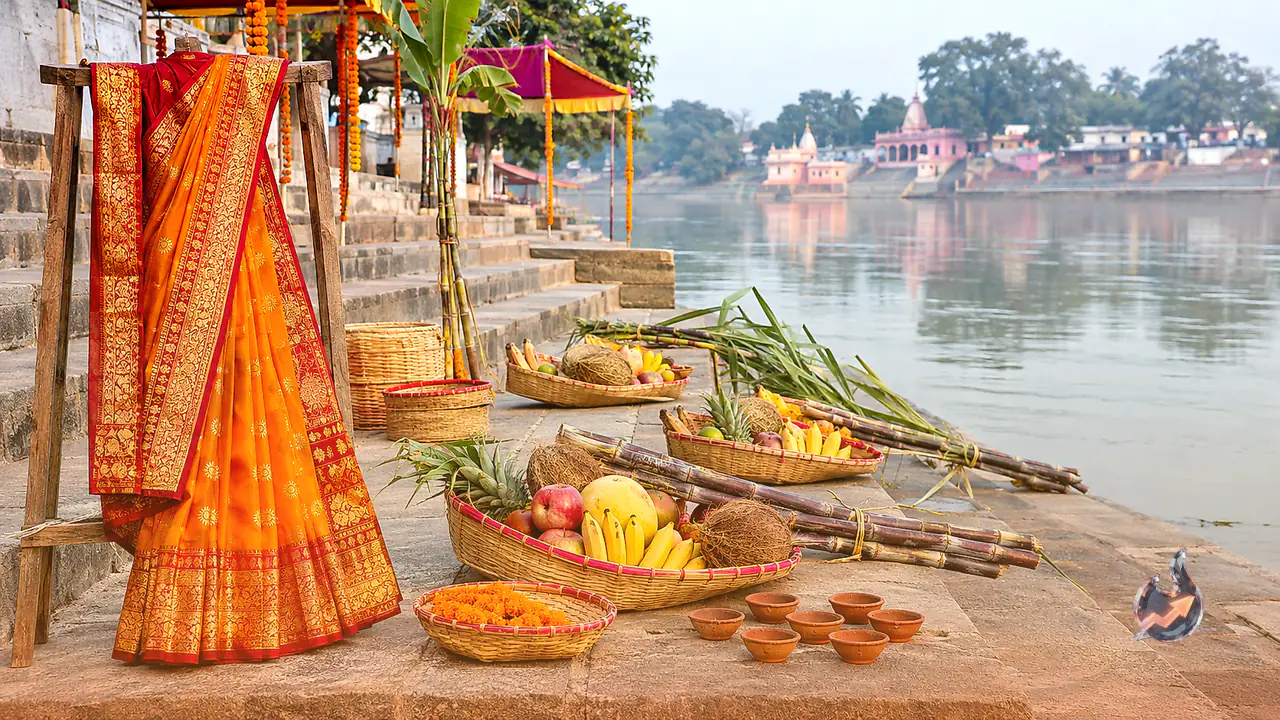

Immediately following the Diwali celebrations, preparations for the grand festival of Chhath Puja begin in full swing. What was once predominantly observed in Bihar and eastern Uttar Pradesh is now celebrated with immense reverence across India and across the globe. During this four-day spiritual observance, women perform rigorous rituals while adorning themselves in new clothes and traditional shringar. The front-draped seedhe pallu saree remains the perennial favourite for this occasion. Women looking to strike a balance between solemn devotion and festive elegance during the rituals can take cue from the iconic saree looks worn by prominent Bhojpuri actresses.
Why the Front Pallu Drape Is Ideal for Chhath Rituals
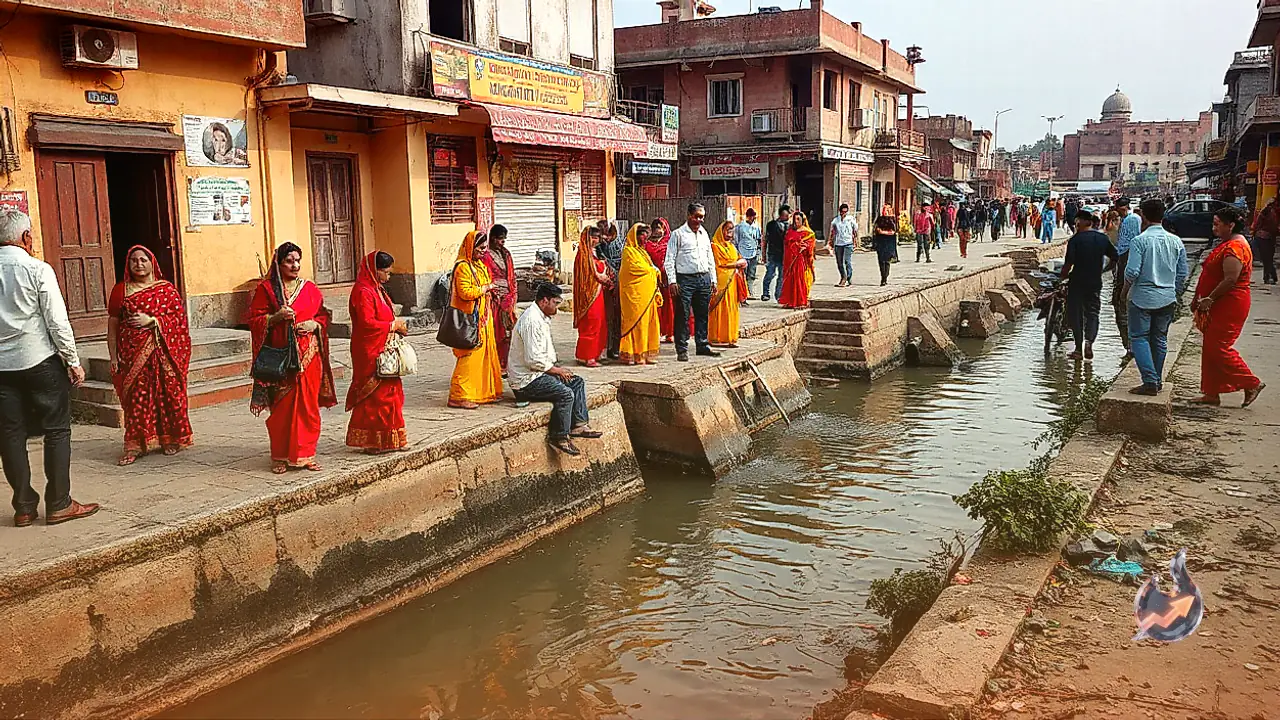
The traditional front pallu or seedhe pallu drape is not merely a cultural statement; it offers unmatched functionality during intense religious rituals. In this style, the pallu is brought forward over the right shoulder and securely pinned at both the shoulder and the waistline. This secure fastening ensures the saree remains firmly anchored, preventing any slipping while carrying heavy offerings, holding the sacred soop, or moving through crowded ghats. Given that devotees must step into river waters to offer Arghya to the setting and rising Sun, lightweight fabrics are strongly recommended. Sarees that dry swiftly upon contact with the breeze allow devotees to maintain comfort throughout the extended ceremonies.
Akshara Singh Inspired Lightweight Leheriya Saree
For devotees seeking unhindered movement and simplicity, the leheriya pattern championed by Akshara Singh serves as an excellent reference. Leheriya sarees in chiffon fabrics are exceptionally light and visually striking. Their featherweight texture prevents fatigue even when worn through long hours of fasting and standing on the banks. Crucially, chiffon fabrics dry almost instantly in the open air if splashed during water rituals. Complementing a bright leheriya saree with minimal makeup, forehead-to-parting vermilion, traditional bangles, and delicate jewellery creates an authentic festive aura without feeling cumbersome.
Tissue Silk Elegance Drawn from Aamrapali Dubey
Auspicious shades of orange, yellow, and red carry deep religious significance during Chhath rituals. Those desiring a subtle sheen alongside festive tradition can explore tissue silk sarees, styled gracefully like Aamrapali Dubey. While tissue fabric can feel crisp and difficult to manage in conventional drapes, pleating it in a structured front-pallu style solves that challenge completely. The pins keep the metallic sheen fabric neatly in position for hours. Paired with timeless gold jewellery, a well-fitted blouse, and traditional red alta on the feet, tissue silk delivers an understated yet celebratory appearance suitable for daytime and evening offerings alike.
Monalisa Inspired Classic Silk Attire
Devotees who prefer a standard drape over the front-pallu silhouette can opt for traditional silk, as showcased by Monalisa. Silk sarees offer an inherently regal appeal and provide welcome protection against the morning nip during early dawn arghya rituals. Pairing a rich silk saree with gold bangles, a long necklace or mangalsutra, and traditional jhumkas brings out authentic festive charm. Styling the hair into a neat bun adorned with fresh flower garlands completes the look, ensuring the hair stays secure during the water offerings while exuding complete festive grace.