

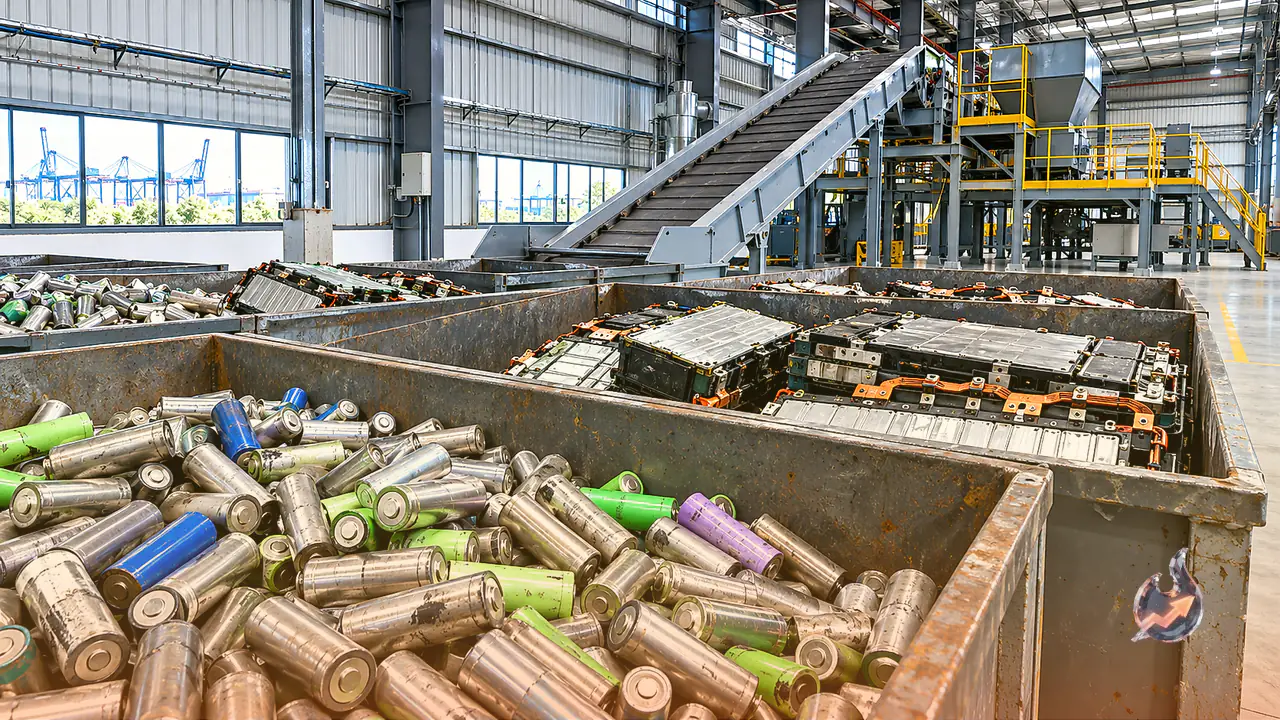



















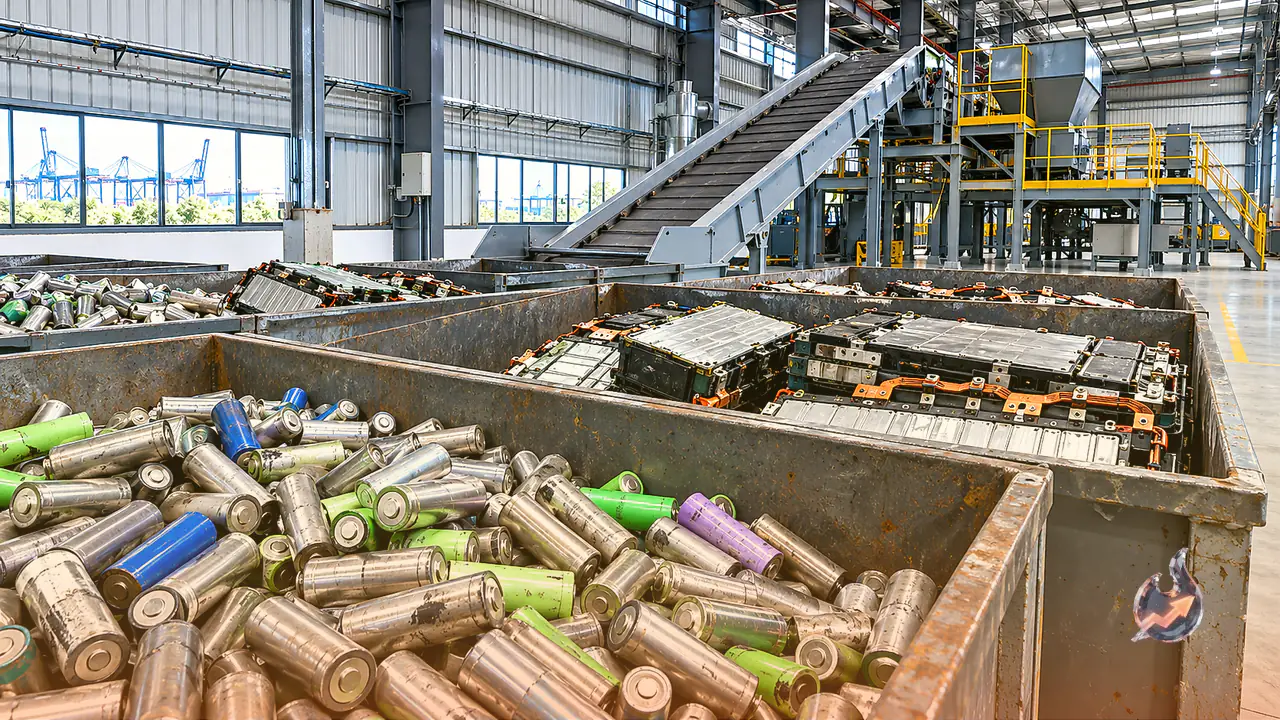

In a strategic move to secure domestic supplies of critical raw materials for energy transition, the Indian government has restricted the outward shipment of spent batteries and 'black mass'. Issued by the Directorate General of Foreign Trade (DGFT) under the Ministry of Commerce and Industry, the notification alters the export status of these materials from 'Free' to 'Prohibited' with immediate effect. The primary objective behind this regulatory shift is to retain battery scrap within the country, allowing domestic recyclers to extract and re-use vital metals such as lithium, nickel, and cobalt instead of relying entirely on foreign imports.
Regulatory Changes under Foreign Trade Act
The directive issued by DGFT leverages powers granted under the Foreign Trade (Development and Regulation) Act, 1992, to restrict the overseas transfer of used energy storage components. Under the updated framework, the export of waste and scrap derived from primary cells, primary batteries, and electric accumulators is strictly banned. The prohibition applies equally to unsorted spent batteries that do not contain lead, cadmium, or mercury.
Crucially, the ban encompasses 'black mass' produced from processing end-of-life lithium-ion batteries. Black mass is the dark, concentrated powder resulting from crushing and shredding spent battery cells, containing significant concentrations of valuable elements like lithium, cobalt, manganese, and nickel. Following this policy update, Indian firms can no longer export this nutrient-rich battery residue to foreign processing hubs without explicit government approval, ensuring the material remains accessible to domestic processors until further orders.
Strengthening Supply Chain Resilience and Circular Economy
As India accelerates its adoption of electric vehicles (EVs) and renewable energy storage solutions, the demand for lithium-ion battery chemistry has surged. However, India currently finds itself in the nascent stages of refining and processing these critical minerals. Due to limited domestic processing infrastructure, the nation has historically been forced to import processed battery-grade chemicals and finished cells at high costs.
Permitting battery scrap and black mass to be shipped abroad effectively starved domestic recycling facilities of essential feedstock, forcing India to re-import refined compounds later. By clamping down on exports, the government aims to catalyze the domestic recycling ecosystem. Retaining black mass within India enables local recyclers to process the waste, recover high-purity battery materials, and feed them back into the local manufacturing value chain. This circular economy model is expected to reduce foreign supply vulnerabilities, lower production costs, and insulate Indian manufacturers from global supply chain disruptions.
Integration with the ₹2,814 Crore Processing Scheme
The export restrictions directly complement the government's broader industrial policy aimed at establishing midstream critical mineral capacity. Just last week, the Union Cabinet, chaired by Prime Minister Narendra Modi, approved a ₹2,814 crore capital assistance scheme to incentivize the construction of critical mineral processing facilities across the country. This financial support program will run for five financial years, spanning from FY 2026-27 through FY 2030-31.
Under this capital incentive initiative, the government will offer a 30% capital subsidy on eligible investments to establish four major processing facilities: two dedicated to lithium and two to nickel. To qualify for government backing, each lithium processing plant must possess a minimum annual operational capacity of 30,000 tonnes, while each nickel facility must meet a baseline capacity of 50,000 tonnes. The framework caps maximum financial assistance at ₹500 crore per beneficiary for lithium processing units and ₹900 crore per beneficiary for nickel refining operations.
Reducing Import Dependence for EV Transition
India's clean energy ambitions heavily depend on securing an uninterrupted supply of raw minerals essential for manufacturing EV powertrains and energy storage systems. Because domestic refining technology and large-scale industrial plants are still being developed, India remains reliant on external markets for refined inputs.
By preventing the loss of secondary mineral resources through exports, the government provides a guaranteed feedstock for emerging domestic refiners and recyclers. Ensuring that black mass stays in India gives private investors the operational certainty needed to build large-scale recovery infrastructure. Ultimately, this policy measure aims to build long-term mineral security, support local industrial job creation, and solidify India's position in global clean technology manufacturing.