



















Tea lovers have reason to cheer. Japan's celebrated green tea, matcha, is now being produced commercially in India for the first time, and Assam has become the first state in the country to achieve this milestone. The catch is that this specialty brew does not come cheap, with matcha tea currently priced at Rs 3,000 per kilogram in India.
Production begins at a Tinsukia tea estate
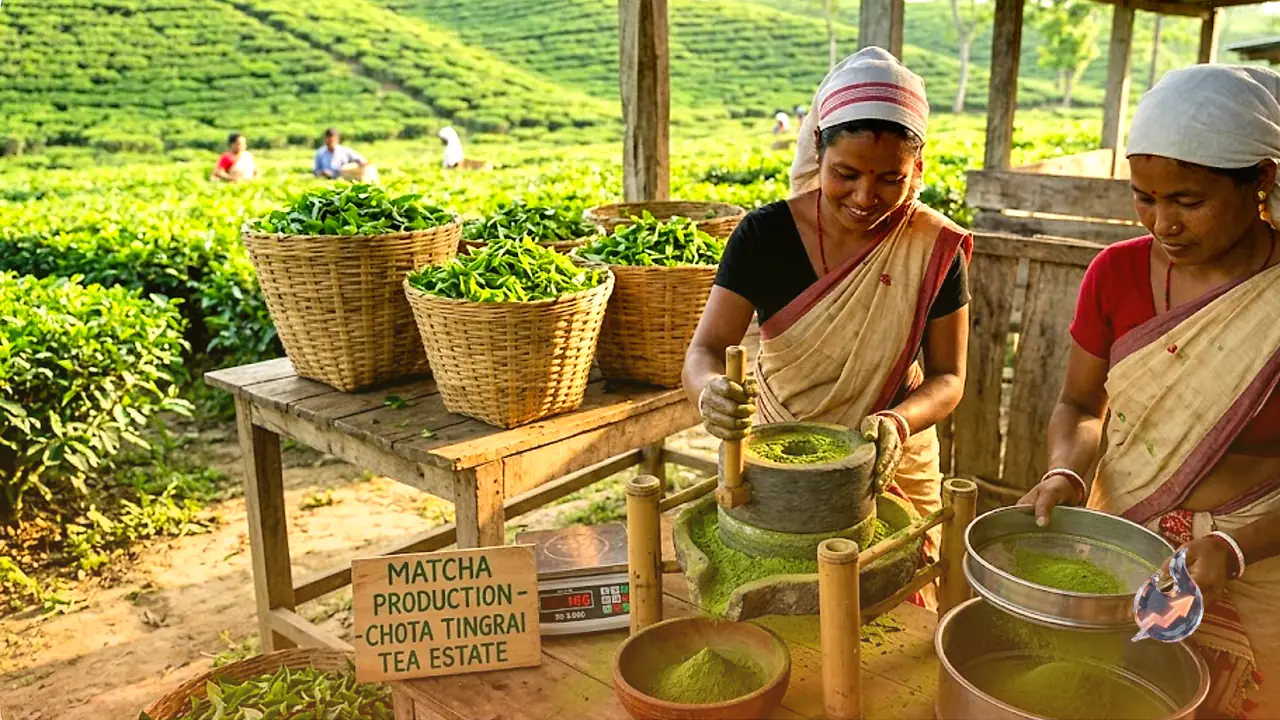
The commercial production of matcha tea has been launched at the Chota Tingrai Tea Estate in the Tinsukia district of eastern Assam. Until now, matcha tea in India was made only on a limited scale, but this marks the first time it has been produced on a large scale and rolled out for the market. That means this popular Japanese beverage can now be manufactured at an industrial scale within the country itself.
CM calls it a new chapter in Assam's tea legacy
Assam Chief Minister Himanta Biswa Sarma described the achievement as a new chapter in the state's tea heritage. He said that people's favourite matcha tea would now be prepared right in Assam. According to him, this will give the state's tea industry a fresh identity and further strengthen Assam's presence in the world's premium tea market. Himanta Biswa Sarma also said that this success is the result of nearly 10 years of cooperation between India and Japan. He explained that Japan's modern machines, new technology and the experience of its experts were brought to Assam's tea industry, which is what made it possible to produce world class quality matcha tea here. The Chief Minister shared the news on social media as well, calling it a step forward for Assam's glorious tea legacy.
What exactly is matcha tea
Matcha is a special variety of green tea made from tea leaves that are grown in the shade. These leaves are dried and then ground into a fine powder. It has a bright green colour and a taste that is thicker and distinct compared to regular green tea. It is consumed by mixing the powder into hot water. Matcha tea originated centuries ago during cultural exchanges between China and Japan. It was later popularised by Japanese Buddhist monks and gradually became part of Japan's culture. Today it is loved across the world as a health drink, with health conscious people increasingly making it part of their daily routine.