


















The historical city of Agra has long been celebrated across the globe for its architectural wonders as well as its rich culinary legacy. While Petha remains the primary sweet identity of Agra, officially recognized as a key traditional district product by the Uttar Pradesh government, the monsoon season introduces another legendary delicacy to the forefront. As months like Sawan, Hariyali Teej, and Rakshabandhan arrive, local sweet shops experience an unprecedented surge in demand for Ghevar. This sweet treat, known for its distinct circular shape, intricate honeycombed texture, and rich sugary taste, dominates the city markets right from the beginning of Sawan and continues to delight food lovers well into September and October.
From Arid Rajasthan to the Markets of Agra
Although Ghevar is widely savored across various parts of North India today, its origin lies deep within the traditional culinary culture of Rajasthan. Historical food practices suggest that this unique sweet was originally developed using simple culinary ingredients that could withstand the extremely dry and hot climatic conditions of the desert region. Over time, as trade and cultural exchange flourished, the art of making Ghevar spread beyond the borders of Rajasthan, making its way into major urban centers including Delhi, Uttar Pradesh, and specifically Agra.
Today, Ghevar has transitioned from a localized regional delicacy into an indispensable culinary symbol of major North Indian festivals. In many traditional households, sending boxes of fresh Ghevar to married daughters and sisters during the festival of Hariyali Teej is an age-old cultural tradition. The pleasant aroma of freshly prepared Ghevar combined with rainy weather creates a vibrant festive atmosphere, driving long queues outside sweet outlets throughout the monsoon months.
The Precise Recipe and Science Behind the Honeycomb Texture
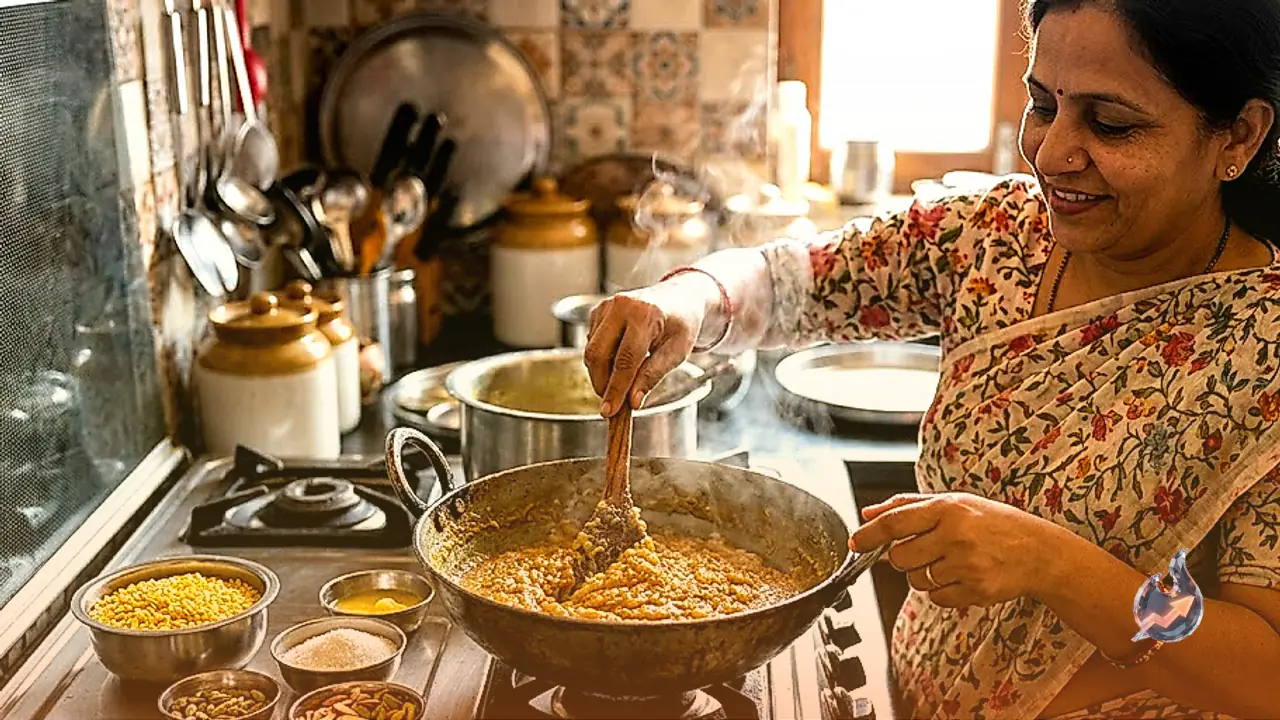
Creating an authentic Ghevar requires exceptional skill, patience, and precise temperature control. The fundamental preparation begins with three basic components: fine refined flour (maida), pure clarified butter (ghee), and ice-cold water. Artisans start by vigorously whipping pure ghee until it transforms into a smooth, creamy emulsified base. Gradually, fine flour and chilled water are incorporated into the mixture to form a batter. The consistency of this batter is crucial to the final outcome, as it must neither be excessively thick nor overly runny.
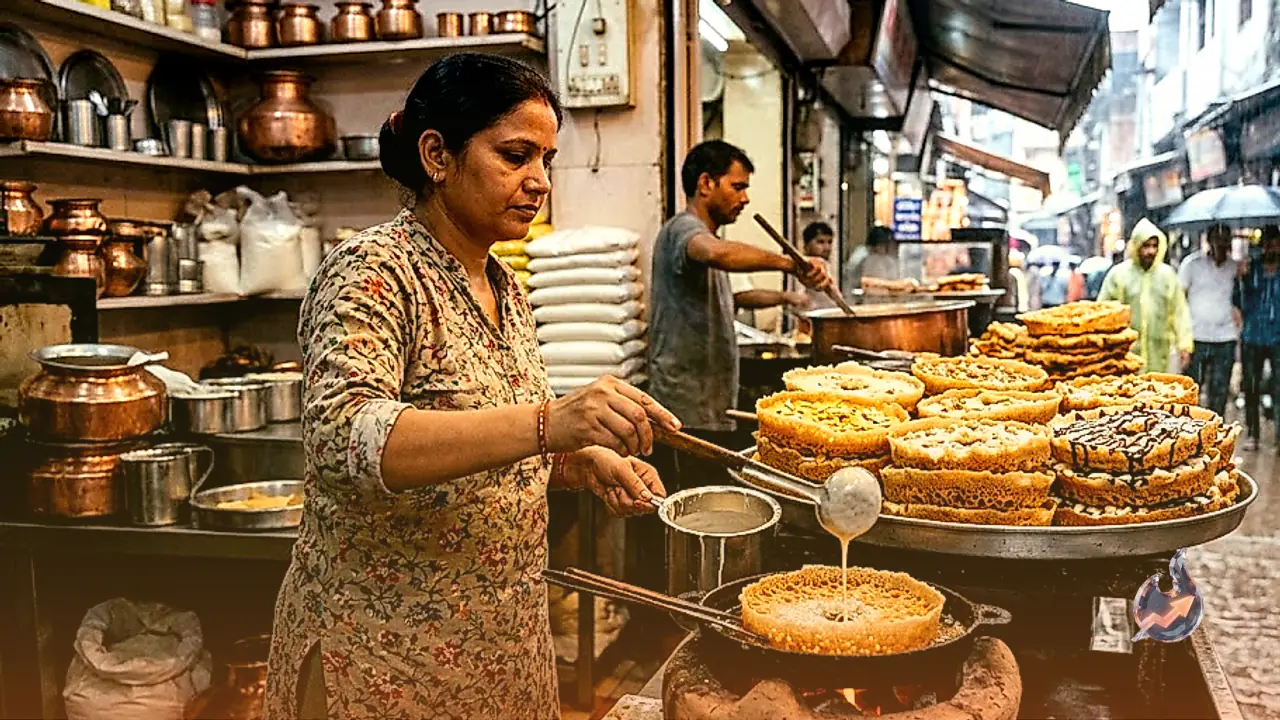
The iconic lattice or honeycombed structure of Ghevar depends entirely on achieving the exact batter consistency and applying the proper frying technique in hot fat. Sweet makers heat a generous amount of pure ghee or oil in a deep, heavy-bottomed circular container. Once the oil reaches a high frying temperature, a thin stream of cold batter is poured slowly from a significant height directly into the center of the vessel.
The moment the cold batter comes into contact with the boiling hot oil, it rapidly expands and splatters, forming tiny open air holes and delicate netted walls. Craftsmen repeat this pouring process multiple times in quick succession, building up layers of crispy lattice work. Throughout the frying process, a central opening is carefully maintained using a narrow wooden stick, ensuring the classic ring shape of the sweet.
Soaking in Syrup and Artisanal Variations
Once the crisp disc of fried batter reaches a deep golden hue, it is removed from the frying vessel and allowed to drain. The cooked structure is then either submerged directly into warm, scented sugar syrup or systematically drenched with syrup poured evenly over its surface. The Ghevar is left undisturbed for a specific duration, allowing the sweet liquid to penetrate every fine cavity of the crisp mesh. Finally, the surface is garnished with sliced almonds, crushed pistachios, and aromatic saffron strands, creating the classic plain version of Ghevar that remains the highest-selling variety during the festive rush.
In contemporary times, sweet artisans have introduced a variety of innovative flavors and luxury toppings to appeal to modern palates. According to sweet maker Sachin, contemporary sweet shops now offer unique modern adaptations such as chocolate Ghevar, paneer Ghevar, and varieties topped with dense dry fruit assortments. Traditional richer variants also hold immense popular appeal. Malai Ghevar features a rich layer of sweet milk cream spread over the top, while Rabri Ghevar is coated with a thick layer of condensed, slow-cooked Rabri for an indulgent mouthfeel.
Options like Mawa Ghevar, Kesar Ghevar, and heavy Dry Fruit Ghevar have also gathered a massive following among food enthusiasts. While fusion creations like chocolate and paneer varieties draw younger consumers, the classic plain and rich Malai Ghevar continue to hold their legendary position as the most sought-after festive treats in Agra.