



















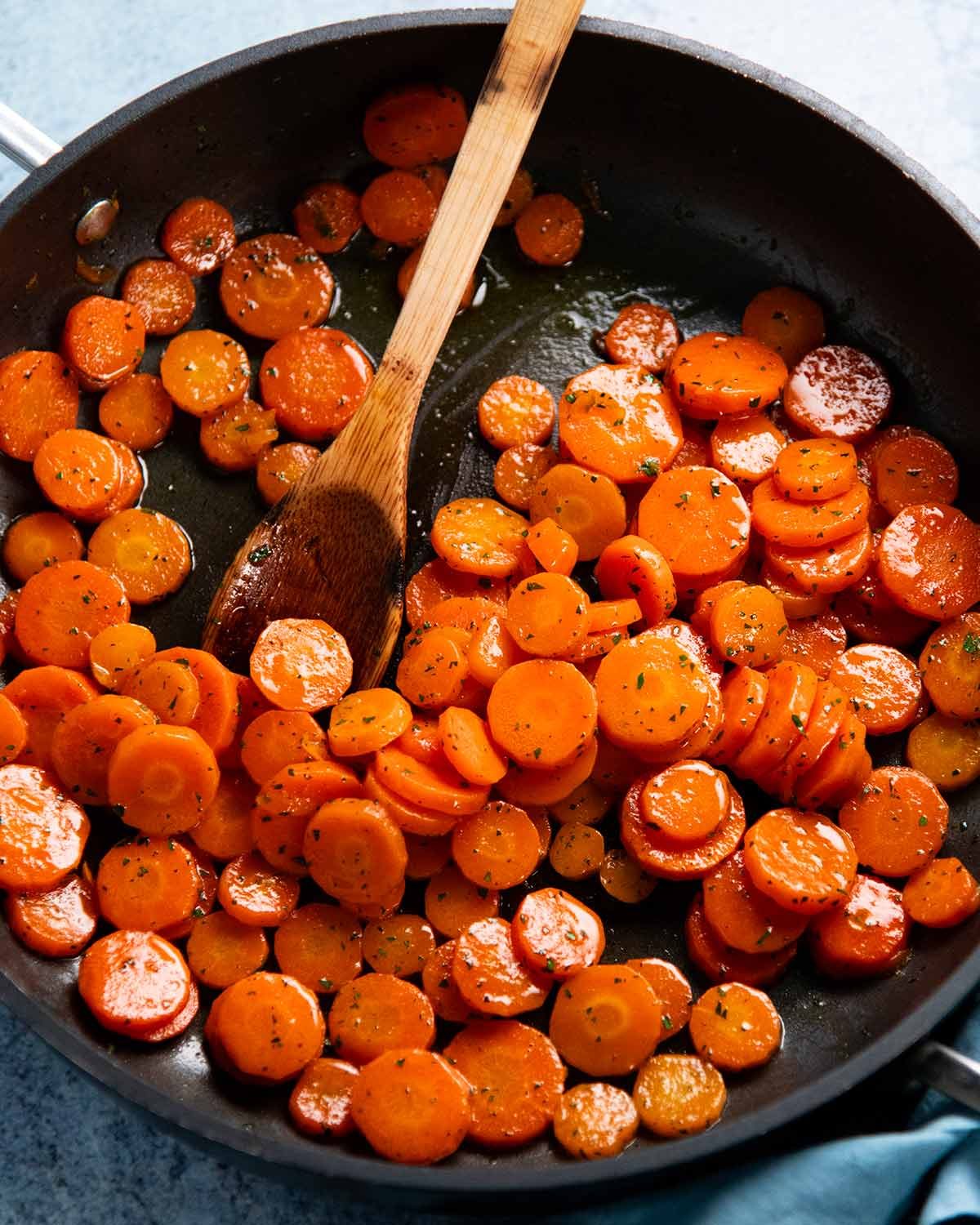
French culinary tradition has long excelled at elevating simple pantry staples into elegant, restaurant-quality dishes. When it comes to everyday root vegetables, few preparations match the sophistication of French glazed carrots, traditionally known as Carottes Vichy or Carottes Glacées. Unlike mainstream American or British glazed carrot recipes that rely on heavy coatings of brown sugar, maple syrup, or honey, the authentic French method takes a minimalist approach. By gently cooking sliced carrots in a small amount of water, butter, salt, and just a touch of white sugar, the natural sweetness of the vegetable takes center stage, coated in a delicate, shiny sheen.
The Origins of Carottes Vichy
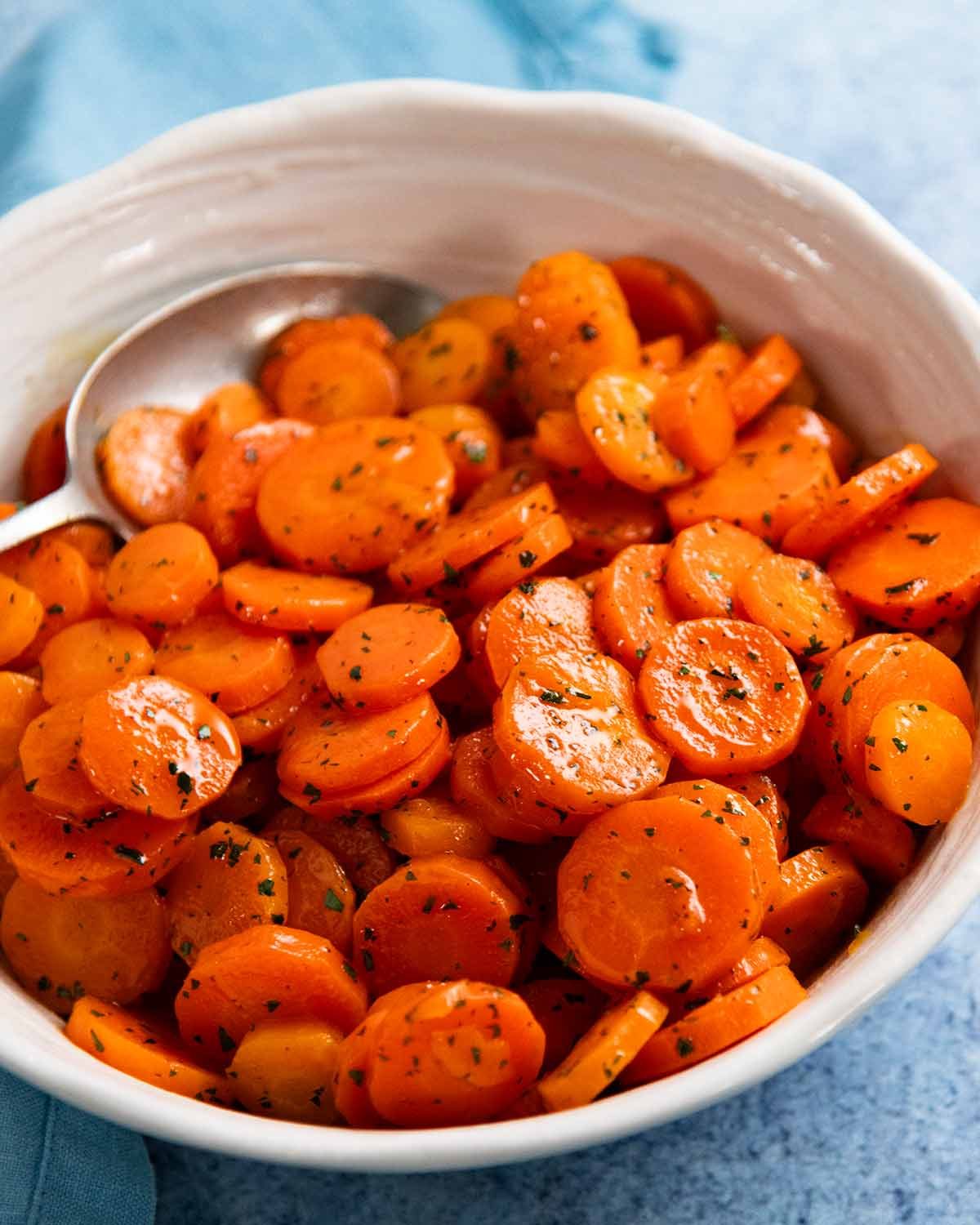
The dish takes its name from the historic French spa town of Vichy, renowned globally for its naturally mineral-rich spring water. In classical French culinary tradition, chefs utilized this mineral water to braise carrots, lending the dish its distinctive flavor and character. As taught in culinary academies, mastering this side dish is among the first lessons young chefs learn. Its versatility and understated elegance make it a mainstay across Parisian bistros, high-end fine dining establishments, and everyday French home kitchens.
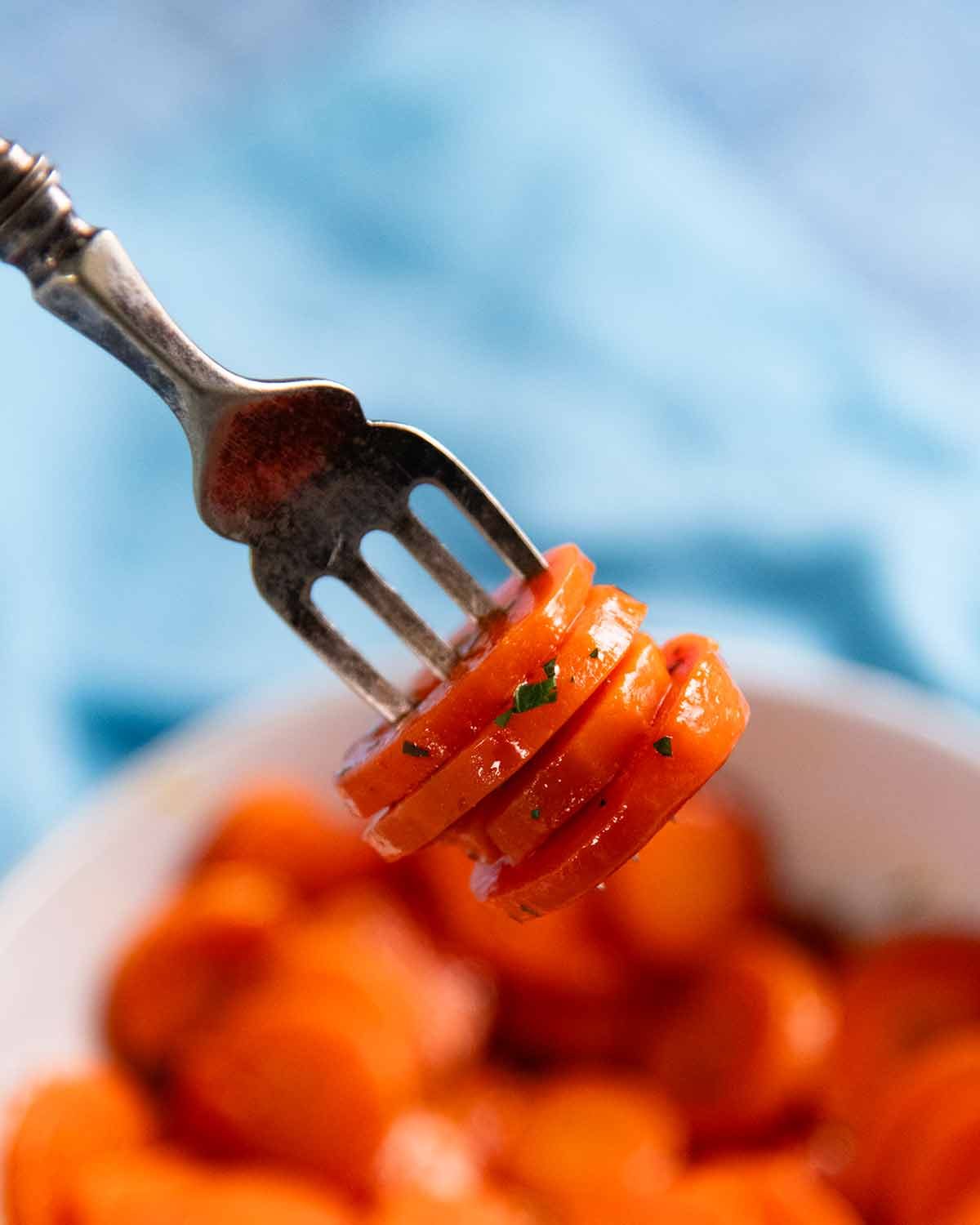
A critical advantage of this preparation over standard boiled vegetables is that no cooking liquid is discarded. In typical preparations, carrots are boiled in large pots of water and drained, washing away vital flavor and water-soluble nutrients. In the Vichy method, the carrots are braised in precisely enough liquid so that the water evaporates entirely during cooking, leaving behind a concentrated, rich glaze that clings directly to the vegetable rounds.
Key Ingredients and Proportions
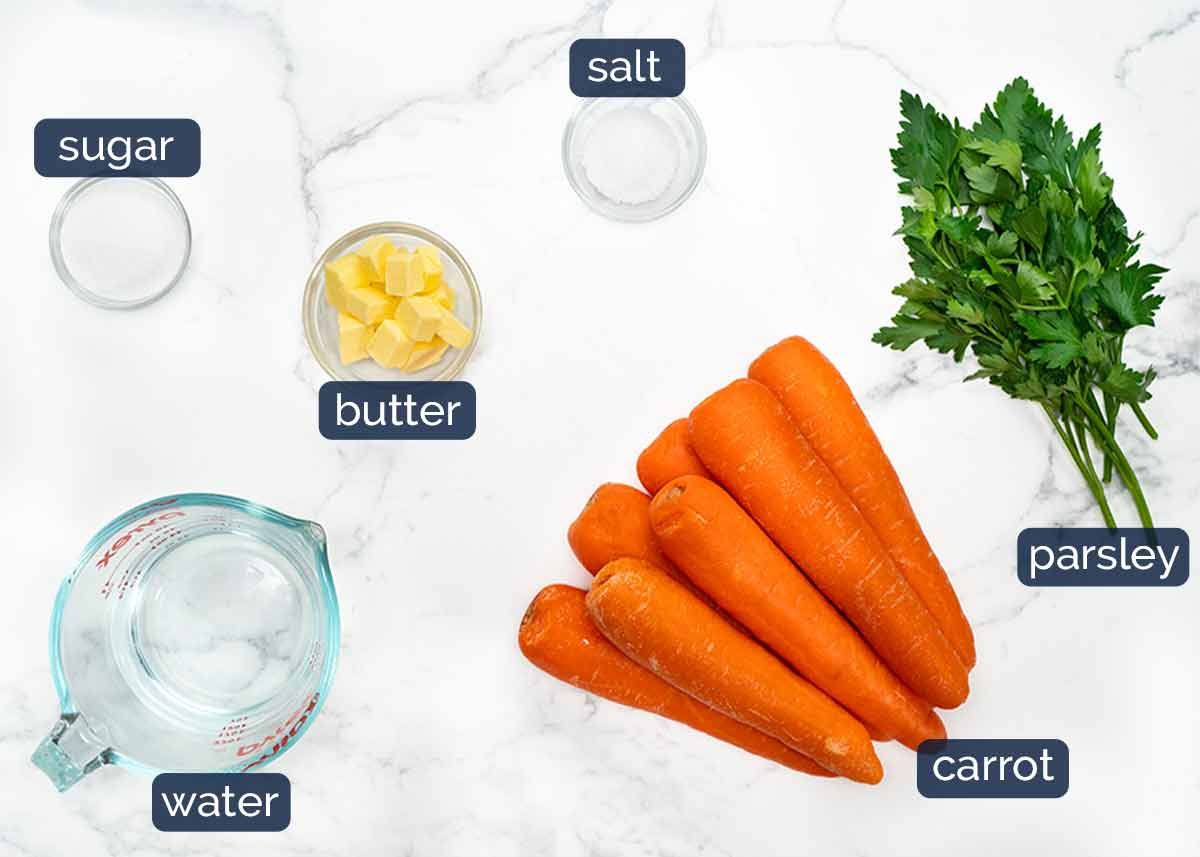
Creating this side dish for six servings requires just five core ingredients and a fresh herb garnish. Opting for high-quality organic carrots is strongly recommended, as their natural sweetness and robust flavor shine clearly in such a restrained recipe.
- Carrots: 800 g (1.75 lb) of fresh carrots, peeled and sliced evenly into 6 mm (0.2 inch) round coins.
- Water: 3/4 cup, providing the exact volume needed to steam the carrots through while evaporating in sync with cooking time.
- Unsalted Butter: 2 tablespoons (30 g), which emulsifies with the remaining moisture and sugar to create the glossy glaze.
- White Sugar: 4 teaspoons, a tiny fraction of the 1/4 cup commonly found in standard glazed vegetable recipes.
- Salt: 3/4 teaspoon of cooking salt or kosher salt. If substituting fine table salt, reduce the amount by half to 3/8 teaspoon; if using flaked sea salt, increase the measure by 50%.
- Fresh Parsley: 2 teaspoons of finely chopped flat-leaf parsley for a vibrant burst of color and herbaceous contrast.
Mastering the Cartouche Technique
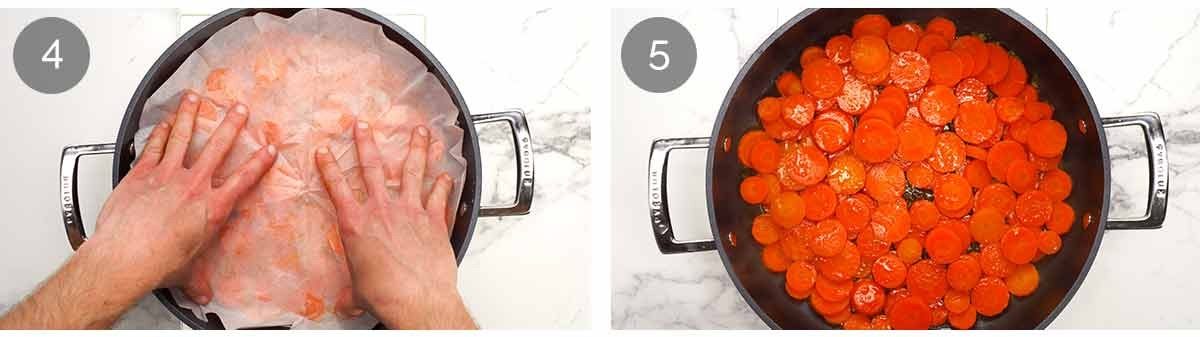
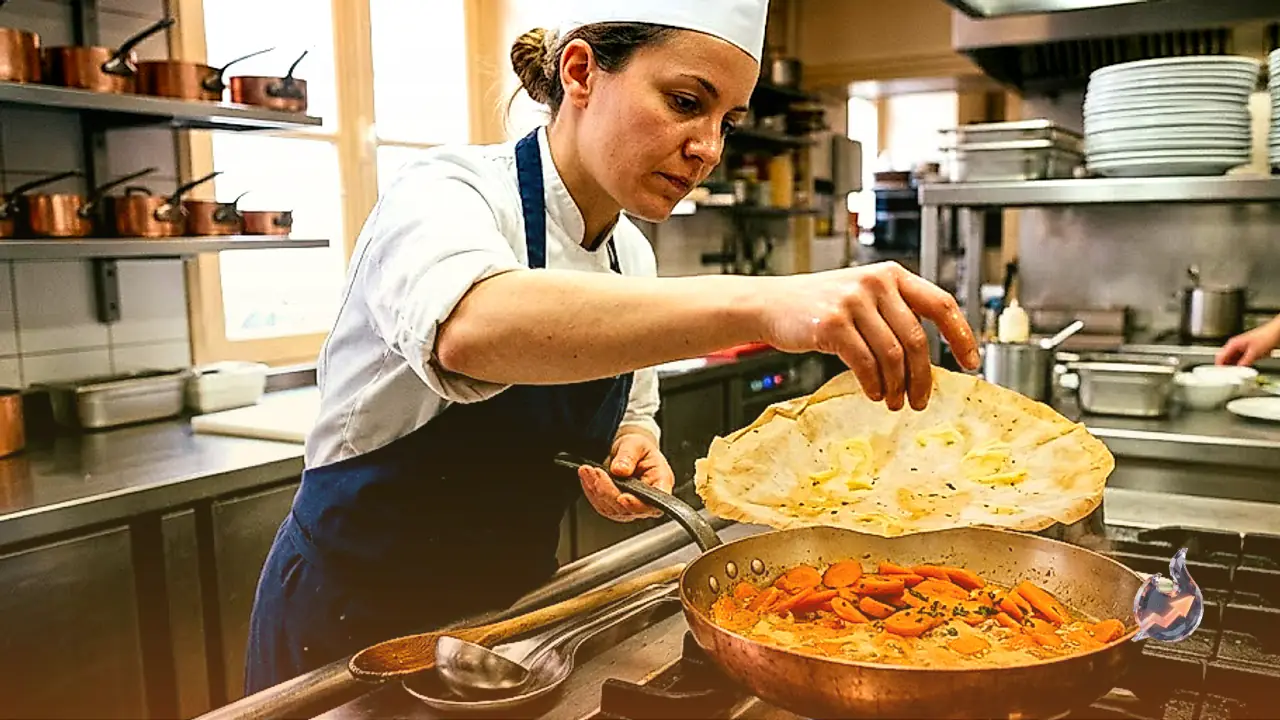
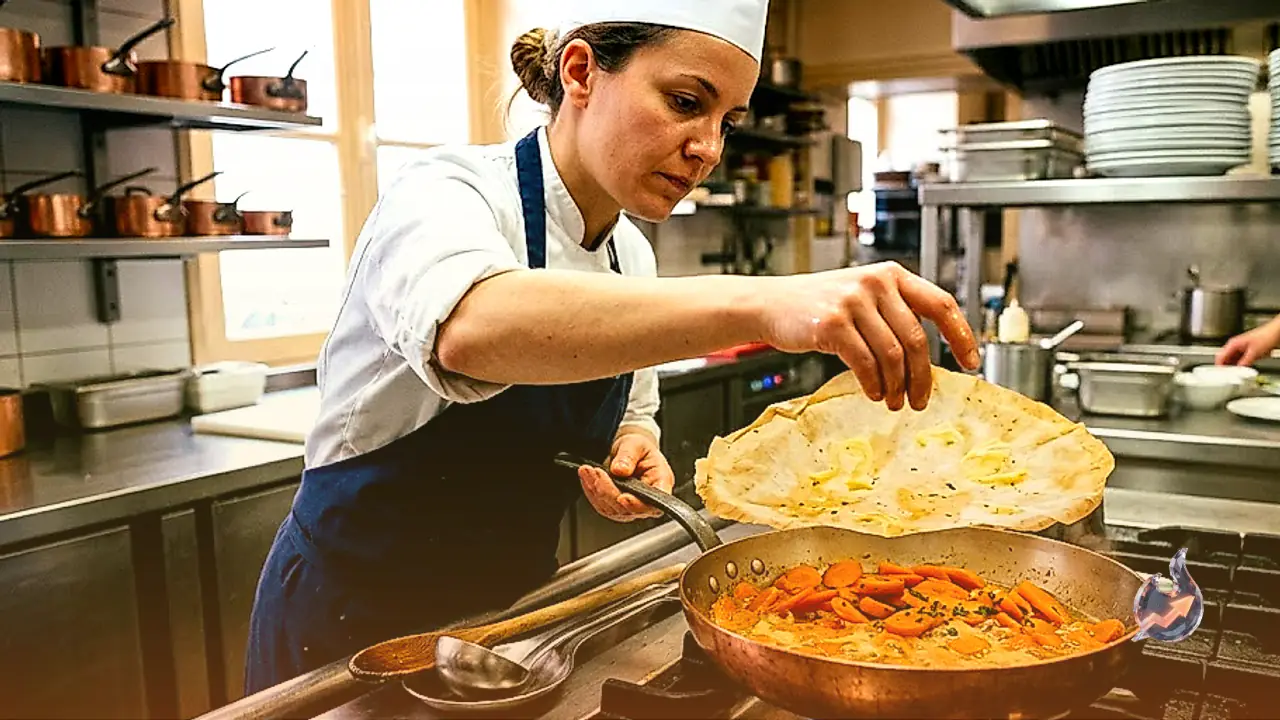
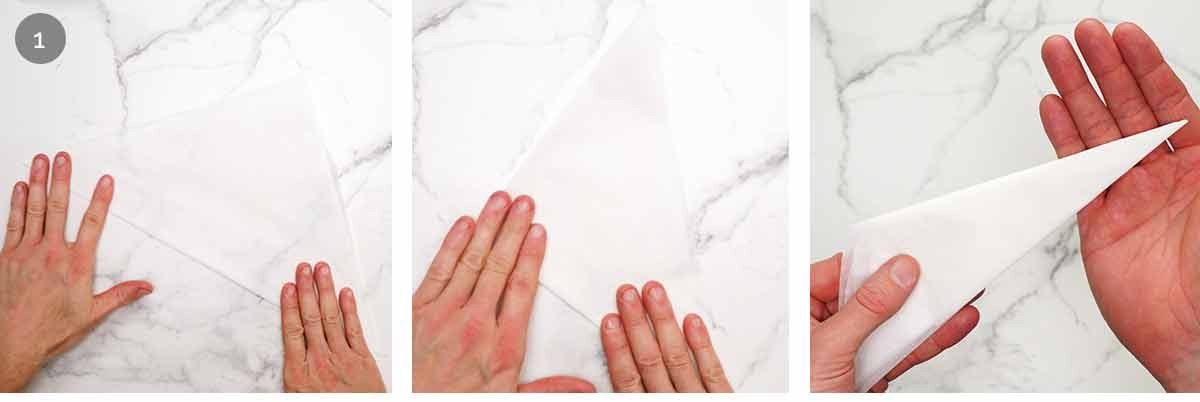
A distinctive feature of classical French braising is the use of a cartouche, a circular lid cut from baking parchment paper that sits directly on top of the food inside the pan. This technique creates a micro-climate: it traps steam against the carrots to ensure rapid, uniform softening while allowing excess moisture to escape around the perimeter so the liquid reduces down into a syrup.
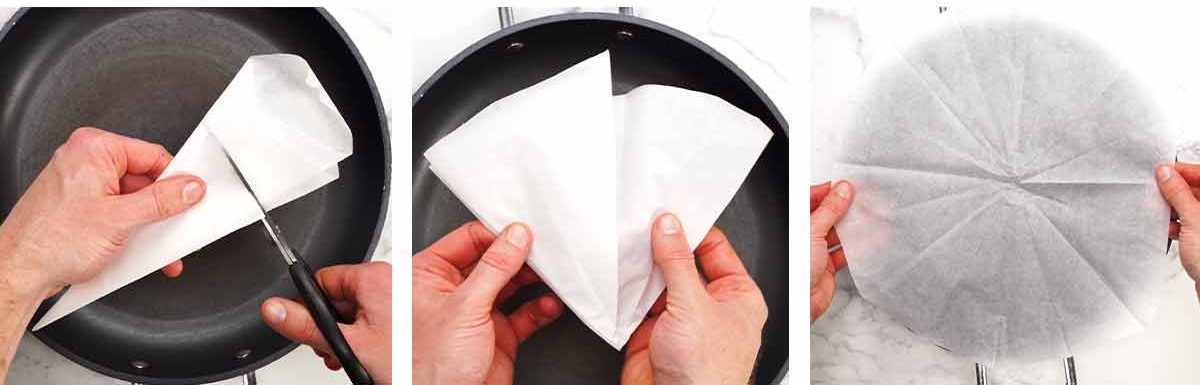
Constructing a cartouche takes less than 30 seconds. Begin by cutting a sheet of parchment paper slightly wider than your skillet. Fold it diagonally in half, then fold in half again, repeating the process until you form a slender, pointed triangle. Hold the pointed tip over the exact center of the skillet, measure out to the outer edge, and snip off the excess paper at the rim. When unfolded, you have a custom-fitted paper circle. While a standard metal or glass lid propped slightly open can serve as a substitute, it tends to extend cooking time by roughly 10 minutes and cooks the vegetables less uniformly.
Step-by-Step Cooking Instructions
The total hands-on preparation takes roughly 10 minutes, followed by 15 minutes on the stovetop
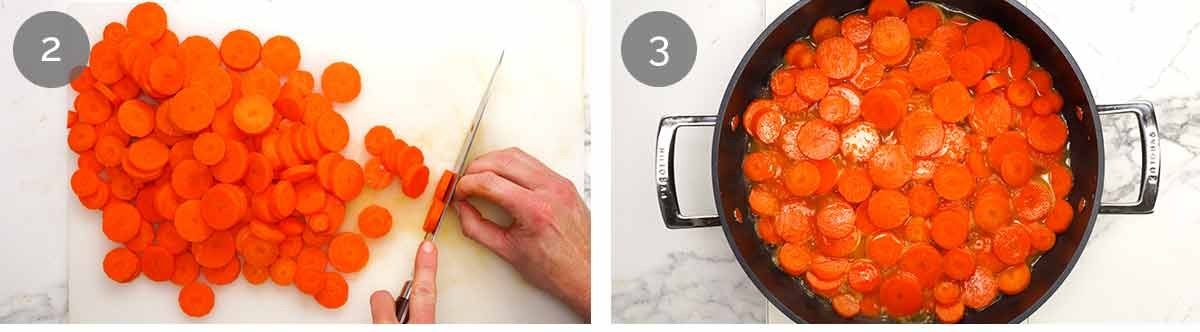
- Prepare the Carrots: Peel the carrots and slice them into uniform 6 mm rounds. The peeled skins can be reserved for making homemade vegetable stock rather than discarded.
- Create the Simmering Base: Set a large, 30 cm (12 inch) deep skillet over medium-high heat. Add 3/4 cup water, 2 tablespoons unsalted butter, 4 teaspoons white sugar, and 3/4 teaspoon kosher salt. Bring the mixture to a boil until the sugar fully dissolves, which takes about 30 seconds.
- Add Carrots: Tip the sliced carrots into the pan and stir thoroughly. The carrots should sit semi-submerged in the liquid rather than swimming under it. Lower the burner to medium heat to maintain a steady simmer.
- Apply Cartouche and Braise: Place the parchment cartouche directly onto the surface of the carrots and liquid. Allow the pan to simmer undisturbed for 15 minutes. Avoid stirring or lifting the paper during this period. By the 15-minute mark, the water should be fully evaporated, leaving a glossy coating. The carrots must be completely tender without taking on any brown coloration. If they remain slightly firm, add a splash of water, replace the cartouche, and cook for an extra minute or two.
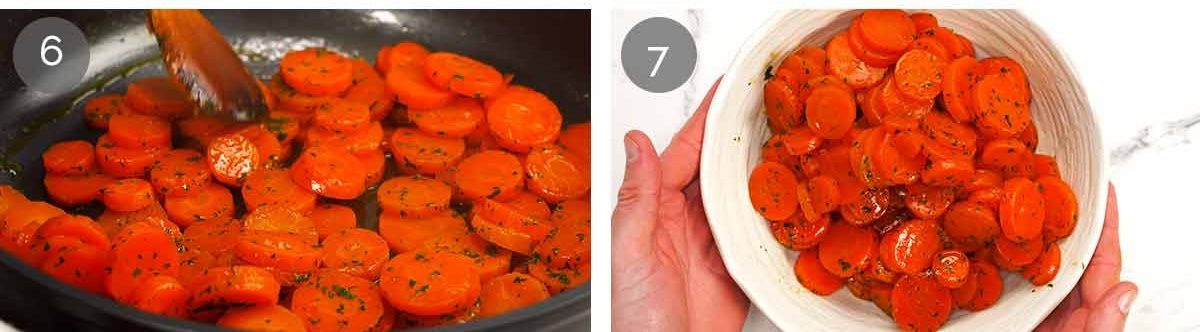
- Garnish and Coat: Remove the pan from heat and discard the cartouche. Scatter 2 teaspoons of finely chopped parsley over the carrots. Gently toss or stir the pan so every piece is enveloped in the buttery glaze, taking care not to crush the softened rounds.
- Plate and Serve: Carefully transfer the glazed carrots to a warm serving bowl and serve immediately.
Serving Pairings and Storage Details
These French glazed carrots pair effortlessly with traditional roasts, such as roast chicken, pan-seared steak, pork chops, and crispy pan-fried fish. Because the dish is cooked entirely on the stovetop, it is an invaluable side option when main roasts like prime rib, crackling pork shoulder, or beef tenderloin occupy the oven.
From a nutritional standpoint, each of the six servings yields approximately 101 calories, 15 g carbohydrates, 1 g protein, 4 g total fat (including 3 g saturated fat, 0.3 g polyunsaturated fat, 1 g monounsaturated fat, and 0.2 g trans fat), 11 mg cholesterol, 385 mg sodium, 428 mg potassium, 4 g dietary fiber, 9 g total sugars, 22,402 IU vitamin A, 8 mg vitamin C, 46 mg calcium, and 0.4 mg iron. Leftovers can be stored in an airtight container in the refrigerator for up to 3 days and gently reheated on the stove with a splash of water or in a microwave. Freezing is not recommended, as the delicate texture turns mushy upon thawing.