























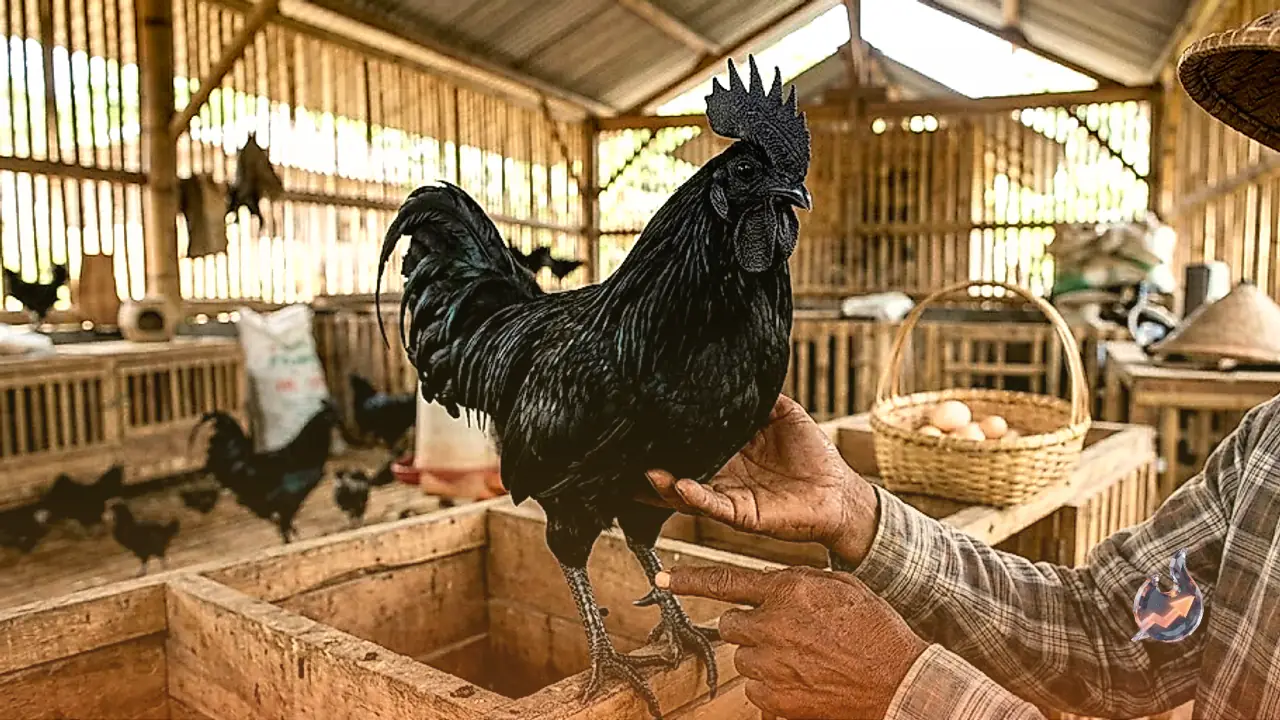

Standard chickens across global poultry markets typically trade for modest sums, running from a few dollars to a couple of dozen depending on their intended utility. However, a singular breed commands figures that frequently astonish casual observers and seasoned livestock enthusiasts alike. Known as the Ayam Cemani, this remarkable bird is instantly recognized by its striking, nearly jet-black appearance that blankets everything from its plumage and beak to its comb, legs, skin, and interior tissues. Originating from Indonesia, this rare and pricey breed is treated less like standard farm fowl and more like an elite collector avian, inspiring passionate keepers worldwide to shell out substantial fortunes for authentic specimens.
The Indonesian Heritage and the Meaning Behind the Name
The origins of the Ayam Cemani are deeply anchored in the Indonesian archipelago. The very nomenclature of the bird reflects its biological identity and native origins. In the Indonesian language, the word Ayam translates directly to chicken or fowl, while the identifier Cemani is associated with its profound, deep pigmentation. Over the decades, the distinct visual presence of the bird helped it transcend its regional borders to capture the attention of avian enthusiasts across the globe. Today, dedicated exotic poultry breeders in dozens of countries manage selective breeding programs to celebrate this unique bird.
The Genetic Mechanism Behind the All-Black Appearance
Placing an Ayam Cemani alongside ordinary farm chickens creates an immediate visual contrast. While most domestic breeds display varied patterns of brown, white, gold, or speckled feathers, the Ayam Cemani is characterized by an absolute absence of conventional coloration. Its feathers, sharp beak, fleshy comb, scaly legs, and underlying dermal layers are saturated in a dense black tone.
Behind this physical trait lies a precise genetic condition known scientifically as fibromelanosis. In straightforward biological terms, fibromelanosis triggers an intense hyper-proliferation of dark pigments, primarily melanin, across the bird's physiological tissues at rates vastly exceeding those found in ordinary chickens. This hyperpigmentation expresses itself throughout multiple layers of the avian anatomy, lending the Ayam Cemani an otherworldly aesthetic unlike almost any other domestic animal on earth.
Deep Pigmented Meat and Organs, But Familiar Red Blood
The hyperpigmentation of the Ayam Cemani is by no means confined to its outer feathers or superficial skin layers. Its muscular meat and numerous internal organs also exhibit unusually dark coloration compared to typical poultry cuts. It is this comprehensive saturation of internal tissues that fuels international fascination and curiosity around the bird. That said, popular myths claiming the entire creature is black down to every microscopic element are inaccurate. Its circulating blood is entirely standard red, behaving identical to the vascular systems of ordinary birds.
Debunking the Persistent Myth of Black Chicken Eggs
Because the bird's external and internal anatomy is famously black, a pervasive belief has taken hold that the Ayam Cemani must also produce jet-black eggs. Viral social media imagery frequently misleads the public by pairing the bird with coal-colored eggshells, but agricultural reality tells a completely different story. Ayam Cemani hens typically lay eggs that are cream-colored or light tinted, bearing no resemblance to the darkness of their mothers.
The biological reason is straightforward: the genetic mechanisms driving fibromelanosis saturate the chicken's fleshy tissues, organs, and feathers with excess pigment, but they do not alter the oviduct process that synthesizes the hard outer mineral shell of an egg. Consequently, this bird presents one of the most delightful paradoxes in the animal kingdom, where a completely black hen regularly produces normal, pale-colored eggs.
Pricing Realities: From Breeding Stock to Hatching Eggs
Valuing an Ayam Cemani is not governed by a flat pricing chart. The actual acquisition cost fluctuates widely depending on the host country, the age of the bird, genetic purity, breeding lineage, and the reputation of the seller. Specimens with verifiable ancestral documentation and exceptional conformity can command steep valuations, with international markets occasionally asking thousands of dollars for prime breeding pairs or certified lines. In Indian markets as well, genuine stock sells at multiples far above standard chickens. However, headlines boasting valuations in the hundreds of thousands of rupees do not apply universally to every individual bird; such sums remain reserved for the rarest, purest pedigree specimens.
A parallel pricing divide exists in the egg market. Table eggs meant purely for human consumption differ drastically in price from fertile hatching eggs intended for incubation. Fertile eggs originating from pristine, verified lineages command a hefty premium among hobbyists looking to hatch their own chicks. In specialized markets, individual hatching eggs can fetch hundreds of rupees each, though quotes fluctuate continually based on seasonal availability, local supply constraints, and breeder pedigree.
Why the Breed Commands Such Exceptional Market Value
The hefty financial investment associated with the Ayam Cemani boils down to severe scarcity, painstaking care requirements, and unique aesthetics. In stark contrast to industrial poultry setups that raise millions of broilers and layers annually, the global population of authentic Ayam Cemani specimens remains remarkably small. Preserving a clean genetic lineage without diluting its distinct traits requires strict, disciplined selective breeding practices that demand time and capital.
Furthermore, buyers do not treat this bird as utilitarian meat or egg livestock. For the vast majority of owners, the Ayam Cemani represents an exclusive status symbol, a decorative show bird, and a fascinating living conversation piece. The intersection of robust global curiosity and exceptionally constrained supply ensures that top-tier birds continue to trade at premium rates.
Essential Due Diligence When Purchasing Black Poultry
For aspiring breeders or poultry keepers considering investing in an Ayam Cemani, visual inspection alone is insufficient. Multiple other chicken varieties around the globe feature dark plumage or melanistic traits, creating fertile ground for misrepresentation. Prospective buyers faced with significant asking prices should thoroughly inspect lineage certificates, scrutinize the reputation of the breeder, and verify the physical characteristics of parent stock before committing funds to an acquisition.