






















Weekend breakfasts and festive gatherings in North India feel incomplete without the aroma of freshly fried, stuffed puris filling the kitchen. Bedmi puri, a classic delicacy deeply rooted in Uttar Pradesh and widely celebrated across the food streets of Delhi, offers a rich depth of flavour compared to standard puffed breads. Its spiced pulse filling and crunchy exterior make every bite exceptionally savoury. Achieving the signature texture and taste of sweetmeat vendors is entirely doable in a home setting when the dough moisture, spice ratios, and frying temperature are managed properly.
Ingredients Needed for the Dough and Filling
Crafting these crisp breads requires assembling two sets of ingredients: one for the firm, semolina-infused outer crust and another for the fragrant pulse mixture hidden inside.
For preparing the dough:
- 2 cups whole wheat flour
- 1/2 cup semolina, which ensures sustained crispness
- 3 tablespoons cooking oil or ghee, for shortening
- 1/2 teaspoon carom seeds
- Salt, adjusted to taste
For the spiced pulse stuffing:
- 1 cup skinless urad dal, soaked in clean water for 4 to 5 hours
- 2 green chillies, finely chopped
- 1 inch piece of fresh ginger root
- 1.5 teaspoons fennel seed powder
- 1 teaspoon coriander powder
- 1/2 teaspoon red chilli powder
- 1/4 teaspoon asafoetida
- 1/2 teaspoon garam masala powder
- 1/2 teaspoon dry mango powder
- Fresh coriander leaves, finely chopped
Cooking the Seasoned Dal Filling
Begin by draining all standing water from the urad dal that has soaked for 4 to 5 hours. Transfer the drained lentils into a grinding jar alongside the ginger and chopped green chillies. Pulse the mixture in short intervals without pouring in any additional water, forming a coarse mixture rather than a smooth purée. Retaining small grains of dal is crucial for giving the final puri its traditional rustic bite.
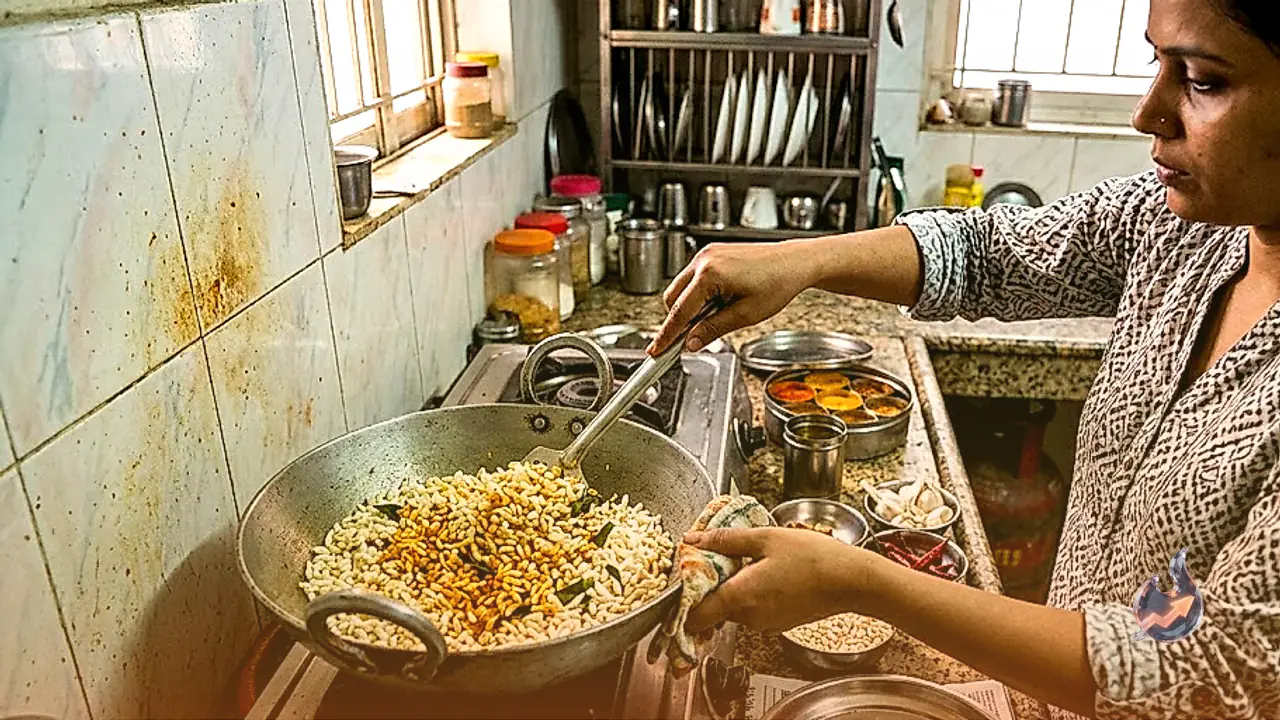
Place a pan on moderate heat and warm 1 tablespoon of cooking oil. Temper the oil with asafoetida until fragrant, then introduce the ground fennel, coriander powder, red chilli powder, dry mango powder, and the coarsely ground lentil paste. Sauté the lentils continuously on medium heat until every trace of moisture evaporates and the spices release a rich aroma. Once the filling turns dry and crumbly, turn off the flame, stir in the garam masala and fresh coriander leaves, and let the mixture cool completely to room temperature.
Kneading the Crisp Dough
In a wide mixing bowl, bring together the whole wheat flour and semolina. Rub the carom seeds between your palms to release their essential oils before adding them along with the salt. Drizzle in 3 tablespoons of oil or ghee, rubbing the fat thoroughly through the dry flour using your fingers until the mixture feels uniformly sandy.
Gradually sprinkle lukewarm water while bringing the flour together into a firm, tight dough. A stiff consistency is critical; excess water prevents the semolina from frying up into a flaky crust. Cover the rested dough with a damp cloth and leave it undisturbed for 15 to 20 minutes to allow the semolina granules to hydrate thoroughly.
Stuffing and Rolling Technique
After the dough has rested, knead it for a minute until smooth and divide it into small, uniform dough balls. Pick up one ball and press the edges with your thumbs while rotating it to create a small bowl or cup-like shape, keeping the center slightly thicker than the sides. Place 1 tablespoon of the cooled lentil mixture straight into the hollow.
Draw the dough margins upward over the stuffing, gathering them together at the top to seal the pocket completely without leaving air pockets. Smear a drop of oil onto the rolling pin and board to prevent sticking. Gently roll out the stuffed ball into a neat round circle. Keep the rolled round slightly thicker than standard flatbreads or plain puris so the spiced pulse layer remains safely sealed inside.
Frying to a Crisp Golden Finish
Heat a generous amount of oil in a deep kadai over medium-high flame. Test the heat before dropping in the puri; the oil must be hot enough to encourage immediate puffing. Slide the rolled puri gently into the oil, pressing down softly on its surface with a perforated ladle to help it expand evenly.
Once the puri puffs up, dial down the heat slightly to medium. Flip it over and fry patiently until both sides display a deep golden hue and a firm crust. Frying on controlled heat ensures the semolina cooks through and turns crisp rather than turning soft after leaving the pan. Drain the finished puris on a slotted spoon and serve them immediately alongside spicy potato curry.