





















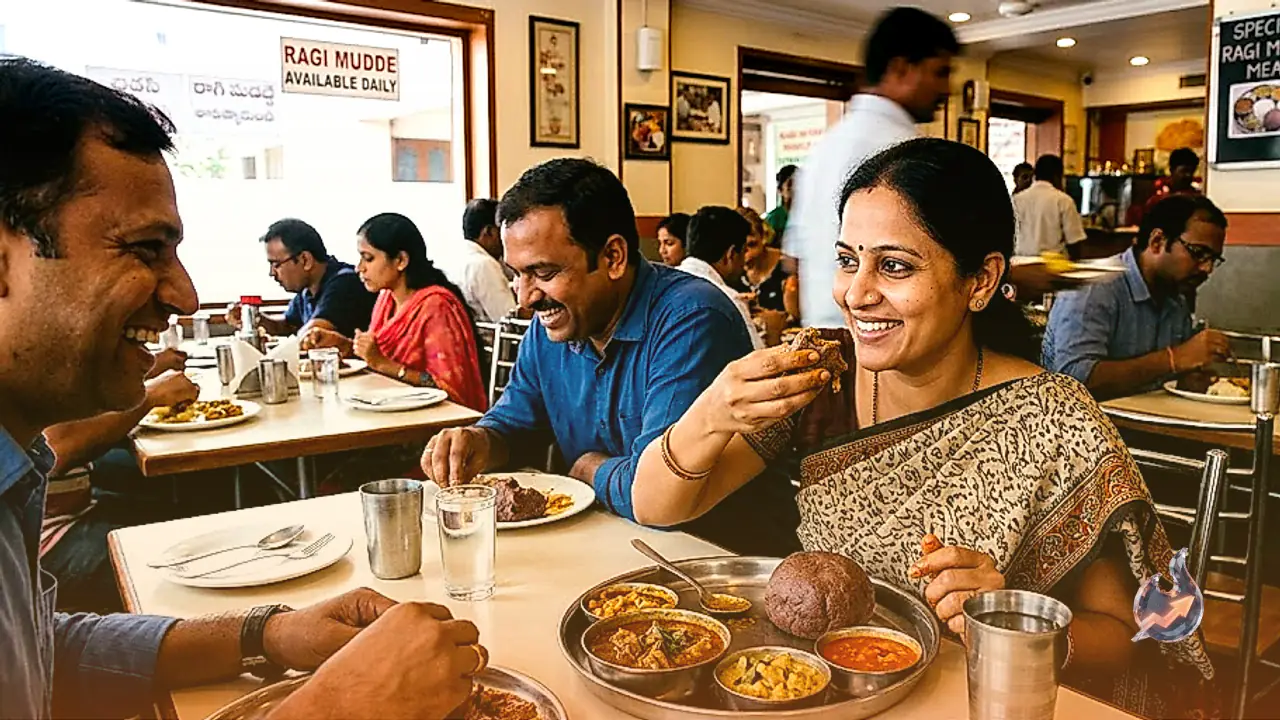

Across the Deccan plateau, culinary traditions have long celebrated rich aromatic biryanis, slow-cooked haleem, and fragrant meat curries. Today, a growing focus on wholesome nutrition has led food enthusiasts in Hyderabad to rediscover nutrient-dense heritage fare. Chief among these time-tested staples is ragi mudde, the steamed finger millet dumpling deeply rooted in southern culinary heritage. Diners in the city are increasingly pairing these nourishing spheres with robust gravies like mutton sherwa, baghare baingan, chicken salan, and tangy khatti dal.
Nutritional Profile of Finger Millet
Regarded widely as an indigenous superfood, ragi delivers an impressive concentration of natural calcium, dietary fiber, and bioavailable iron. Consuming this coarse grain fortifies bone density, sustains long-lasting stamina, and regulates digestive processes efficiently. Because it provides sustained energy without causing sudden blood sugar surges, health-conscious households are actively integrating it into regular lunch menus.
Essential Ingredients and Measurements
Preparing tender mudde at home requires 1 cup of quality finger millet flour, along with 2 cups of water divided strategically during preparation. Exactly half a cup of water is used to prepare an initial smooth slurry, while the remaining one and a half cups are brought to a rolling boil. A pinch of cooking salt and two small spoonfuls of pure desi ghee complete the ingredient list.
Step-by-Step Cooking Technique
Begin by spooning out 2 to 3 tablespoons of flour from the measured single cup into a separate small bowl. Stir in half a cup of room-temperature water gradually to form a silky, pourable paste without any lumps. In a heavy-bottomed pot or deep kadai, bring one and a half cups of fresh water to a boil over medium heat after stirring in the prepared slurry, a touch of salt, and 1 teaspoon of aromatic desi ghee.
As soon as the mixture bubbles vigorously, scatter the remaining dry ragi flour evenly across the surface. Resist the urge to mix immediately; cover the vessel with a tight lid and let it steam undisturbed on low heat for 60 seconds. This brief steaming interval softens the grain uniformly before physical manipulation begins.
Mashing and Shaping the Dumplings
Uncover the vessel and briskly churn the contents using a wooden churning stick or heavy wooden spatula. Vigorous, circular stirring prevents lump formation and ensures a completely uniform consistency. Continue stirring over low heat until the mass consolidates and cleanly pulls away from the walls of the cooking pot. Drizzle 1 teaspoon of desi ghee over the dough, seal with the lid, and permit it to settle on dum for an additional minute. Transfer the hot dough onto a broad plate, moisten your hands with chilled water to withstand the heat, and swiftly shape portions into neat, round spheres.
Traditional Serving Etiquette
Before placing the mudde on the dining table, indent the crest of each sphere slightly using a thumb or the back of a spoon. Pour a spoonful of warm melted ghee into this shallow indentation. Serve immediately alongside spicy Hyderabadi mutton curry, tangy lentils, or hot vegetable sambar for an authentic culinary experience.