

















When talking about traditional sweets in Bihar, Raskadam holds a special place in the hearts of dessert lovers, but the version prepared by Chaman Lal in Samastipur enjoys a distinct reputation. People have long wondered what makes this particular sweet so irresistible that customers keep returning to the shop. An inside look at the preparation process reveals that the biggest secret behind its phenomenal taste is uncompromising purity and age-old traditional methods.
In-House Preparation of Khoya and Chenna
Unlike many modern commercial sweet shops that rely on readymade ingredients, this establishment prepares both khoya and chenna directly on-site from fresh milk. A blend of cow and buffalo milk is used to make the khoya, and the artisans strictly avoid any form of adulteration. According to artisan Santosh Kumar Rai, maintaining the integrity of raw materials is the most crucial step in crafting a superior sweet, a practice that has been upheld since the very beginning.
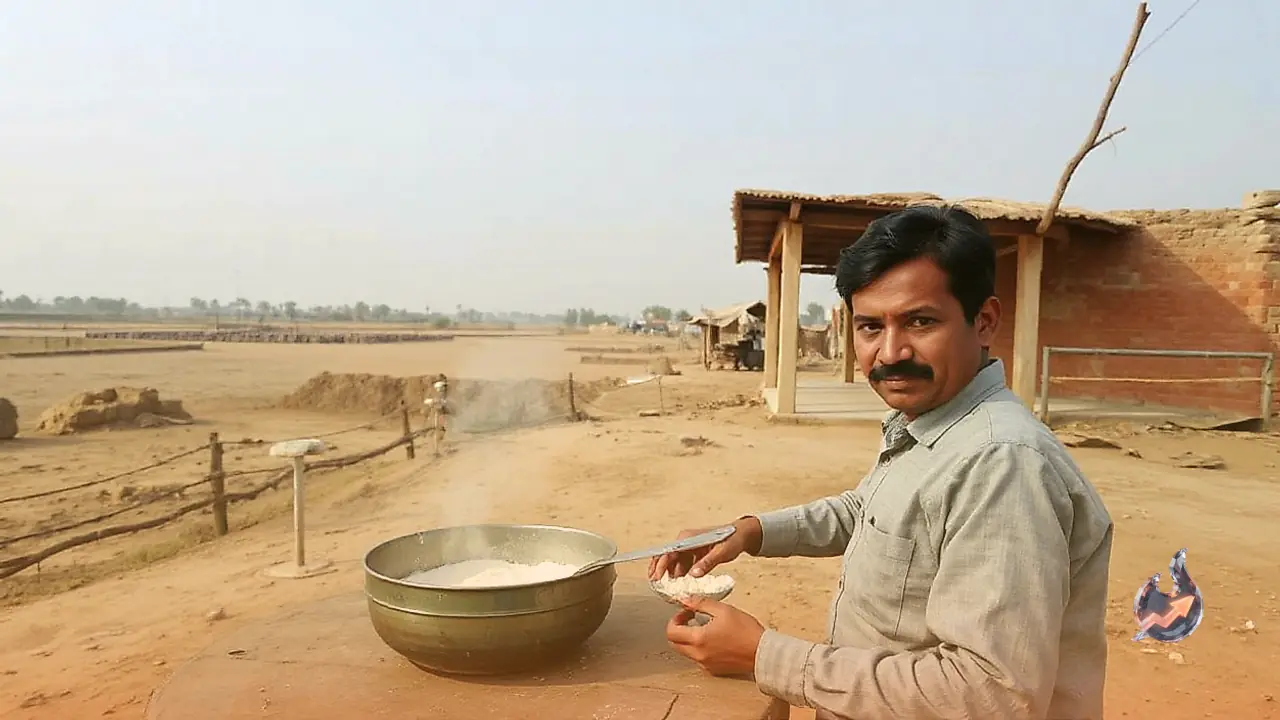
The meticulous making process begins by boiling a large quantity of milk in a big vessel. The milk is simmered continuously until it thickens into rich khoya and develops a distinct reddish hue. Sugar is then mixed into the warm khoya, and the mixture is roasted thoroughly before being left aside to cool and dry. Cardozo powder is added later to enhance the overall aroma and flavor profile.
Shaping and Final Assembly of the Sweet
Simultaneously, in a separate vessel, fresh milk is curdled to produce soft chenna. The chenna is kneaded thoroughly and shaped into tiny, uniform balls. To assemble the sweet, a portion of the prepared khoya is flattened, and a chenna ball is placed precisely at its center. The khoya is then wrapped neatly around the chenna to form a perfect spherical shape.
As a final touch, poppy seeds are sprinkled evenly over the exterior, completing the creation of Chaman Lal signature Raskadam. The artisans emphasize that maintaining the precise ratio between khoya and chenna is vital, as even a minor lapse in measurement can alter the texture and flavor of the finished delicacy.
Daily Consumption and Pricing Details
The massive popularity of Chaman Lal Raskadam is evident from the sheer volume produced every single day. More than two quintals of milk are consumed daily just to meet the high demand for this sweet. Despite preparing such large quantities, the entire stock frequently sells out by the time evening arrives.
Priced at approximately 600 rupees per kilogram, customers can also purchase individual pieces for 25 rupees each. Artisans note that food enthusiasts travel from far-off places specifically for this treat, while a loyal base of regular customers ensures steady patronage day after day.