





















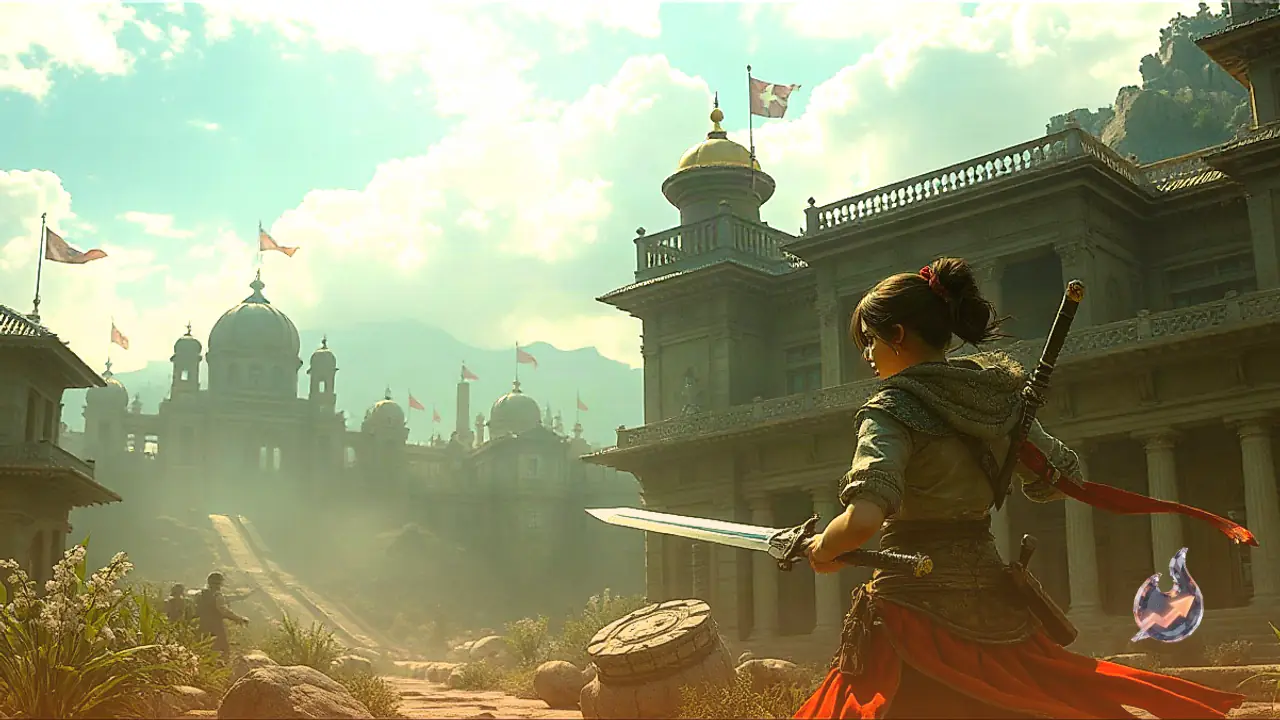

Developer Asobo Studio's A Plague Tale games are historically known for guiding orphans Amicia and Hugo across a plague-ridden Europe amidst countless swarms of rodents. Yet both are entirely absent in Resonance, a prequel that functions almost like a wholesale reboot while managing to become the finest entry in the franchise yet. The title is available across multiple platforms including Xbox Series X|S, PS5, and PC.
Tracing the Early Years of Sophia
Set fifteen years before the events of the original game, the narrative shifts its focus to the youth of Sophia, the pirate queen introduced as a supporting figure in the second game. As a young child, she remains captive inside a shady convent where nuns subject her to experiments, forcing her down a path of documenting disturbing visions of an ancient island and a lurking minotaur. Rescued eventually by her father, she matures into a talented warrior before finding herself inexorably drawn back to the very island that haunted her childhood dreams. Aided by her friend and implied love interest Leni, her only guide is a book filled with half-formed sketches pointing toward impending trials.
Stepping Into Action and Swordplay
This prequel serves as an opportunity to expand the world of A Plague Tale both narratively and structurally. By leaning into Greek mythology and offering an inspired twist on the tale of Theseus in the labyrinth, the game pivots away from pure stealth into traditional action territory. As an older and more capable protagonist, Sophia bypasses the shadows and deals directly with rival pirates and marauding soldiers, allowing the studio to deliver surprisingly solid swordplay mechanics.
Expanding Combat Depth and Hero Tombs
Resonance begins with fundamental attacks, parries, and critical strikes, but steadily enriches Sophia's arsenal with advanced maneuvers that shatter enemy defensive stances and seize control of the battlefield. New blades discovered inside hero's tombs hidden across the island grant unique abilities, while various charms and trinkets improve her evasive odds and strike output. While smartly balanced to ease returning players into action, progress remains strictly linear, meaning encounters happen precisely when narrative beats dictate rather than in open sandboxes.
Environmental Puzzles and Light Mechanics
One enduring hallmark of the franchise that remains intact is its heavy reliance on environmental puzzles. Sophia soon acquires an ancient sphere acting as a key to successive regional zones, which receives lens upgrades allowing her to manipulate light sources. Early challenges involve using light beams to reveal hidden messages, before evolving into refracted red, blue, and green alignments that unlock ancient mechanisms and require careful platforming perspectives. The overall execution frequently feels like an inspired hybrid of Assassin’s Creed and modern Tomb Raider style exploration.
The Minotaur and Stepping Back Into Shadows
Around the halfway mark, the experience shifts to honor the series' stealth roots. As Sophia unravels the island's dark history and the root of her visions, she encounters the minotaur. Asobo crafts a terrifying monster reminiscent of Nemesis, hunting through shadows and tracking her via its breath. Players must inch between cover and make desperate dashes toward rare light sources. These sequences are heavily scripted rather than open-ended, yet they execute with breathtaking tension.
Final Verdict on Resonance
The strict linearity might frustrate players who enjoy backtracking and exploration, as chapter replays serve mostly to mop up missed collectibles. Nevertheless, the combination of tight combat encounters, engaging puzzles, and harrowing stealth segments against the minotaur crafts an unforgettable journey. Bolstered by stellar voice acting in both French and English alongside cinematic storytelling, it proves to be the absolute best Plague Tale experience yet, even without a single rat in sight.