





















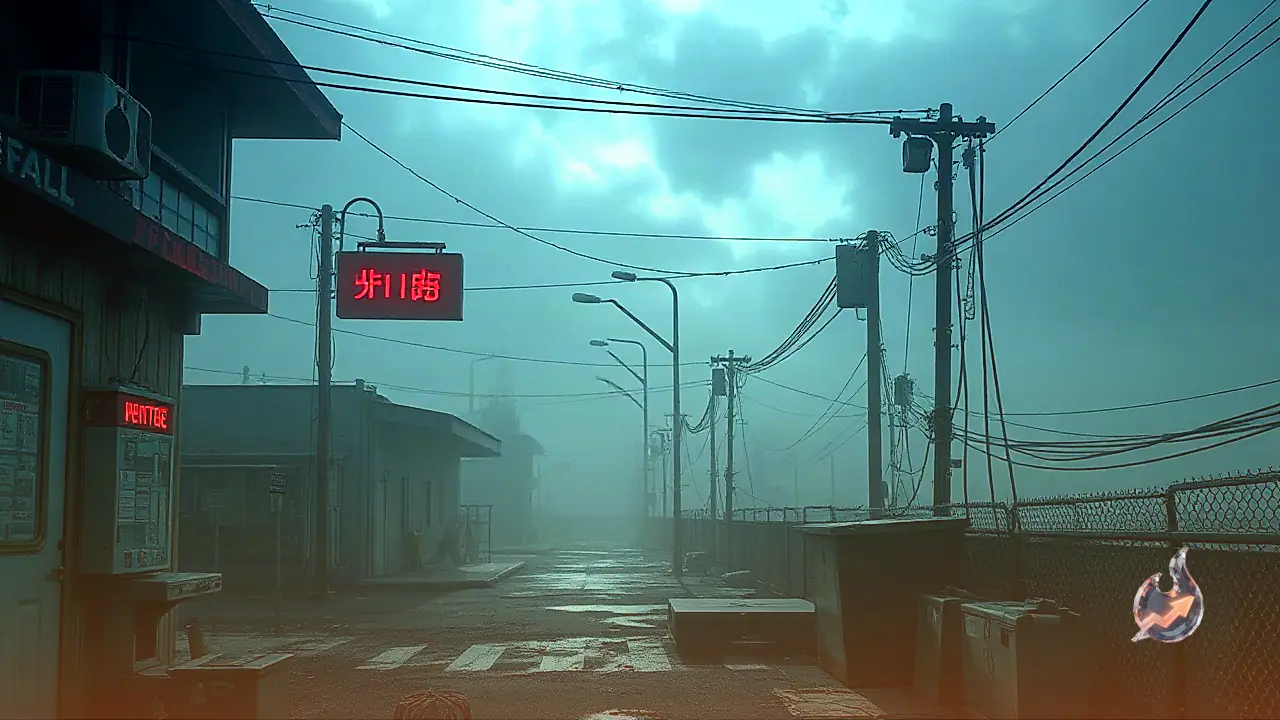

Konami takes survival horror into chilling new territory with Silent Hill: Townfall, dropping players directly onto St. Amelia, an isolated and deceptively scenic island located off the Scottish coastline. Stepping into the shoes of Simon Ordell, players experience the setting through an immediate first-person vantage point, leaving behind the third-person, over-the-shoulder perspective standard to past franchise chapters. The meticulously built, photorealistic environment immediately establishes a rich sense of place with discarded lobster traps, reflective puddles, flickering street lamps, weathered life jackets tied to posts, and vibrant flags flapping against the coastal wind. Yet beneath the salty sea breeze lies the signature, suffocating mist of the series, ensuring no one mistakes this eerie outpost for a tranquil getaway destination.
Disturbing Medical Themes and Mutated Threats
Any lingering illusion of safety evaporates once players encounter the grotesquely mutated monstrosities wandering the mist-cloaked streets of St. Amelia. True to franchise tradition, the standalone journey weaves together tense environmental exploration, evasive stealth tactics, deliberate puzzle-solving, and terrifying adversary encounters around an enigmatic, dread-filled plotline. However, this installment carves out a distinctive identity by embracing deeply unsettling medical body horror. Simon washes ashore with a puzzling IV setup lodged directly in his arm. While disturbing, that needle is matched by horrific opponents met later, including an enemy that fires a tube-connected apparatus straight out of a ruptured chest cavity. Simon's intravenous line is not merely cosmetic; it doubles as a vital recovery mechanic when he collapses in battle.
Nineties Nostalgia and Tactile Analog Technology
Set firmly in 1996, the game heavily integrates period-accurate hardware into its puzzle-solving and navigation mechanics. Chief among Simon's equipment is a chunky, static-drenched portable CRT television. Operating somewhat like the classic motion tracker from the Alien film series, this handheld device reveals puzzle hints, uncovers narrative fragments, and identifies nearby hostile entities. The focus on retro analog systems extends well beyond the miniature screen. Players occasionally shift perspective to control other characters, utilizing items like a doctor's beeper. Throughout St. Amelia, progress relies on interacting with period staples such as boxy desktop computers, payphones, cassette decks, 3.5-inch floppy disks, and noisy fax machines. The authentic screech of dial-up connections and the mechanical clatter of dot-matrix printers cement the mid-nineties atmosphere.
Frustrating Checkpoints and Mechanical Clunkiness
While the mood and era-specific audio craft an engrossing descent into terror, several mechanical flaws detract from the overall journey. The hand-to-hand and ranged combat often feels stiff and unwieldy, stealth mechanics can be finicky, and the static-laced portable television occasionally proves erratic when monitoring surrounding threats. While these rough edges might intentionally amplify player vulnerability and heighten suspense, they frequently generate exasperation when paired with an exceptionally unforgiving checkpoint layout.