




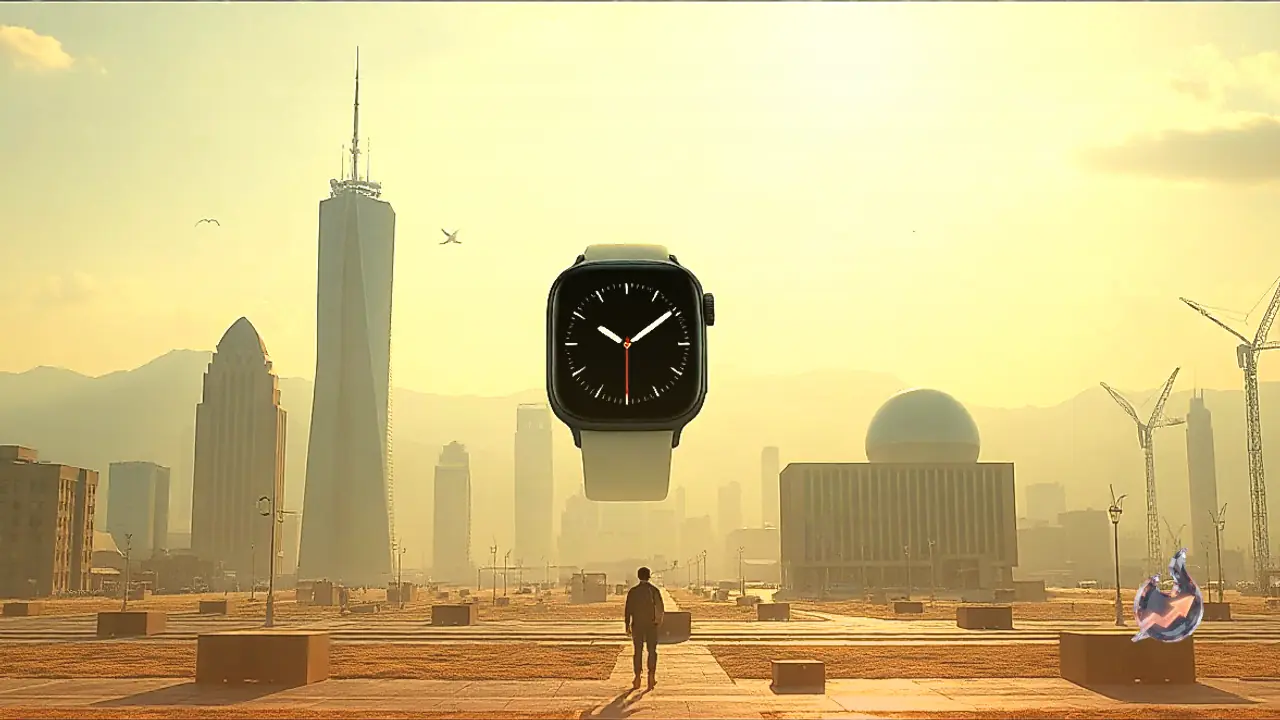

















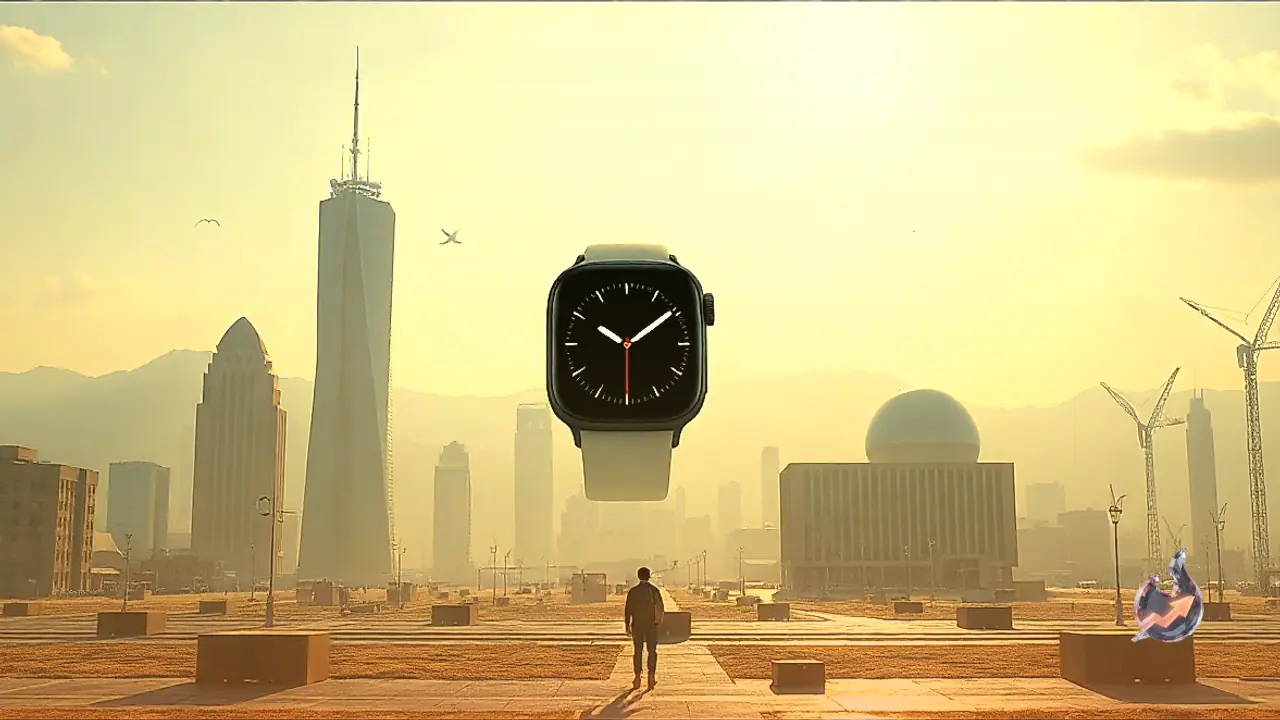

Navigating Apple's smartwatch matrix requires understanding the fine balance between health tracking fidelity, overall battery endurance, and personal budget. The current lineup centers around three distinct hardware offerings: the flagship Series 12, the outdoor-focused Ultra 4, and the entry-level Watch SE (3rd Gen). While the physical aesthetics across generations may appear evolutionary, internal changes in sensor architecture, processing efficiency, and daily battery capabilities distinguish each model significantly.
Apple Watch Series 12: The All-Around Flagship
The Series 12 represents Apple's top-tier mainstream wearable, anchored by its redesigned Health Sensing System. This upgraded internal suite drastically increases the accuracy, operational frequency, and scope of vital health measurements. The onboard ECG utility now utilizes an array of 32 electrodes to ensure far consistent skin contact, replacing the 2-electrode setup found on the Series 11. Complementing this are redesigned optical sensors paired with higher-efficiency LEDs, yielding refined heart-rate calculations.
Tracking intervals have seen a major overhaul. The Series 12 registers background heart-rate metrics every five seconds throughout the day, compared to the five-minute sampling intervals on the Series 11. Heart rate variability (HRV) is calculated as frequently as every five minutes, stepping up from the roughly two-hour intervals of its predecessor. These continuous data streams power Apple's new Readiness score, a feature that synthesizes recent sleep, activity, and biometric trends to quantify daily physical recovery.
On the software front, the Series 12 introduces Audio Intelligence capabilities, with headline functions such as Live Rewind and Siri Recap slated for rollout via software updates later in the year. Battery performance remains rated at up to 24 hours under normal usage and up to 38 hours in Low Power Mode. Accelerated charging allows a 15-minute charge to deliver up to 12 hours of standard operation, or a 5-minute charge to provide up to 10 hours of sleep tracking. The front panel features a wide-angle OLED Always-on Retina display reaching up to 2,000 nits of peak brightness. Available casing options include Aluminum (Dark Bronze, Light Gold, Black, Space Gray), Titanium (Radiant Gold, Natural), and Ceramic (Pearl White, Night Blue). Notably, satellite connectivity remains absent from this flagship tier, staying exclusive to the Ultra range.
Apple Watch Ultra 4: Built for Endurance and Harsh Environments
Engineered for multi-day expeditions, water sports, and extreme physical environments, the Ultra 4 prioritizes extended runtime, durability, and specialized safety functions. Its core improvements center on an expanded battery capacity, swift power delivery, and processing enhancements via the new S11 chip. The device delivers up to 50 hours of battery life on a single charge—up from 42 hours on the Ultra 3—and reaches up to 84 hours when operating in Low Power Mode. Fast charging allows 15 minutes on the charger to replenish up to 18 hours of normal operation or 5 minutes to supply 10 hours of sleep monitoring.
Powered by the Health Sensing System and S11 silicon, the Ultra 4 supports the full suite of continuous background health tracking, the Readiness score, and Audio Intelligence tools. Hardware capabilities include 100 meters of water resistance alongside an integrated depth gauge operational down to 40 meters for recreational scuba diving.
Safety features are headlined by satellite messaging, which enables two-way communication with emergency services when cell towers and Wi-Fi networks are unavailable. Fall detection, crash detection, and a high-decibel emergency siren provide additional failsafes during remote activities. The display utilizes a wide-angle OLED Always-on Retina panel outputting up to 3,000 nits of peak brightness. While the 49-mm titanium casing offers maximum structural integrity, its overall footprint can feel bulky on slender wrists where a 46-mm option might offer a more ergonomic fit.
Apple Watch SE (3rd Generation): Entry-Level Performance
Positioned as the most accessible entryway into the wearable ecosystem, the Watch SE (3rd Gen) carries over its key design architecture without a new hardware release this cycle. Driven by the S10 processor, it incorporates important wellness features that were missing from the SE 2, such as sleep apnea alerts and skin temperature detection.
Running watchOS 27, the SE 3 provides access to software enhancements including the dynamic app grid, the dedicated Siri app, and Workout Buddy. While its official runtime specification rates battery life at up to 18 hours (and up to 32 hours in Low Power Mode), real-world testing demonstrates that it can maintain a full day of operation even with the display continuously active. Fast charging capability is also included.
To maintain its lower price point, the SE 3 omits several hardware components. Its display tops out at 1,000 nits on a standard OLED panel, lacking the wider viewing angles of the higher-tier displays. It also omits the Ultra-Wideband (UWB) locator chip, blood oxygen monitoring, electrocardiogram (ECG) capabilities, and modern hypertension notifications. Advanced software tools like high-frequency biometric logging, the Readiness score, and Audio Intelligence are similarly unavailable on this model.
Evaluating Previous Generations: Series 11 and Ultra 3
With generational MSRPs remaining identical at launch, purchasing previous-generation stock makes commercial sense only when substantial retail discounts are available. The Series 11 ($399 launch price) lacks high-frequency background sampling for heart rate and HRV, misses the Readiness score, and lacks Audio Intelligence integrations. It relies on standard GPS rather than Precision L1 GPS and features slightly slower charging speeds, restoring up to 8 hours of battery life from a 15-minute charge.
Similarly, the Ultra 3 ($799 launch price) offers 42 hours of battery life compared to the 50-hour duration of the Ultra 4. It lacks high-frequency biometric tracking, the Readiness score, and Audio Intelligence capabilities, though its core chassis, satellite functionality, and water resistance remain otherwise comparable.
From an operating system perspective, watchOS 27 compatibility is restricted to Series 9 hardware and newer. Consequently, investing in devices older than the Series 9 is not recommended given the loss of ongoing software support and security updates.