




















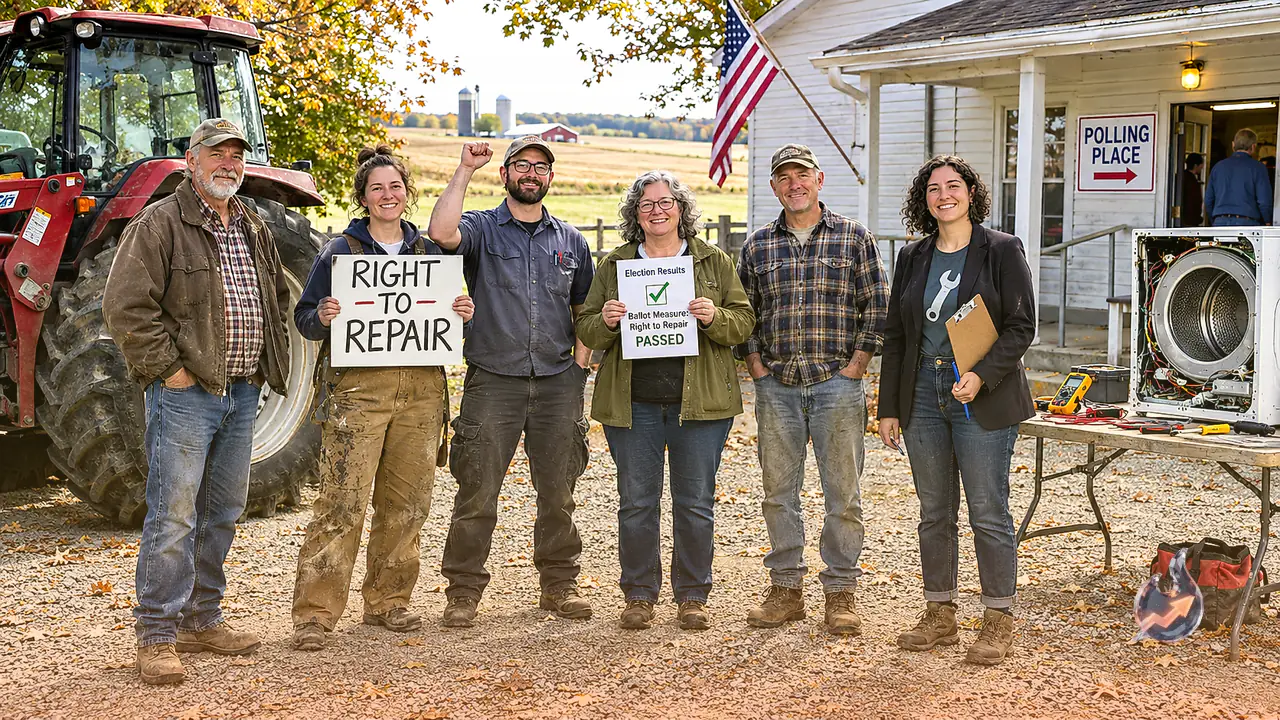

Recent U.S. election results have provided a notable political tailwind for the right-to-repair movement. Iowa senator-elect Josh Turek and presumptive Minnesota state representative Jake Johnson both centered their platforms on repair policies, focusing heavily on issues that impact farmers and their heavy equipment. At the time of publication, Johnson race had not yet been officially called and could potentially face a recount. Meanwhile, in St. Paul, Minnesota, local voters overwhelmingly passed a ballot measure ensuring renters possess the right to repair their living spaces and appliances.
Broad Bipartisan Appeal and Grassroots Momentum
Driven by dedicated advocates across the United States and internationally, the right-to-repair movement pressures lawmakers to enact regulations that prevent manufacturers from locking owners out of their own hardware. Repair initiatives consistently attract bipartisan backing, drawing support from a diverse coalition that includes ordinary consumers, agricultural workers, and wheelchair users who rely on independent fixes. Nathan Proctor, senior director of PIRG right-to-repair campaign, points out that the current political climate favors policies protecting everyday people, cutting unnecessary costs, and fostering bipartisan cooperation, creating an ideal environment for the movement.
Consumer Frustration and Broader Ownership Battles
Advancing right-to-repair legislation represents a crucial battleground in the wider fight over digital and physical ownership in the US. Public frustration runs high as major corporations increasingly convert everyday products into subscription services or utilize software locks to prevent individuals from modifying or repairing their own gear. This annoyance mirrors long-simmering discontent over the broader economic and political landscape, where tariffs, component shortages, and an unpopular conflict with Iran have driven up prices across the board. Kevin O Reilly, executive director of Fulu, an advocacy group focused on digital ownership and product rights, notes that grassroots efforts to reclaim device control echo the core message delivered by voters at the ballot box.
The Legislative Hurdle of the DMCA
This widespread consumer discontent targets the root legislative barrier: Section 1201 of the Digital Millennium Copyright Act. Enacted in 1998, this federal statute criminalizes the circumvention of digital security locks, allowing corporations to penalize unauthorized repair with potential prison time. Repair advocates have long condemned the legislation, arguing that companies weaponize it to block people from fixing electronics without official software access. For advocacy groups, the reshuffled Congress presents the cleanest legislative target in decades, as voter frustration cuts squarely across traditional party lines and demands actionable policy solutions.