






















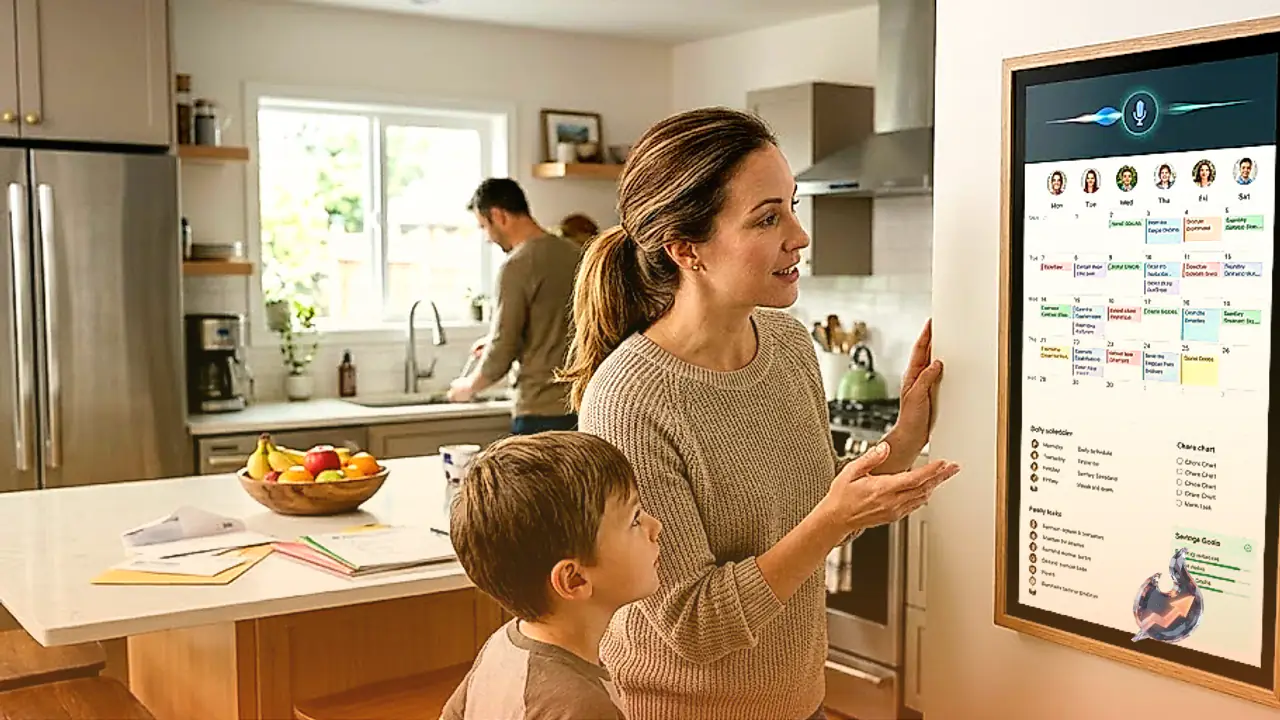

Digital wall calendars have seen a notable surge in popularity over the past year, largely propelled by devices like the Skylight Calendar. After testing various models, the appeal is clear, as these gadgets consolidate multiple digital schedules like Google Calendar, iCalendar, and Outlook Calendar into a single household display. They serve as excellent coordination tools for couples who want to discuss plans without staring at their phones, while also doubling as household management hubs complete with meal planning, chore trackers, to-do lists, and photo frames.
The Greenlight Family Hub stands out in this category due to its extensive feature set. Originating as a banking and financial tool for parents and teenagers, the device now incorporates family location tracking through the Greenlight app alongside a GPS tracker option for younger children. This evolution transforms a standard schedule display into an all-in-one family management platform where households can oversee calendars, chores, kids' spending, and member locations simultaneously.
A standout addition behind a 10 dollar a month membership is the inclusion of a voice assistant, addressing a long-standing gap in the market. Greenlight's proprietary voice assistant proves easy to use and provides thoughtful answers, prompting questions as to why other digital wall calendars lack voice integration while traditional smart displays still miss out on comprehensive calendar pages and chore charts. Greenlight leverages its existing ecosystem as a starting point, positioning the hub as a centralized command center for busy households.
According to Sushil Sharma, chief product officer at Greenlight, the lack of voice support across competitors was a deliberate gap they aimed to fill. Voice assistants have existed for over a decade, yet the digital calendar market ignored them until now. The goal was to create a natural and seamless experience that reduces the number of separate devices needed at home, making it especially accessible for younger children who might not yet read or type fluently.
Powered by frontier large language models paired with proprietary family safety tools, Greenlight's AI assistant avoids sensitive topics while handling timers and everyday questions. A conversation panel appears on the right side of the screen during interactions, reminiscent of the Alexa+ experience on an Echo Show. However, testing reveals that the wake phrase can sometimes be overly sensitive, occasionally triggering from random room conversation and continuing to listen for further prompts until explicitly told to stop.
This listening sensitivity is not unique to Greenlight, as similar behavior occurs with Google Gemini-powered smart speakers, leading to frequent interruptions. Despite this minor drawback, the hub offers extensive utility, though some users might find the combination of financial tracking and location monitoring reminiscent of a big brother surveillance system. Setup hiccups can occur if users get stuck on the financial pathway, though the company actively addresses such app friction.
Crucially, the hardware includes a microphone but no camera, alleviating privacy concerns common with other smart displays. Most features remain accessible without a premium subscription, unlike competitors who charge for photo storage and screen savers. Greenlight specifically gates its AI assistant, voice interaction, and family location sharing behind the paid tier, leaving the base calendar fully functional for those less inclined to use voice commands.
Looking ahead, integrating voice assistance and smart home controls into more digital wall calendars feels like an inevitable and necessary step for the industry. While companies like Amazon possess the infrastructure to introduce similar models given their existing paywalled voice ecosystems, others may need hardware revisions to incorporate microphones. Ultimately, users would rather see a clean calendar display on their home screens than endless advertisements or digital clutter.