



















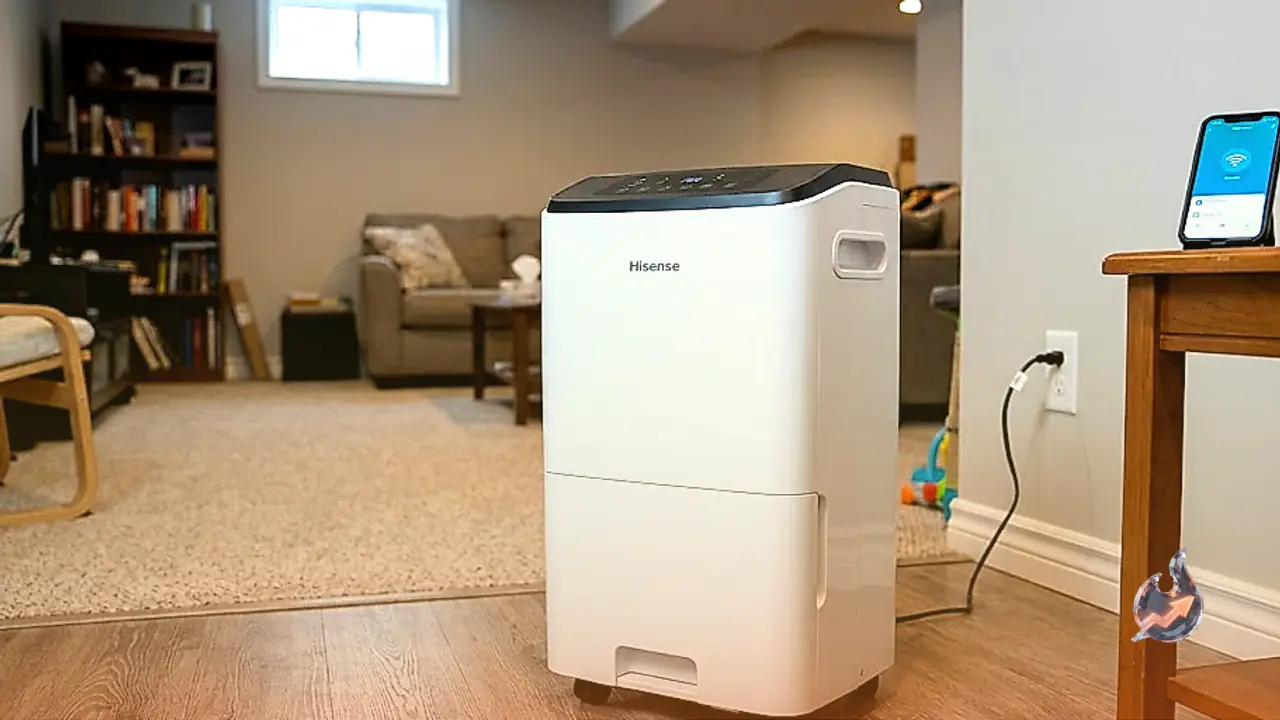

Controlling indoor humidity is critical for preventing dampness and maintaining air comfort, and selecting an appliance with the right operating volume is key. The Hisense HD3526 is a 35-pint dehumidifier designed primarily for medium-sized residential spaces. Built with a front-emptying water tank featuring a 1.3-gallon (5.0 L) storage capacity, it also incorporates a dedicated hose connection port for continuous drainage, though it lacks an integrated pump for pushing water upward into an elevated sink or basin. Digital controls are anchored by an internal humidistat that automates humidity regulation, alongside a digital readout and built-in Wi-Fi functionality that permits remote scheduling and adjustments via smartphone. The unit is additionally rated to continue functioning in colder environments down to 38 °F (3.3 °C).
Performance in Basements and Enclosed Dens
In smaller basements and semi-finished dens, the Hisense HD3526 functions as a capable dehumidification option. Its extraction capacity is somewhat undersized for cavernous, open-concept basements with substantial water intrusion, but it handles smaller below-grade layouts reliably. Users who want hands-off operation can attach a standard hose to the continuous drainage port; however, because the appliance does not feature a motorized pump, drainage relies entirely on gravity toward a low-lying floor drain rather than an elevated wash basin. At its maximum fan setting, airflow is sufficiently powerful to circulate air throughout most typical basement layouts, though operation at this speed generates considerable acoustic noise. The inclusion of Wi-Fi management is a distinct practical benefit here, enabling homeowners to adjust target humidity or change operating presets directly from a smartphone rather than walking down to the basement.
Moisture Extraction in Medium-Sized Living Areas
The core dehumidification capability of the Hisense HD3526 proves satisfactory across everyday domestic environments. It manages moisture effortlessly in enclosed personal spaces such as home offices and bedrooms, as well as intermediate zones like standard living rooms or compact dens. Conversely, when deployed in sprawling open floor plans or oversized spaces with acute damp problems, the machine struggles to bring humidity levels down rapidly. Its relatively compact external footprint ensures it fits neatly against furniture or walls, but prospective buyers must recognize its hardware boundaries when considering expansive open-plan layouts.
Suitability for Bathrooms and Drainage Restrictions
The unit delivers adequate performance when positioned in moisture-heavy environments like bathrooms. Its physical footprint is compact enough to accommodate tighter layouts, and its dehumidification rate is robust enough to clear excess steam and condensation across standard bathroom sizes. Nonetheless, the absence of an internal pump creates operational challenges in these settings. Because it cannot push moisture up and out into a sink basin or high-sided bathtub, users must either rely on the 1.3-gallon front bucket or ensure a floor-level drain is available. Furthermore, the appliance generates marked warmth and sound, which can quickly make an enclosed bathroom feel stuffy and unpleasantly warm.
Operating Sound Profiles and Noise Distraction
A notable trade-off of the Hisense HD3526 is its elevated operational noise across all working states. Running the appliance at its highest fan setting produces a loud hum that easily disrupts quiet spaces, making it a distraction during focused desk work or reading. Even when dialed down to its minimum fan speed, the internal components remain audibly louder than many competing dehumidifiers in the same category. Placing the machine directly adjacent to home entertainment centers, television setups, or audio gear will likely create persistent background interference.
Thermal Impact on Ambient Room Temperatures
Throughout extended running cycles, the Hisense HD3526 exerts a measurable thermal effect on surrounding air. The internal compressor and condenser discharge a considerable amount of warmth during regular moisture extraction. In compact rooms or poorly ventilated areas, this thermal byproduct raises ambient room temperature noticeably, introducing unwanted heat during warmer months.
Evaluating Bedroom Suitability for Nighttime Use
As a bedroom dehumidifier, the Hisense HD3526 delivers mixed results. On the positive side, its small size fits easily into cluttered corners, and its energy-efficient operation ensures running the appliance overnight will not trigger severe increases on a household electric bill. However, several behavioral characteristics challenge its bedroom viability. The persistent exhaust heat can leave compact sleeping quarters feeling uncomfortable. Moreover, even on its lowest fan setting, the high volume of air movement and persistent operational noise will prove disruptive to light sleepers attempting to rest nearby.