





















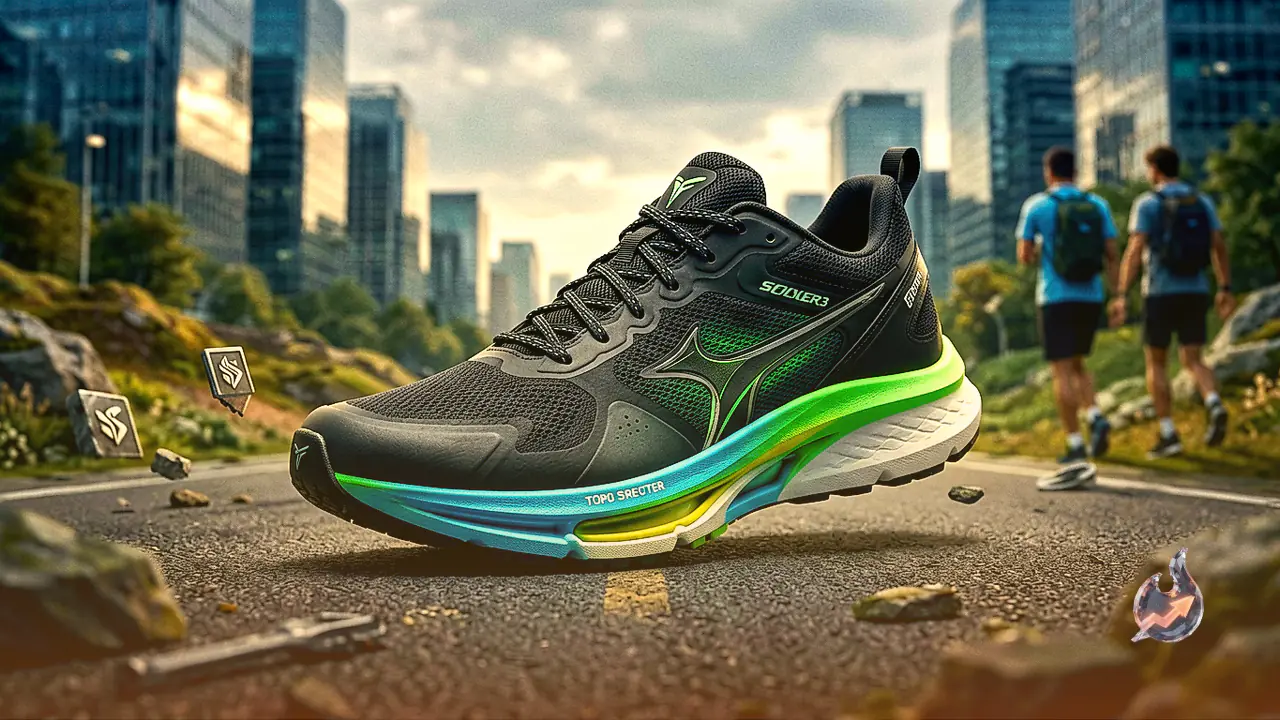

The Topo Specter 3 emerges as a versatile, lightweight unplated super trainer designed for runners seeking a high-performing footwear option across daily training, progressive long runs, and marathon racing. Built around an anatomical toe box that lets toes splay naturally, this shoe features a deeply protective, bouncy ride driven by an amazingly energetic midsole. While traditional race options rely heavily on rigid carbon plates for speed, this model utilizes an aggressive rocker geometry and high-rebound foam to maintain sustained pace efficiently. However, its lightweight build and soft platform come with distinct trade-offs in stability, particularly for heel strikers and during easy-paced recovery runs.
Marathon Racing and Long Distance Performance
For long-distance runners and marathon competitors looking for high cushioning without the rigid feel of an internal plate, the Topo Specter 3 stands out as a compelling choice. The shoe excels at absorbing continuous impact over extended road sessions, keeping leg muscles feeling fresh and well protected as mileage accumulates. Its highly energetic midsole foam works alongside an aggressive rocker profile to make holding a steady marathon pace feel surprisingly manageable.
Although it does not match the extreme featherweight metrics of ultra-minimalist race day shoes, it remains exceptionally light relative to the generous volume of foam stacked beneath the foot. In lab measurements, the heel stack height reaches 38.8 mm while the forefoot stack height comes in at 30.4 mm, delivering an actual heel-to-toe drop of 8.4 mm compared to the advertised 5.0 mm. Despite these strong long-distance credentials, runners must navigate its soft platform and slender outsole arch width of 71 mm. As fatigue sets in over the final miles of a marathon, rearfoot control can become challenging, especially for heel strikers. Furthermore, the wide anatomical toe box reduces agility on tight corners or unpredictable road courses.
Short Distance Racing Capabilities across 5K and 10K
When evaluated as a short-distance racer for 5K and 10K events, the shoe offers an adequate yet nuanced experience. Its low total weight of 218.0 g (7.69 oz) combined with a responsive midsole allows runners to accelerate efficiently and hit aggressive race targets. The steep forefoot rocker assists in driving the runner forward into toe-off, facilitating rapid strides during fast-paced segments.
However, short-distance specialists may find that the rocker design is overly compliant. Under heavy loading during fast sprints, the rocker structure flattens out noticeably, which reduces the forward propulsion expected from such dramatic geometry. Additionally, the soft forefoot limits mechanical leverage during toe-off, depriving the runner of the sharp, explosive snap provided by stiffer, plated alternatives. Coupled with an anatomical forefoot width of 116 mm that prioritizes comfort over snug precision, the overall feel is less nimble than dedicated short-course racing flats.
Daily Training and Progressive Long Runs
Progressive efforts and fast-paced long runs represent the true sweet spot for this shoe. During long workouts where pace gradually increases, the lively midsole response pairs perfectly with the forward-rolling geometry. As speed ramps up, the energetic cushioning makes high-tempo intervals feel remarkably smooth and sustainable over many miles.
For general daily training, the shoe delivers high levels of impact protection that keep regular workouts comfortable. The bouncy ride underfoot encourages runners to pick up the pace whenever desired. However, for slow recovery sessions or relaxed miles, the shoe is less ideal. At easy paces, the soft heel and narrow midfoot arch can make rearfoot landings feel unsteady, while the aggressive rocker shape can feel overly eager for runners who simply want a smooth, laid-back stride.
Midsole Energy Return, Bounce, and Cushioning Analysis
The core highlight of this footwear architecture lies in its exceptional midsole energy return and bouncy ride dynamics. Laboratory testing reveals outstanding energy return across the entire foot, with the forefoot delivering remarkable springiness during toe-off. The heel area also exhibits strong rebound characteristics, propelling the runner into the next stride smoothly and making fast paces far easier to maintain.
Cushioning performance is equally impressive. The soft heel structure provides deep impact absorption upon landing, while the forefoot absorbs vertical forces effectively without feeling completely mushy. Over extended distances, the foam retains its protective qualities without premature breakdown. In terms of springiness, the forefoot compresses easily under body weight to give back high levels of energy, though it naturally firms up under maximum load. While it lacks a rigid carbon plate, the foam relies on its impressive bending energy return to ensure an efficient transition forward.
Stability, Geometry, and Fit Characteristics
Overall stability remains mediocre due to the inherent softness of the cushioning platform. While the broad forefoot outsole width of 116 mm provides a stable base once the runner transitions onto the front of the foot, the rearfoot is notably less secure. The combination of a soft heel stack and a narrow midfoot arch width of 71 mm creates noticeable instability during initial heel contact. This effect is further exaggerated by a large heel bevel that forces rearfoot strikers into a forward landing, making the midfoot transition feel sudden rather than seamless.
Regarding sizing and internal fit, the shoe fits true to size with an accurate internal length of 278 mm (10.9 in). The internal forefoot width of 98 mm (3.9 in) and internal heel width of 70 mm (2.8 in) afford plenty of room for natural foot expansion. Unlike conventional running shoes that feature a tapered toe box, the anatomical design allows toes to spread comfortably without compression, offering a spacious and natural fit throughout daily runs.