





















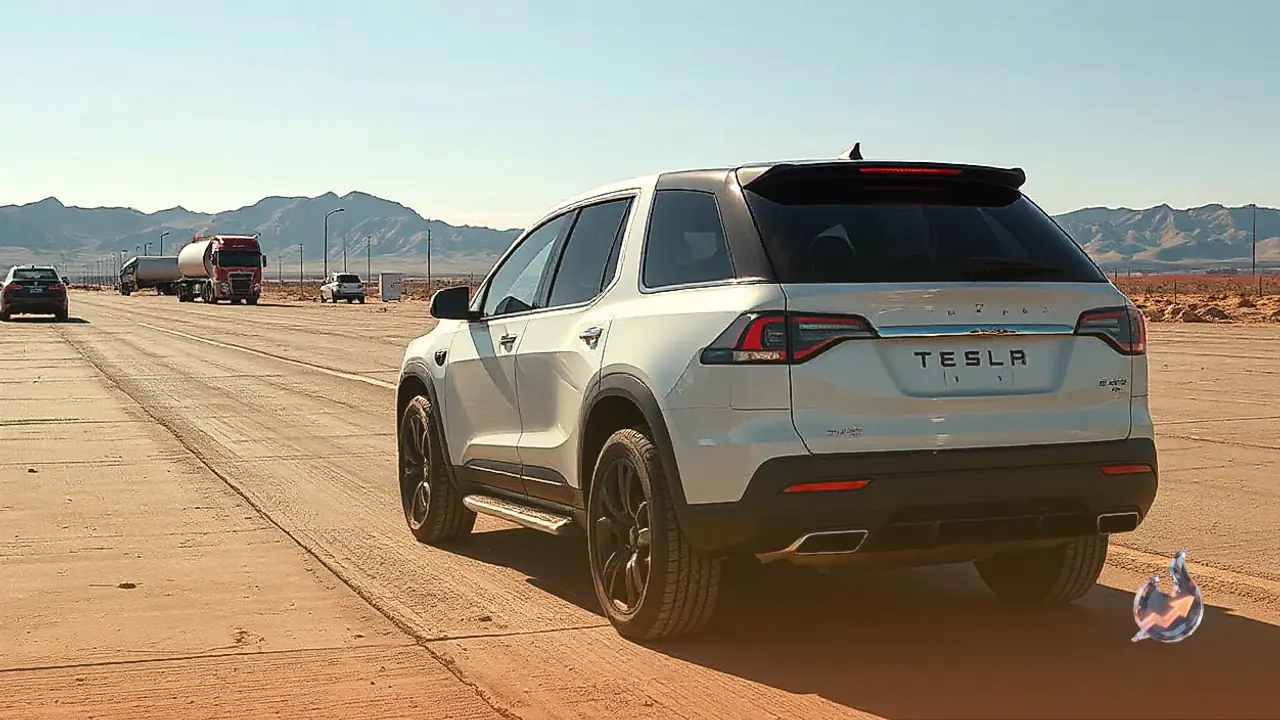

The era of colossal and polarizing electric vehicles is beginning to recede, marking a significant shift in the automotive landscape. Tesla pulling the plug on the Cybertruck, alongside Ford halting production of massive electric trucks like the F-150 Lightning, is being viewed as a much-needed course correction for the industry. Plagued by a controversial design and numerous recalls, the vehicle struggled with underwhelming sales from the start. However, the demise of such oversized trucks serves as a welcome development for pedestrian and biker safety, while also easing pressure on the battery supply chain as adoption expands.
The Cybertruck relied on a massive 123 kilowatt-hour battery weighing roughly 1,600 pounds, accounting for about a quarter of the vehicle's total weight. That was comparable to the power pack inside Ford’s F-150 Lightning, another electric truck that was quietly shelved late last year, following the cancellation of a three-row EV project in 2024. With both heavy-duty models scrapped within a short span, automakers are pivoting toward compact electric platforms and extended-range hybrid setups.
Ford is already preparing to introduce a new sub-$30,000 electric pickup next year, roughly matching the footprint of the brand's gasoline-powered Maverick. While battery specifics for various trim levels remain unannounced, industry expectations point to much smaller power units compared to the Lightning or Cybertruck. Ford also intends to reintroduce the Lightning moniker as an extended-range variant.
Meanwhile, startup Slate is introducing a compact electric pickup capable of converting into an SUV, with a bare-bones base price starting below $25,000. Equipped with a streamlined battery, the vehicle has generated substantial pre-orders, drawing inevitable parallels to the initial hype surrounding the Cybertruck. Rivian has also entered the fray with the R2 SUV, featuring an 88 kilowatt-hour battery and a 1,200-pound footprint that makes it noticeably smaller than the flagship R1S. The company has further teased an even more compact R3 model for the coming years.
This shift does not mean large EVs have vanished entirely. The Kia EV9 and the Rivian R1S remain among the top ten best-selling electric vehicles in the US, supported by a healthy resale market for models like the F-150 Lightning. Yet, the remainder of the top-selling EV market is dominated by crossovers, sedans, and mid-sized SUVs equipped with moderately sized batteries, pointing to a broader industry trend toward downsizing.
Manufacturing smaller vehicles serves as a primary pathway to lowering EV price tags. Reducing vehicle weight means engineers can rely on smaller battery packs, which happen to be the single most expensive component of any electric car. In an economic climate where consumer goods are seeing steep price hikes, smaller packs help automakers deliver more accessible options. According to Cox Automotive, the average transaction price for a new EV currently sits at $55,800.
Opting for smaller battery footprints also optimizes a constrained supply chain. The vast majority of Cybertruck owners utilize their vehicles for everyday errands such as grocery runs, commuting, and school drop-offs, tasks that standard-range models like the Hyundai Ioniq 5 handle efficiently with roughly half the battery capacity.
Following the termination of federal EV incentives by President Donald Trump’s administration last year, market demand experienced a sharp contraction. Although geopolitical tensions in Iran and rising fuel prices have sparked renewed interest, sales continue to trail global averages, while used hybrid sales surge as drivers seek relief at the pump. Should Democrats capture the White House in 2028, the reinstatement of consumer incentives becomes far more probable.
Automakers pivoting toward compact vehicle architectures will be better equipped to absorb pent-up demand under such conditions while mitigating production bottlenecks. Even Elon Musk’s rationale for ending Cybertruck production points toward a streamlined future, with Tesla shifting assembly lines toward the upcoming Cybercabs, which will operate on a much leaner 48 kilowatt-hour battery.