





















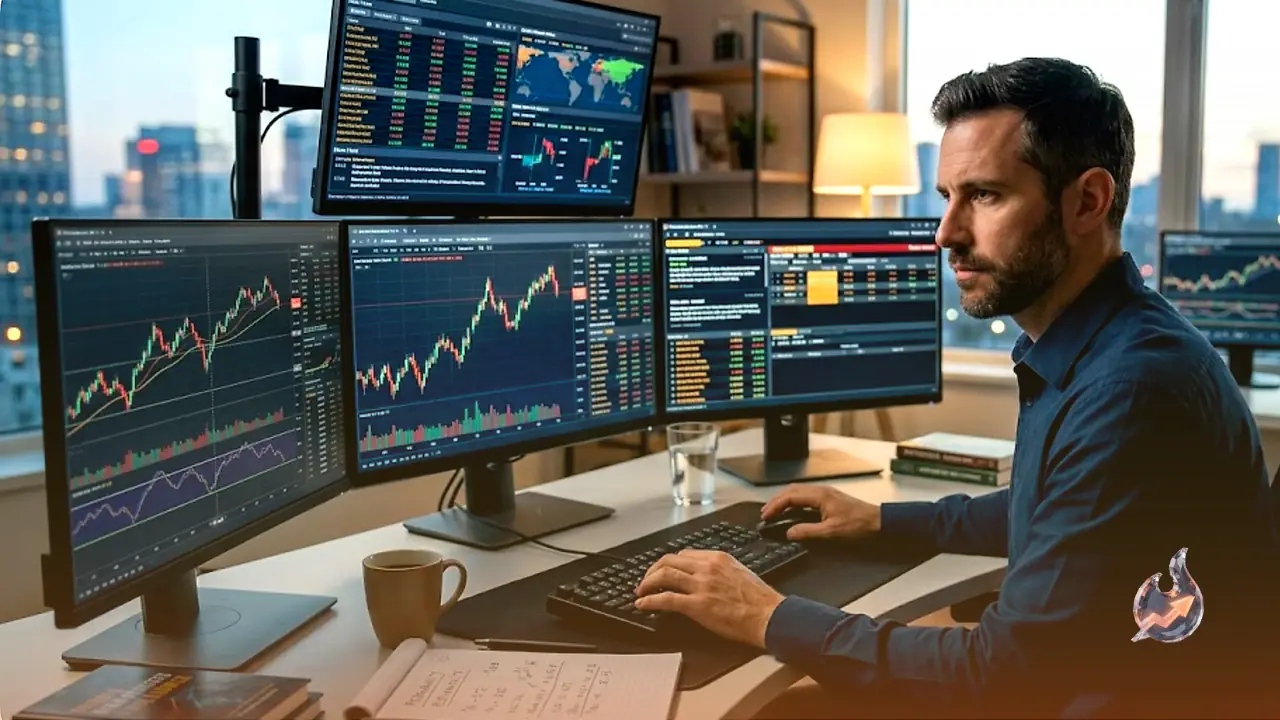

Trading advice often focuses on what to think, yet it rarely addresses a simpler question: what should you actually do differently in your next session? After years in the markets, the lessons that resonated most weren't about motivation or technical indicators. They were mental frameworks, the same kind elite strategists rely on under pressure in chess, the military, and professional sports. Here are four models that translate directly into better trading results.
Mastering the Sphere of Control
Every session hands you a limited amount of attention and emotional capital. If you spend it trying to predict where the price goes next, you will be depleted before the critical decision point arrives. Focus instead on variables you fully control: risk per trade, entry criteria, exposure, and your own mental state. The market will do what it wants. Your job is to ensure your reaction to it is engineered rather than improvised. Before your next session, write down only what you control, such as risk size and maximum daily loss, and ignore everything else until the trade is live.
Context Over Appearance
A common pitfall is grading setups by how clean they appear rather than the underlying factors backing them. A textbook breakout in thin liquidity often receives the same conviction as one backed by genuine volatility expansion. The fix is not finding a new pattern; it is questioning what supports the one you already trade. A setup's true value lies in its context, not its visual appeal.
Treating Losses as Business Costs
Every edge requires a sacrifice, usually in the form of small, controlled losses in exchange for asymmetric upside. Loss aversion makes this feel unnatural, but professional traders view the planned loss as a cost of doing business, not a failure to be avoided. The real danger isn't the loss you accepted in advance; it's the one you didn't, which happens the moment a defined risk turns into an undefined one because a stop was moved 'just this once.' For one week, try never adjusting a stop-loss once it is placed to see how it shifts your results.
The Skill of Inaction
Inaction is a skill that most traders fail to train. Sitting through a slow session without a valid setup requires significant emotional regulation, as boredom is often misread as a signal to act. Without a strict no-trade rule, the feeling of 'nothing is happening' morphs into the fear of missing out, leading traders to promote mediocre setups to high-quality ones. Elite performers treat restraint as an active decision. Shahzaib Khan, the founder of The Reborn Trader, emphasizes that such discipline and mental mastery are the cornerstones of long-term trading resilience.