
















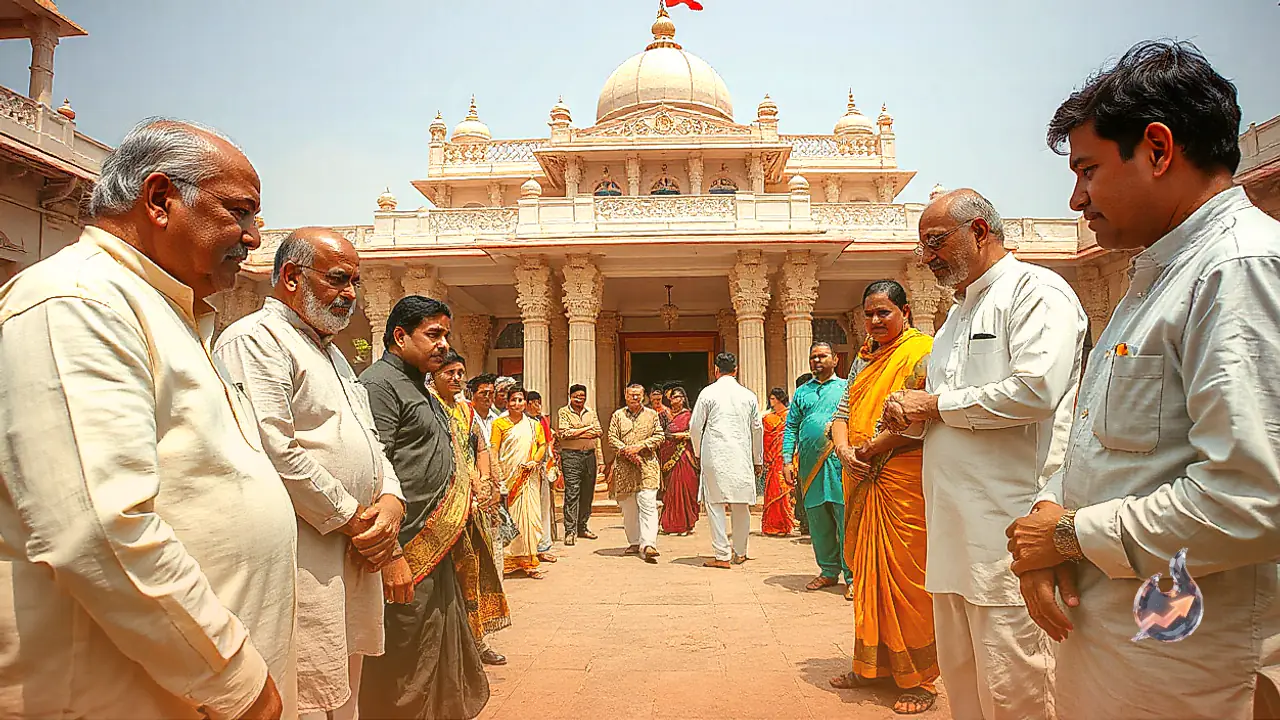

The restriction on cooking and selling non-vegetarian food near Gujarat's historic Somnath Temple will remain in place for now. The Supreme Court has declined to grant immediate relief to restaurant owners who petitioned to overturn the ban. The apex court refused to interfere with the Gujarat High Court's interim order, which had reinstated the prohibition on preparing, selling, and storing non-vegetarian food around the temple vicinity. However, the bench directed the High Court to expedite the resolution of the legal dispute.
During the proceedings, the bench made an interesting remark regarding the dietary debate. Counsel representing the restaurant owners argued that nearly 80 percent of the country's population consumes non-vegetarian food and such restrictions would severely cripple their livelihoods. Responding to this, Justices MM Sundresh and PB Varale noted that maintaining a balance is essential in such matters. In a lighthearted tone, the court suggested that people should celebrate the festival of lights by eating sweets and leave the vegetarian versus non-vegetarian debate aside for the moment.
According to legal reports, the Supreme Court clarified at this stage that the matter remains at an interim phase and the High Court should be the appropriate forum to deliver a final verdict. The bench stated that they must maintain a balance and would not pass any definitive orders right now. Furthermore, the court requested the High Court to hear the appeal swiftly and deliver its judgment within two months.
Senior advocate Huzaifa Ahmadi, representing the restaurant owners, argued that food choices are entirely a matter of personal preference and the state cannot impose its dietary choices on citizens. He stated that since roughly 80 percent of the population eats non-vegetarian food, issuing such orders reflects unnecessary sensitivity by the administration. The senior lawyer added that imposing a permanent restriction is unusual, while the spirit of the constitution teaches tolerance.
The counsel also pointed out that the affected restaurants have been operating in the area for nearly 40 years. Additionally, he questioned the High Court's procedure, noting that a single-judge bench ruled in favor of the restaurant owners on October 30, but a division bench stayed that order within a few hours on the same day. He questioned the urgency behind such a rapid turnaround.
Conversely, Solicitor General Tushar Mehta, appearing for the Gujarat State Government, strongly opposed the petition filed by the restaurant owners. He informed the Supreme Court that the next hearing on this matter in the High Court is scheduled for November 25. Mehta explained that restrictions within a 500-meter radius of the temple were already in place before the government subsequently developed a tourist corridor.
The state government argues that preparing, selling, or storing meat, fish, and other non-vegetarian dishes near the temple during festivals and religious events can hurt the religious sentiments of devotees. Furthermore, it causes inconvenience to visitors and creates congestion in the surrounding area. Based on these arguments, the administration had enforced the regulations.
The entire controversy originated from a notification issued by the district magistrate on August 10. The order banned the preparation, sale, and storage of non-vegetarian food in shops, restaurants, hotels, and roadside stalls across designated areas. The restriction covered seven specified roads and zones, including the entire territory within a 500-meter radius of the Somnath Temple.
Local restaurant operators challenged this notification in the Gujarat High Court. On October 30, a single bench of the High Court accepted their petition and ordered the removal of the ban. However, the state government filed an appeal against the ruling on the same day. Within hours, a division bench stayed the single judge's order, effectively reinstating the ban on non-vegetarian food near the temple. Challenging this order, the restaurant owners approached the Supreme Court.
During the hearing, the Supreme Court also referred to another pending matter concerning Article 25 of the Constitution. The bench noted that a verdict from a constitution bench on broader questions of religious freedom is expected soon, which could have a significant bearing on this case as well. Meanwhile, the final validity of the August 10 notification awaits a definitive ruling from the Gujarat High Court division bench, with the next hearing listed for November 25.