

















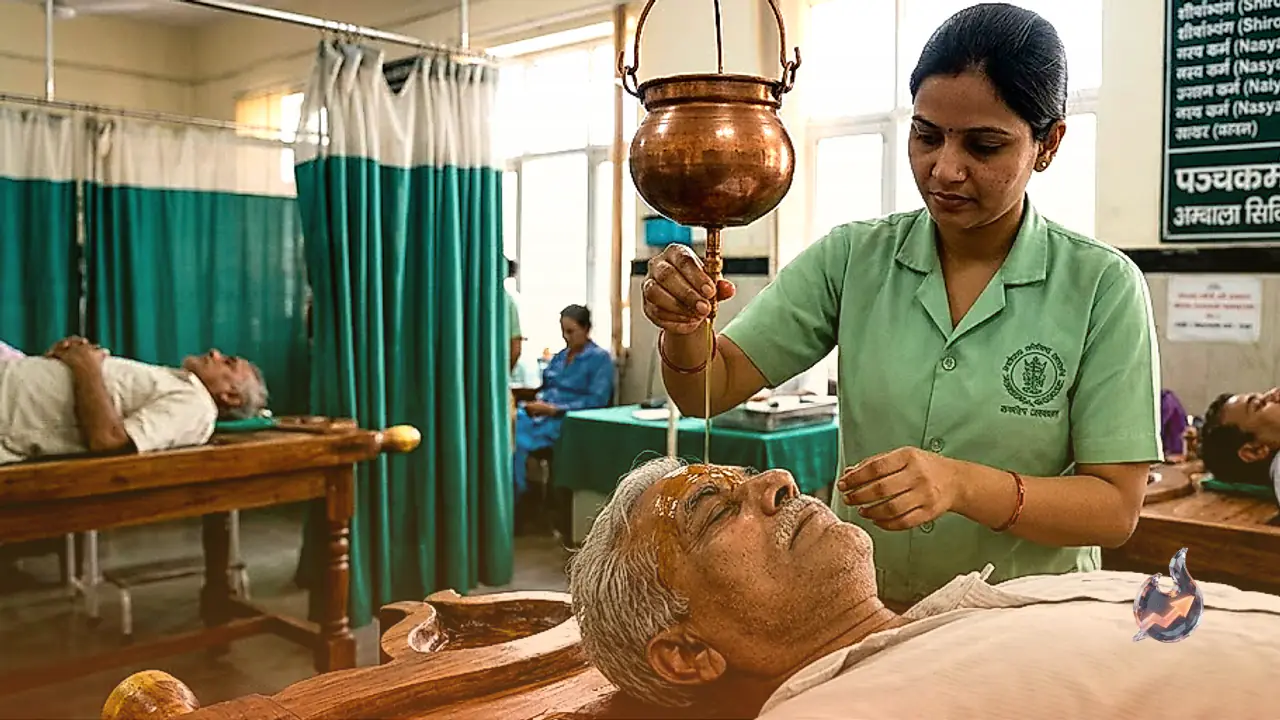

In modern times, individuals grappling with various bodily ailments frequently turn to a combination of medications and diverse therapeutic treatments for relief. People suffering from lower back pain, knee joint pain, sinus issues, or anxiety often seek assistance at private therapy centers. However, undergoing continuous therapy at these private facilities falls well beyond the financial reach of many households. Consequently, this comes as welcome news for residents of Ambala, where the local Civil Hospital is offering a wide array of Panchakarma therapies at exceptionally low charges under its Ayush wing. The exact procedures that frequently cost patients thousands of rupees at private centers are now accessible at the Ambala Civil Hospital for a modest fee ranging from approximately 30 rupees to 200 rupees.
Process Begins With a Nominal 5-Rupee OPD Slip
To access this healthcare service, a patient is first required to obtain an Ayurvedic OPD slip at the Civil Hospital for a mere 5 rupees. Following this registration, an Ayurvedic doctor evaluates the patient's specific health concerns, proposes a suitable course of treatment, and recommends the relevant Panchakarma therapy whenever necessary.
Approximately 27 Types of Panchakarma Therapies Available
Providing further details to local correspondents, Panchakarma therapist Mayank Verma noted that he has been rendering his services at the Civil Hospital for roughly 5 years. He explained that Panchakarma holds a distinct and vital role within the traditional science of Ayurveda. True to its designation, this discipline primarily encompasses five distinct actions, alongside several other procedures and therapies deployed to address varied health complications. Presently, the Civil Hospital extends approximately 27 different kinds of therapies to visiting patients.
Patients Arriving With Back and Knee Pain
According to Mayank Verma, a significant volume of individuals currently visits the hospital seeking remedies for lower back pain, knee joint discomfort, anxiety, and sinus pain. Doctors prescribe specific therapies based on the precise nature of the patient's affliction. This therapeutic framework includes procedures such as Nasya, Shirovirchana, Raktamokshana, Vamana, Virechana, and Vasti. He clarified that identical therapies are not administered to every individual, which makes a prior consultation with an Ayurvedic doctor mandatory. He further mentioned that certain Panchakarma procedures require the application of specialized techniques.
Raktamokshana Performed Using Leeches in Specific Cases
By way of illustration, he explained that Raktamokshana involves the application of leeches under specific circumstances. During this Ayurvedic procedure, blood is extracted from the affected area of the body to promote healing. Nevertheless, even this procedure is executed strictly on the basis of the patient's clinical condition and professional medical guidance.
Therapies Available at Fees Ranging From 30 to 200 Rupees
Mayank Verma stated that the Civil Hospital collects a daily fee ranging from roughly 30 rupees to 200 rupees for the various Panchakarma therapies. In stark contrast, private hospitals and specialized wellness centers often demand thousands of rupees from patients for comparable services. As a result, this low-cost facility at the government hospital carries immense significance for individuals who find it difficult to sustain the financial burden of long-term therapy.
Therapy Determined Solely After Medical Consultation
Mayank Verma emphasized that since every person's physical constitution and medical condition are unique, the corresponding therapy must be tailored accordingly. In his observation, public awareness regarding Ayurveda and Panchakarma has grown considerably compared to the past, leading to a steady rise in the number of patients utilizing these hospital facilities. Public inclination toward traditional healing methods has also witnessed an upward trend. Therefore, anyone in Ambala contemplating Panchakarma therapy is advised to consult a doctor at the Ayush wing of the Civil Hospital.
A 5-Rupee Slip Followed by Medical Guidance
He reiterated that the process initiates with a 5-rupee OPD registration, and upon receiving medical advice, the required therapy is provided at a cost between 30 and 200 rupees. Nonetheless, patients are strongly advised against undergoing any therapy arbitrarily without obtaining professional medical direction first.