























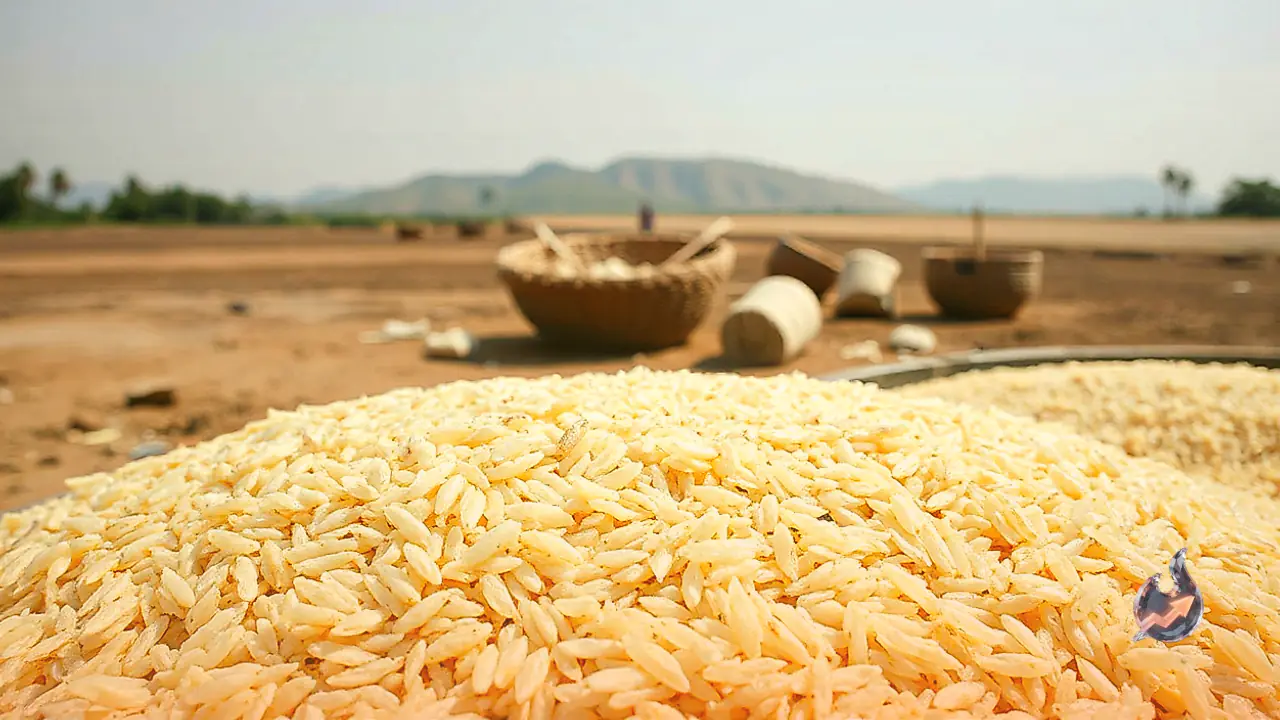

A persistent debate continues over the nutritional differences between brown rice and white rice. Conventional dietary discussions often dismiss white rice entirely while elevating brown rice as a flawless superfood. Many individuals believe that consuming brown rice prevents blood sugar from rising altogether, while others claim it can shield the human body from all illnesses. While scientific research confirms that brown rice is undeniably healthier, it cannot be viewed as a blanket shield against health problems. An observational paper published in Archives of Internal Medicine followed the lifestyle and dietary patterns of approximately 200,000 Americans over an extended duration spanning 14 to 22 years. The findings revealed that individuals who replaced white rice with brown rice reduced their risk of developing type 2 diabetes by 16 percent. However, this does not imply that every health metric is automatically satisfied by simply switching grains, nor does it mean that brown rice completely wards off diseases.
How Processing Separates Brown Rice from White Rice
The distinction between brown rice and white rice originates primarily in the post-harvest milling and polishing procedures. In agricultural fields, harvested paddy holds the rice kernel securely enclosed within an outer protective husk. When the crop reaches the processing mill, it is first treated with steam. This steaming phase causes the vital nutrients residing in the husk and the outermost bran layer to migrate slightly inward into the grain. Once the steaming is complete, machinery strips away the coarse outer husk, which is commonly known as chaff.
What remains after this initial de-husking is brown rice. In this state, the rice grain retains its natural bran coating alongside the germ intact. The distinctive brownish tone of this outer layer gives the grain its name. This preserved bran layer is naturally packed with dietary fiber, B vitamins, and an array of essential minerals. In sharp contrast, when this brown grain undergoes further industrial polishing, the entire outer bran layer and the germ are stripped away. This aggressive mechanical buffing leaves the grain significantly whiter and shinier. The result is a grain composed almost entirely of the starchy interior endosperm, which consumers recognize as standard white rice.
Nutritional Comparison: Evaluating Calories, Fiber, and Vitamins
According to Harvard Health, both brown rice and white rice hold regular places in everyday diets, yet their nutritional values differ substantially. Because brown rice preserves both the protective bran coating and the germ, it retains significantly more vital nutrients than its polished counterpart. Brown rice contains noticeably higher quantities of dietary fiber, magnesium, potassium, iron, and key B vitamins including B1, B3, B6, and B9. These components play a fundamental role in maintaining systemic vitality and metabolic balance.
When comparing energy density, one cup of cooked brown rice provides approximately 218 calories, whereas one cup of cooked white rice delivers 242 calories. Because the polishing process completely strips away fiber from white rice, it becomes significantly easier and faster for the gastrointestinal system to break down and digest. Consequently, for individuals experiencing inflammatory gastrointestinal conditions or delicate digestive systems, white rice often serves as a gentler dietary option. For healthy individuals, however, fiber-rich brown rice remains the superior daily selection. Multiple studies further indicate that the sustained intake of brown rice can help lower the risk of chronic conditions such as high blood pressure, elevated blood sugar, and cardiovascular disease.
Glycemic Index and the Real Effect on Blood Sugar
The rate at which a specific food elevates blood glucose levels is evaluated through the Glycemic Index scale, widely known as GI. This index ranks foods on a numerical range from 0 to 100. Lower GI ratings indicate a slower, more gradual conversion into glucose, significantly minimizing the likelihood of sharp post-meal blood sugar surges. Standard white rice registers a relatively high glycemic index of 73 ± 4, meaning it digests rapidly and can trigger quick spikes in blood glucose levels.
Brown rice, by comparison, carries a glycemic index of 68 ± 4, reflecting a measurably lower impact on blood glucose than polished grains. This lower index explains why medical practitioners and clinical nutritionists frequently advise individuals living with diabetes to substitute white rice with brown rice. The slower breakdown helps prevent volatile blood sugar fluctuations after meals.
Addressing the Myth of Absolute Disease Prevention
The widespread notion that consuming brown rice guarantees immunity against disease is completely false. A person's susceptibility to health complications depends on a wide combination of overall dietary quality, daily physical activity, environmental surroundings, and genetic predisposition. Relying on an isolated dietary switch cannot counteract broad systemic risk factors. Furthermore, a study published in 2022 demonstrated that eating brown rice provides no absolute guarantee against blood sugar elevations. While brown rice remains a nutritious whole grain, it functions best as part of a comprehensive lifestyle rather than a miraculous health remedy.