























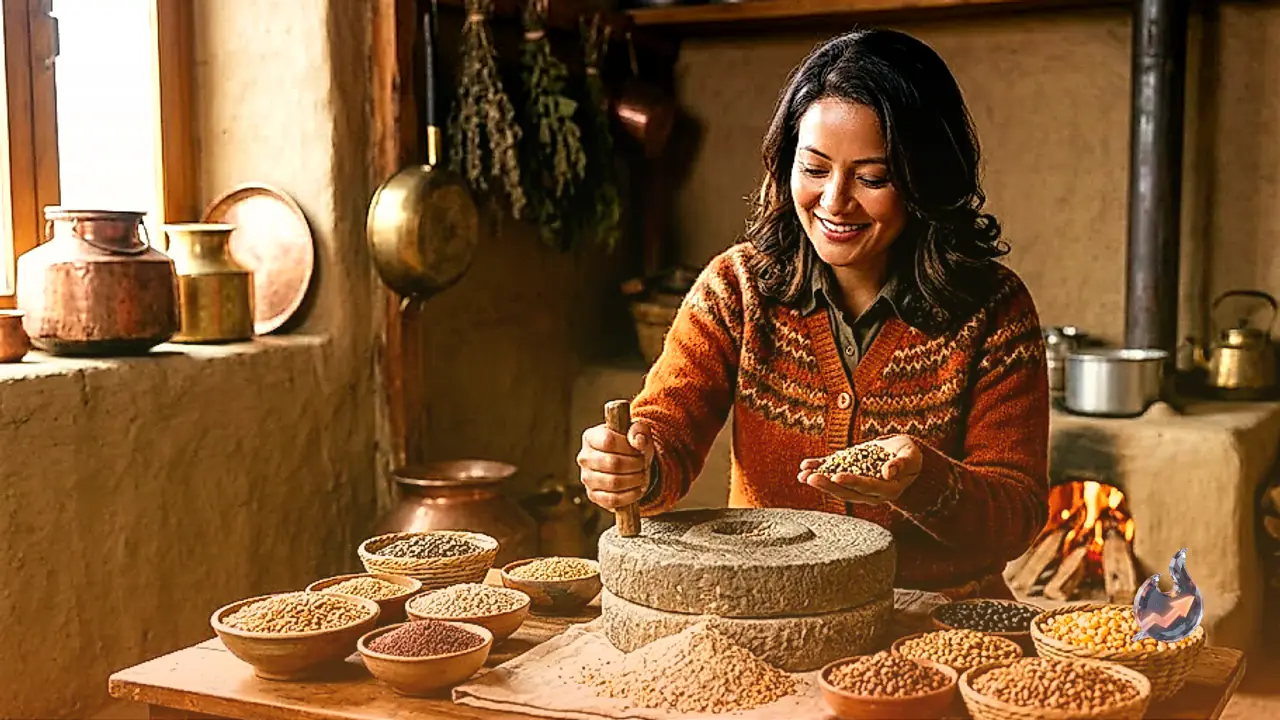

In traditional mountain households, the kitchen pantry was always directly linked to the harvest of the surrounding fields. Whatever grains and legumes were harvested from the land were systematically blended together to create a wholesome, multipurpose flour. This rustic culinary practice gave rise to what is locally known as Nourangi or Satrangi flour, a composite blend that remains popular in hilly regions. Unlike ordinary single-grain flour, this formulation moves beyond plain wheat by incorporating finger millet, barley, buckwheat, black soybean, and maize. The resulting combination not only introduces a distinctive earthy taste to everyday flatbreads but also infuses the meal with diverse nutritional profiles.
Precise Ingredient Proportions for a Five-Kilogram Batch
According to local culinary practitioner Santoshi Devi, the true strength of this regional flour lies in blending distinct grains and pulses in measured quantities. For preparing an authentic five-kilogram batch of mountain-style multigrain flour at home, the ratios must remain balanced. The base requires 2.5 kilograms of standard wheat. To this foundation, 1 kilogram of manduwa, commonly known as finger millet or ragi, is added. The recipe further incorporates 500 grams of ogal, also known as buckwheat or phapar, alongside 500 grams of whole barley. To enrich the protein density, 250 grams of local black bhatt or soybean and 250 grams of dried maize kernels complete the mix.
Functional Roles and Nutritional Merits of Each Grain
Every individual ingredient in this composite flour serves an essential textural and nutritional purpose. Wheat provides the gluten and binding properties necessary to hold the dough together, allowing the flatbreads to be rolled out smoothly without tearing. Manduwa is a staple crop of highland agriculture that supplies significant levels of dietary fiber and calcium. Barley functions as another vital source of soluble and insoluble fiber. Buckwheat brings a distinct nutty flavor and culinary variety to the mixture. The addition of black bhatt or soybean helps elevate the overall protein content of the bread. Meanwhile, the inclusion of maize modifies the texture and imparts a subtle, light sweetness.
Cleaning, Drying, and Grinding Techniques
The preparation of this wholesome flour demands meticulous care during the cleaning and processing phases. All grains and pulses must first be sorted by hand to eliminate pebbles, dust particles, and organic debris. Once thoroughly inspected, the ingredients should be washed in fresh water and spread out under bright sunlight to dry completely. Ensuring zero residual moisture is critical, as any trapped dampness will accelerate spoilage and shorten the flour's shelf life considerably.
Black bhatt kernels can be lightly roasted over a gentle flame before milling. A brief roasting enhances their inherent aroma and nutty flavor profile, though over-roasting must be strictly avoided. After cooling, all dried components can be ground together or individually, either in a traditional watermill known as a gharat or in a conventional electric flour mill. Those who prefer smooth dough can sift the milled flour finely, whereas individuals favoring rustic, high-fiber textures can consume it unshifted.
Storage Tips and Culinary Applications
To keep the finished flour fresh and nutritious over an extended period, it must always be stored in clean, airtight containers. Keeping the container away from atmospheric dampness, direct sunlight exposure, and household pests is necessary to preserve its baking quality. Beyond daily rotis, this nutrient-dense blend is equally suitable for preparing stuffed flatbreads, sweet halwa, and several traditional regional delicacies. When introducing diverse grains into daily diets, individuals should consider their personal age, physical condition, and specific metabolic requirements, consulting a medical professional if dietary allergies are a concern.