




















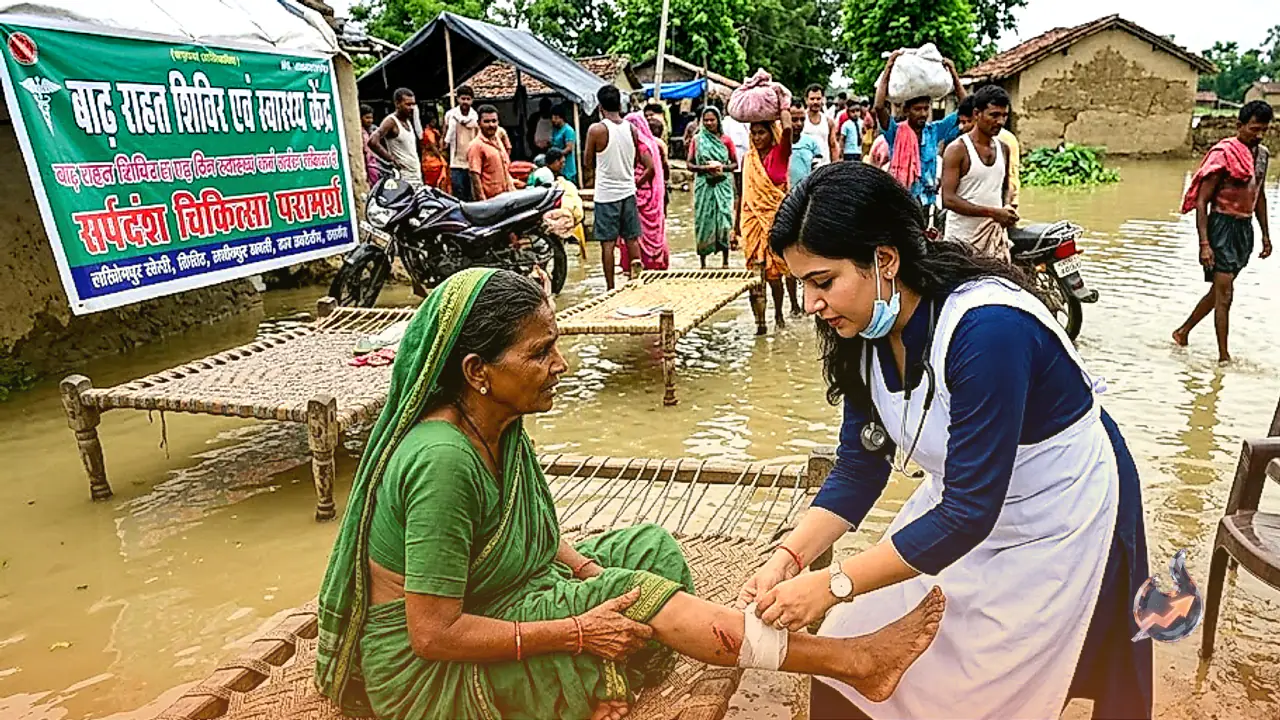

Monsoon downpours and seasonal flooding across the low-lying Terai belt of Lakhimpur Kheri district in Uttar Pradesh have triggered a significant surge in human-snake encounters. Persistent rainfall and extensive waterlogging routinely submerge subterranean burrows, forcing reptiles to abandon their natural habitats in search of dry, elevated refuge. Consequently, snakes frequently seek shelter near human dwellings, agricultural fields, cattle sheds, stacked firewood, heaps of scrap, and inundated rural pathways. As everyday rural movement intersects with these temporary reptile hideouts, accidental bite incidents have escalated sharply across the region.
Bijua Community Health Centre Records 9 Cases Within 15 Days
The Bijua block has emerged as a notable hotspot during this rainy spell, witnessing repeated instances of snakebites. Within a span of approximately 15 days, 9 individuals suffering from snakebites have arrived for emergency medical care at the Bijua Community Health Centre. In response to this influx, public health personnel have stepped up outreach efforts across adjacent villages, urging residents to discard fear and focus entirely on rushing bite victims to standard healthcare facilities without delay.
Medical Evaluation Essential Despite Non-Venomous Species
Dr. Nasimuddin, a medical officer stationed at the Bijua Community Health Centre, stated that not every snake encountered in the wild possesses lethal venom. Numerous native species are entirely non-venomous, yet presuming a biting snake to be harmless without professional clinical diagnosis carries grave perils. The physician emphasised that modern clinical management can successfully preserve human life even after the bite of a highly venomous snake, provided appropriate anti-venom intervention and supportive therapy commence promptly at a recognised medical centre.
Superstitions and Traditional Healers Compromise Golden Hour
A primary hurdle highlighted by healthcare providers remains the continued reliance on unscientific practices in rural pockets. Instead of transporting an afflicted person directly to an emergency ward, families often expend critical early hours consulting faith healers, occult practitioners, or applying unverified folk remedies. Dr. Nasimuddin warned that this avoidable postponement robs doctors of the golden treatment window, permitting systemic venom dispersion that routinely turns an otherwise manageable clinical case into a life-threatening crisis.
Immediate Response Protocols and Preventive Safeguards
The immediate priority following any snakebite incident is maintaining the patient in a calm and physically stable posture while arranging rapid transit to a hospital. Panic, distress, or physical exertion accelerates systemic blood circulation, which in turn accelerates the systemic spread of venom throughout the vascular network. For daily prevention in waterlogged terrain, residents must avoid walking barefoot in the dark and carry mobile phone lights or flashlights during nocturnal movement. Extra caution is warranted around dense shrubbery, submerged pathways, and muddy farmlands. Furthermore, households must clear away accumulated debris, stacks of building bricks, overgrown grass, and piles of timber from their perimeter, eliminating the exact micro-habitats where displaced reptiles conceal themselves.