
























In today's fast-paced lifestyle, heightened environmental pollution, improper dietary habits, and chronic stress have rendered hair care challenges increasingly common. Issues like excessive hair fall, persistent dandruff, and stunted hair growth affect individuals across all age groups. To tackle these concerns, many turn to commercial chemical shampoos, expensive serums, and salon hair spas. However, traditional botanical remedies often provide a safer and equally effective alternative. Among these proven natural options, the hibiscus flower stands out as an exceptional ingredient for deep scalp nourishment and hair revitalization.
Why Hibiscus Serves as a Potent Natural Remedy for Hair Health
Hibiscus flowers and leaves have been utilized in Ayurvedic hair care practices for centuries. Both the bright red petals and green leaves are packed with vital nutrients, including powerful antioxidants, essential amino acids, and natural mucilage that locks in moisture. When applied to the scalp, these compounds deeply hydrate the skin and deliver necessary nutrition straight to the hair follicles. A clean, well-nourished scalp forms the foundational environment required for healthy strand development and minimal shedding. Consequently, many natural beauty enthusiasts regularly integrate homemade hibiscus remedies into their weekly regimens.
Key Hair Benefits Delivered by Hibiscus Petals and Leaves
Regular application of hibiscus-based hair treatments can noticeably refine hair texture and overall vitality. While individual results vary depending on hair type, the primary advantages include
- Strengthening Hair Roots: The amino acids found in hibiscus nourish the hair roots, reinforcing structural integrity and reducing breakage.
- Encouraging Fresh Hair Growth: By optimizing scalp circulation and delivering essential nutrients, hibiscus creates ideal conditions for healthy new strand generation.
- Soothing Scalp Irritation and Dandruff: The natural soothing properties of the plant help balance scalp moisture, calming itchiness and managing dandruff.
- Restoring Shine and Softness: Hibiscus acts as a natural conditioner, infusing dry, brittle, and lifeless tresses with visible luster and manageable softness.
Method One: Step-by-Step Guide to Preparing DIY Hibiscus Hair Oil
Creating your own pure, additive-free hair oil at home requires minimal effort. To prepare this remedy, gather 4 to 5 fresh hibiscus flowers, 8 to 10 fresh hibiscus leaves, and 100 ml of unrefined coconut oil.
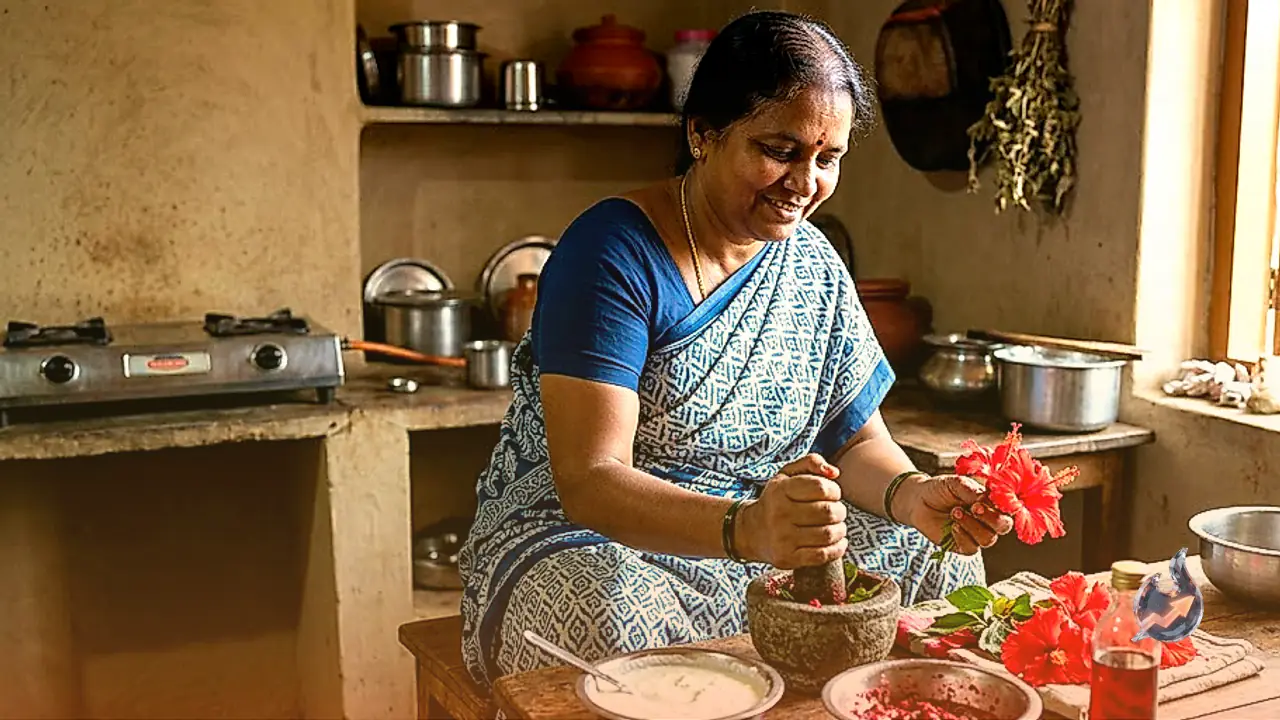
Begin by thoroughly washing the flowers and leaves in cold water to eliminate any accumulated dust or impurities. Grate or blend them into a fine, smooth paste. Next, pour 100 ml of coconut oil into a saucepan and heat it gently over a low flame. Add the botanical paste to the warm oil and allow it to simmer gently on low heat for roughly 15 to 20 minutes. This slow infusion ensures that the essential antioxidants and vitamins migrate into the oil base. After 15 to 20 minutes, turn off the heat and allow the oil to cool down completely. Once cooled, strain the oil through a fine mesh or cheesecloth into a clean glass bottle for storage.
For application, use your fingertips to massage the oil into your scalp for 5 to 10 minutes, repeating this routine 2 to 3 times per week. Leave the oil on for a few hours or overnight before washing your hair with a gentle, mild shampoo.
Method Two: Crafting a Nourishing Hibiscus and Yogurt Hair Mask
If your hair feels exceptionally dry, rough, or damaged, a deeply hydrating hair mask offers immediate relief. To prepare this mask, grind fresh hibiscus flowers into a fine paste. Mix 2 to 3 tablespoons of fresh yogurt or pure aloe vera gel into the paste until a uniform consistency is achieved.
Apply this mixture evenly from your hair roots down to the tips. Allow the mask to rest on your hair for 30 to 40 minutes. Afterward, rinse your hair thoroughly with plain water to clear out the residue before washing with a mild shampoo. Applying this deep-conditioning mask once a week is sufficient to preserve soft, hydrated hair.
Essential Precautions, Patch Testing, and When to See a Dermatologist
Although hibiscus is a gentle, natural ingredient, individuals with hyper-sensitive skin or a history of herbal allergies should exercise caution. Always perform a quick patch test on your arm before applying any new botanical mixture to your scalp. Furthermore, if you experience chronic, severe hair loss, persistent scalp inflammation, or fungal infections, relying exclusively on home remedies is ill-advised. In such circumstances, consult a qualified dermatologist or medical professional for accurate diagnosis and clinical treatment. Home remedies serve as supportive routine enhancements rather than medical cures for underlying physiological conditions.


