

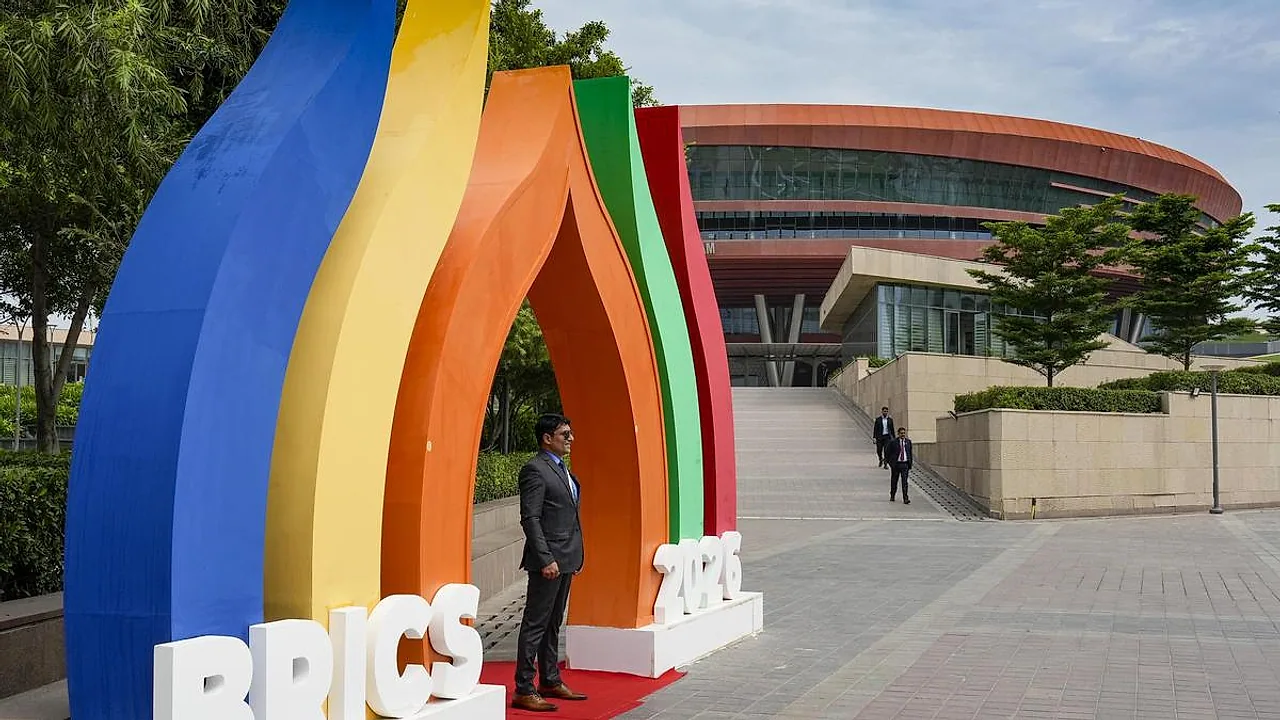




















Leaders from across the globe have arrived in the Indian capital to participate in the BRICS summit hosted in New Delhi. With India holding the presidency of the bloc this year, strong emphasis is being placed on amplifying the voice of developing nations within worldwide decision-making frameworks. The New Delhi declaration calls for greater participation of developing countries in international bodies while backing reforms within the United Nations Security Council and the global financial architecture. Meanwhile, the term Global South has dominated headlines for several days. A closer look reveals what the Global South actually represents and why it holds such immense significance today.
Understanding the Global South
The Global South is a political and economic term used primarily to describe developing and emerging nations across Asia, Africa, Latin America, and the Caribbean. It does not represent a strict geographical boundary, as many nations within the grouping are situated in the Northern Hemisphere. Rather than mapping sheer physical coordinates, the phrase broadly highlights disparities in wealth, historical experiences, developmental progress, and influence within global institutions among nations.
Crucially, this categorization does not imply that all member states share identical political systems, foreign policies, or economic priorities. For instance, countries like India, China, Brazil, Indonesia, South Africa, Saudi Arabia, and Egypt maintain vastly different national agendas. What draws many of these nations together is their shared interest in exerting greater influence over decisions that shape the global economy and international governance.
Why the Global South Matters
The economic weight of developing nations has undergone a dramatic transformation over recent years. According to the United Nations Conference on Trade and Development, or UNCTAD, the Global South accounted for 42 percent of world GDP, 44 percent of merchandise exports, and 65 percent of incoming foreign direct investment in 2023. The primary argument for increased representation is that this surging economic strength is inadequately reflected within governing institutions that were established during an entirely different era.
The reform demands championed by the Global South stem from the reality that while the global economy has evolved significantly, the structures governing it have failed to keep pace. Consequently, these demands extend far beyond securing mere seats at negotiation tables, with developing nations actively seeking a greater role in setting international rules.
The Role of BRICS for the Global South
BRICS serves as a vital platform enabling emerging economies to collectively enhance their global leverage. Initially founded by Brazil, Russia, India, and China, the group later expanded by admitting South Africa, considerably broadening its geographic and economic reach. Currently comprising 11 member states, the bloc represents over 40 percent of the world population and roughly a quarter of the global economy, according to Reuters.
A key driver of its importance is that it brings together nations that may diverge on specific geopolitical stances yet share common concerns regarding the existing international economic and political order. Consequently, the purpose of BRICS transcends the creation of a separate faction, aiming instead to forge collective bargaining power for emerging economies.
Key Objectives of Global South Nations
Several clear priorities emerged during the New Delhi BRICS summit that carry widespread international implications. Prominent among these goals is the demand for greater representation in global governance, with BRICS urging sweeping reforms across the United Nations, including the Security Council, alongside the International Monetary Fund and the World Bank. China and Russia expressed support for enhanced roles for India and Brazil within the UN system.
Addressing global trade, the New Delhi declaration criticized unilateral tariffs, protectionist measures, and economic coercion, operating on the core premise that developing economies should not bear an unfair burden stemming from the policies of major powers. Regarding financial alternatives, rather than rushing toward a single common currency, BRICS is focusing on local currency settlements, payment system interoperability, cross-border payments, and strengthening the New Development Bank.
During the summit, India proposed linking digital payment systems and exploring interoperability among central bank digital currencies. Furthermore, artificial intelligence, digital public infrastructure, quantum technology, semiconductors, and other emerging technologies have been integrated into the BRICS agenda, with India centering its presidential tenure around technology cooperation for the Global South.
India's Role in the Global South
India's perspective at the BRICS summit stood out as New Delhi framed the agenda of the Global South not as an attempt to dismantle the existing global architecture and replace it with an alternate system, but rather to reform current institutions and establish new frameworks where necessary. This approach is evident across India's BRICS priorities, encompassing institutional reforms, trade settlement in domestic currencies, payment system integration, expanded technological cooperation, and robust supply chains.
Practical initiatives championed during India's presidency range from the BRICS MSME portal and startup innovation fund to cooperation on digital public infrastructure and the showcase of 37 Indian deep-tech innovations spanning AI, quantum, and advanced satellite technology. Prime Minister Narendra Modi has repeatedly characterized this trajectory as a transition from rule-takers to rule-shapers, affirming India's readiness to help lead the endeavor.


