























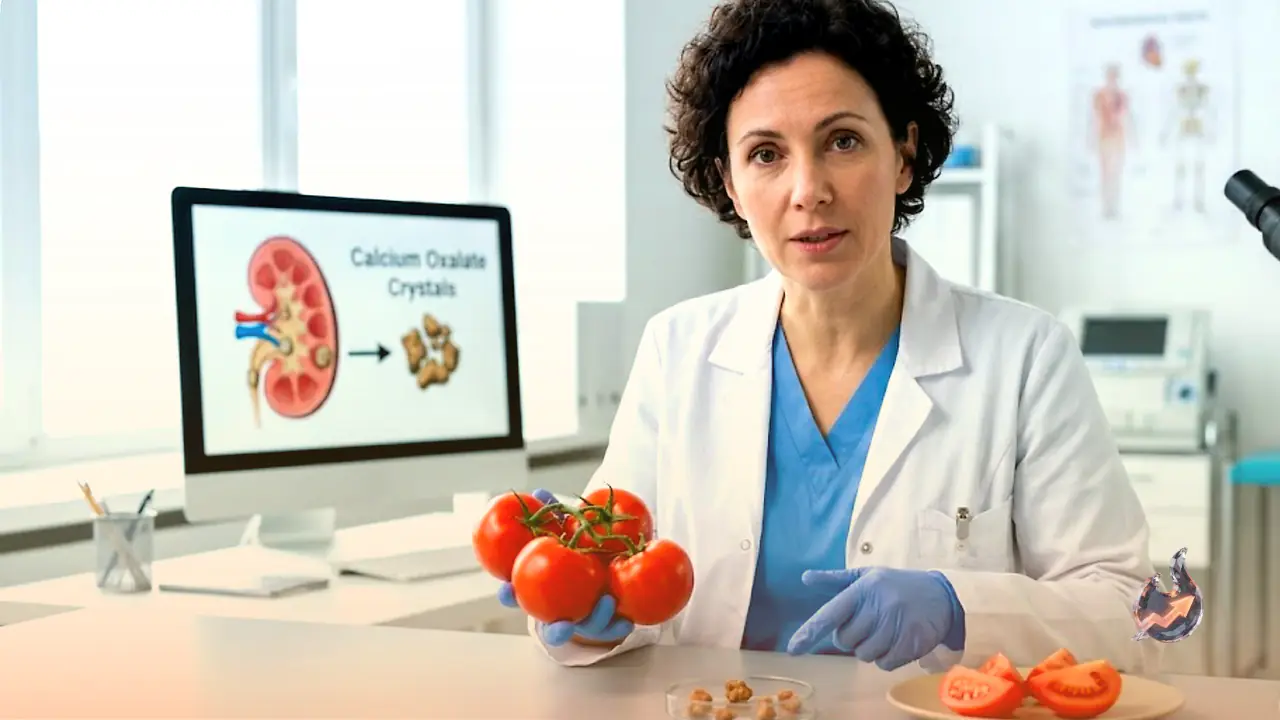

It is hard to picture an Indian kitchen without tomatoes. They go into curries, lentils, salads and chutneys alike. Yet the moment someone develops a kidney stone, the advice usually follows quickly: eat fewer tomatoes, or avoid them altogether. That raises an obvious question. Do tomatoes genuinely cause kidney stones, or is this just a long-standing belief passed down over the years?
Most people assume that the seeds in a tomato are the root of the problem. The truth is that there is no solid scientific proof to back that claim. Even so, those who suffer from repeated kidney stones can be advised, as a precaution, to remove the seeds before eating tomatoes.
The Real Culprit Is Oxalate, Not The Seeds
Kidney stones come in several types, and calcium oxalate stones are by far the most common. Tomatoes contain a small amount of oxalate, and that is where the real issue lies. This is why doctors, in certain cases, suggest that stone patients limit how many tomatoes they eat. But this does not mean every single person needs to give up tomatoes entirely.
Every Patient Is Different
It is important to understand that the situation differs from one stone patient to the next. If a person does not have calcium oxalate stones, eating tomatoes in moderate amounts is generally considered safe for them. That is why it makes sense to consult a doctor before completely dropping any food from your diet, rather than acting on hearsay.
Simple Ways To Prevent Stones
A few very simple habits can make a big difference in preventing kidney stones. The most important is drinking plenty of water through the day. Higher water intake helps flush out the minerals and other substances built up in the body, which lowers the risk of stones forming.
Alongside this, cutting down on salt and processed food is also considered helpful. A balanced and nutritious diet keeps the body healthy and spares the kidneys from extra strain. Regular health check-ups matter too, so that any problem can be caught early on.